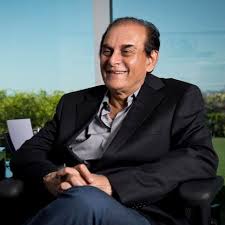
Welcome to the 1st episode of Sustainability Karma, Season 4! We are excited to bring to you an interview with Harsh Mariwala. He is a businessman with a purpose and passion. Apart from constantly striving to embed sustainability into his family businesses like Marico, and Kaya, he believes in active giving, which goes beyond chequebook donations.
He is deeply involved in initiatives close to his heart ranging from plastic waste management to mental health to entrepreneurship through his Marico Innovation Foundation, which stands at 40th spot on the Global Innovation Index; Mariwala Health In...
My philosophy is in active giving, you know, so whether it's my personal philanthropy or it's through the CSR part of Marico, it's active giving. It's just not giving money as a donation to a hospital or a school, but actively participating because I think that's what gives me pleasure in terms of adding value. And you have to be passionate about that subject, so you have to choose a subject which you're passionate about. And my third philosophy is that whatever I do, I need to be a thought leader and a pioneer in that area.
Welcome to this episode of Sustainability Karma. I'm your host Nana Goyam, and today we have with us a very special guest, Mr. Harsh Mariwala. He is the chairperson of Marico Limited and Kaya Limited. He has also formed the Mariwala Health Initiative and Marico Innovation Foundation. He has also set up the ENT Foundation. He also oversees the Sharar Ventures, which is the family office of the Harsh Mariwala family. Welcome, Mr. Harsh Mariwala.
So thank you very much for inviting me to this podcast and subject which is very dear to me because it has huge implications on our lives and more importantly, lives for our youngsters. India's a young country.
Sustainability is not a word, it's our way of life. And why is it getting so much traction in business organizations is something which relates to the fact that all the stakeholders, and not just shareholders, are interconnected to the business. And one of the key stakeholders for any business is the society. So if there is such a close connection between the society and its future sustainability implications, then I think it's very important for organizations to realize that they have to play a proactive role in driving this agenda. The other thing is it's a global issue, and we see that there are more and more pressures brought in on business organizations to improve their adherence to the subject. And these could be from employees, especially younger employees.
So when you go to a campus interview, one of the first questions raised by the youngster at the time of the interview is that what is the organization doing in the area of sustainability, because ultimately it will impact much more in their lives. There is pressure from board members also because it is getting traction. Even shareholders, especially foreign institutional investors, they go on asking for the organization's track record in ESG. There are advisories who also advise foreign institutions and they also track you and rate you on ESG.
In Marico, we are there for all the stakeholders. So much before it started getting traction, we already achieved a lot in the past. For this subject to get traction within the organization, it's very important that there is a high degree of alignment amongst all the employees and including the board. Whoever is handling these issues, people who are very passionate about this subject, give exclusive responsibility to them so that there are no escape buttons. Ultimately, it has to translate into a yearly goal, three-yearly goal, measured against the goals of the organization, and also review this in the board meetings which are normally held quarterly. So it's very important to review this at the board level.
Is it not expensive to embrace sustainability? I think there's another perception that any initiative to improve in this area costs money and the financial payoffs may not be as attractive compared to some other investments which the organization may be doing.
But I view it a little differently. In some cases, of course, the paybacks are low, but the impact it can create in terms of improving the organization's equity amongst all the stakeholders, its image at campuses, or attracting board members, or in capital markets, or attracting new shareholders, even including customers, that's not measured by most organizations. I think that's the invisible part which plays a very, very important role in terms of adding to the paybacks beyond financial paybacks.