Back
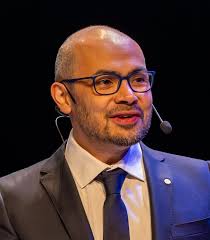
Demis Hassabis
CEO & Founder, DeepMind

DeepMind Chief Demis Hassabis Says Google’s Still Winning AI Talent | Semafor Tech

🎥 Jun 23, 2026 📺 Semafor ⏱ 29m 👁 55787 views
Following a string of departures among its top AI leaders, ‪@googledeepmind‬ CEO Demis Hassabis dismissed the notion that Google was losing its grip on leading AI talent and said he remains confident in the company’s ability to attract and retain the best people. Even as well-funded rivals and nimble startups poach its top brass, “we have by far the biggest and broadest research bench of any of the labs out there,” Hassabis told Semafor Tech Editor Reed Albergotti during an on-stage interview at the Cannes Lions Festival. “We win our fair share of the top talent.” Google’s shares tumbled as...
Watch on YouTube

About Demis Hassabis

Demis Hassabis, CEO of Google DeepMind, has said he believes artificial general intelligence (AGI) could arrive around 2030, describing the current period as being in the "foothills of the singularity." He has stated that the technology will be transformative for economies and the human condition. Hassabis has also discussed the potential for AI to help cure all diseases within the next decade, citing progress at Isomorphic Labs, where he said test compounds are in pre-clinical stages. He has described the next 10 to 20 years as a potential "new golden age of scientific discovery." Hassabis has addressed concerns about AI talent retention at Google, stating that DeepMind has "by far the biggest and broadest research bench of any of the labs out there" and that the company wins its "fair share of the top talent." He has also spoken about the risks of AI, including misuse by bad actors and the technical challenges of ensuring autonomous systems remain aligned with human intent. Hassabis has advocated for international standards and cooperation on AI safety. He has also commented on the future of the web, suggesting it will change significantly with the rise of an "agent-first" model.

Source: AI-verified profile updated from Demis Hassabis's recent appearances. Browse all interviews →

Transcript (29 segments)
I
Interviewer0:02
It's great to see you.
D
Demis Hassabis0:04
Seems like we always talk where it's very cold or very hot. I know. Exactly. Very hot. So, let's see if we can get through this without sweating.
I
Interviewer0:11
Demis, everyone right now is freaking out about AI. They're banning AI models in DC. A lot of the concern though is about these text-based models that can create software, find vulnerabilities in computers. I'm wondering if you think, as a lot of people do, that the path to AGI runs through these models like Mythos that may soon be sort of self-improving, or do you think that it still requires a multimodal approach, like what you're working on at Gemini?
D
Demis Hassabis0:47
Well, there's a lot there to unpack just in that first question. First of all, with the things that we're seeing with cyber and Mythos, I've been pretty vocal for a long while that as we get closer to AGI — and I think we're on the cusp of that now — I sort of said statements like we're in the foothills of the singularity, that we need a bit more systematic approach. Of course, there's amazing opportunities ahead, a lot of the things you talked about in the introduction: solving all disease, finding new energy sources. All these are the reasons I've worked on AI my whole career. But there are also risks, and cyber is one. I'm actually there are going to be even more serious things. That's just a kind of warning shot for humanity, and I hope we take it seriously. But there'll be bio, nuclear, other kinds of risks coming down the line maybe in the next couple of years, and we've got to get ready for that. I think we need a more systematic way to deal with the issues, and maybe a kind of standards body that ideally would be international that would help test the latest frontier systems to make sure they're robust and the guardrails are sufficient. That's on the one hand of what you just mentioned. In terms of the technical approaches to AGI, we've always had a kind of, you know, the broadest (I would say) and deepest research bench. That's why over the last decade, I think maybe 90% or plus of the big breakthroughs in AI that underpin the modern AI industry came from, you know, Google Brain or DeepMind as separate research entities, and now together as Google DeepMind — from Transformers that underpins all large language models to AlphaGo and all the reinforcement learning pioneering that we did back then. So I think our approach has always been to bet on multiple things and push them as hard as possible. So obviously we have our scaling work, our own multimodal foundation models Gemini. We're pushing hard on coding, but also we have our multimodal generative media models like Omni and Veo, and we think those are important to give these models understanding of the world around us, the context around us. I think in the end, to have a full AGI system, you need to be able to also understand the physical world around you, and you definitely need that for things like robotics to become a reality and things like assistant on smart glasses, which I think are two very interesting applications.
I
Interviewer3:20
I'm going to take that as a no. Thank you. So when you started DeepMind, you were so far on the frontier, and when you joined Google, it just seemed like between DeepMind and Google there was almost all of the major talent in AI under one corporate roof. Now you have at least three major competitors on the frontier who are all vying for the top minds. I'm wondering, do you think that DeepMind today still has the right talent to win the race to AGI?
D
Demis Hassabis3:51
Yeah, I think there's a lot of talent movement between all the leading labs, and we win our fair share of the top talent. But what I would say is that we have by far the biggest and broadest research bench of any of the leading labs out there. And we continue to put out the absolute frontier work, whether that's on the foundation models or these other models that eventually will feed into the foundation models, like our Omni and Veo models too. So, but it's a ferociously competitive market out there right now. Probably the most ferociously competitive there's ever been in the tech industry. And I think that was inevitable. When I look back on this, we started this back in 2010 where I started DeepMind and nobody was working on AI, definitely not in industry, but even in academia it was basically thought to be career suicide. 'Of course we know AI doesn't work, we tried it in the '90s at places like MIT and it was a dead end.' That was the prevailing view. But a small band of us felt that with the right ideas and using learning systems, reinforcement learning, and betting on neural networks, a lot of fast progress could be made. And we were right in the end. But it also meant that now the whole world in the last few years has woken up to the potential of AI. Every important company in the world is going to get involved in it.
I
Interviewer5:28
Yeah. So we're here at CAN, we're at an advertising conference. There's a lot of people here who are extremely creative, and I'm sure a lot of them, even here in the audience, are using your video creation tools to create ads, to do other things in the creative arts. What can you do with these tools now that you couldn't do a year ago?
D
Demis Hassabis5:50
Well, I would say every month these tools and the underlying models are improving massively. And a year ago, the biggest change I would say with our tools, like with our new Omni model and things like Imagen for images, is the ability to kind of live what the output of the generative models is. So I think that's become extremely useful for creators. Part of the creative process obviously is you generate the first idea, the first concept, but you like some of it but not other parts of it. You don't want to have to regenerate the whole thing, which is where we were a year ago. You want to be able to describe in natural language, ideally as you would to a designer, 'Okay, keep that part the same but change this to something else,' and then iterate that maybe hundreds of times till you get to the final polished version that you want. So I think that kind of fine-grained control has been a big change over the last year, as well as just general relentless quality improvements.
I
Interviewer6:53
Yeah. I mean, there's also, you know, even controversies within the ad industry where people try to figure out: 'Are they using AI at all? Is this 100% human created and you should disclose this?' etc. Do you think that's a conversation that's sort of temporary because we haven't adjusted yet to how AI is going to change creativity, or do you think that that's here to stay, that there will always be that conversation?
D
Demis Hassabis7:18
Well, there's two different parts. For certain, we need to deal with misinformation and deepfakes. That is something we were cognizant of years ago when we first started building these generative models, 3-4 years ago. We foresaw that we would be in a world where these systems would be really good — obviously that's what we were planning to do — and they would eventually be, as you know, photorealistic. And so we would need a digital watermarking system, which we created called SynthID, that was robust, sort of unhackable, and would be embedded imperceptibly in the image so that anyone — a citizen, a journalist, or a government — could detect whether that image was generated by an AI or not. All of our models that generate anything from music to images to videos come with SynthID embedded in it, and we've also open-sourced it and given it to the rest of the industry to use. A lot of our industry colleagues have now adopted that standard: OpenAI, Nvidia, and many other big ones. So I hope eventually that should become almost a regulation: if you're creating generative media, it should come with provenance detection. Obviously that will also help with things like right holders and IP rights too, so that can all be sort of connected together. As to whether it should be disclosed if you use AI for a piece of the work that you're doing, I'm not sure. I think that might be just an era we're in where, okay, we were using Photoshop or some other tool before, and now this is a more advanced tool, but it's just a tool for your own creativity. I'm just not sure that needs to be disclosed in the sense that you're talking about, other than you should know that the output was synthetically generated.
I
Interviewer9:16
If you look at your career, creativity is this through line. I mean, you started out creating video games. You studied this as a neuroscientist, the nature of creativity in the brain. You're, you know, even AlphaFold, I think you could think of as a very creative approach to science, right? Now we have all these tools. There are people who would say, 'This is going to make us less creative. We're now just asking a model to do what you slaved for years doing.' So how do you think about it? How's it going to change creativity?
D
Demis Hassabis9:47
It's definitely going to change it. But I think what I'm seeing is a twofold change. One is it's democratizing some of the creative tools so more people can try this and try out their ideas relatively quickly and relatively easily. That's double-edged though, because it also produces a lot more things that maybe are not very creatively valuable. But it also means a lot more people can break into those industries. I think there's a lower bar to entry, less gatekeeping. So that will probably mean new creators, professional creators, find a path wherever they are in the world through using these tools. And then the other thing I'm seeing is on the professional side. We work with many professional directors and amazing collaborators, and we try to talk to them to design our tools to help enhance and empower their creative process. I think it's going to be incredible. They can sort of do 10x more things than they used to be able to do. Try out more stream ideas, iterate faster. They all have way more ideas than they can ever produce in their lifetimes, and these tools allow them to try out things in relatively inexpensive and quick ways. So for the professional, they're going to be able to iterate their way to much cooler things way more quickly. But just like with any new tool — the internet's the same, computers are the same — if you use it in a lazy way, it kind of takes away from the creative process. But if you use it in an innovative way, it should add to the creative process. I think it's going to take a while for the creative industries to figure out the best way to use these things. I talked to my game designer friends in the games industry. They're very excited about these tools, but I would say at least the games industry, which is the creative industry I know best, we're still yet to figure out the deeper ways of using this. But it's very early. The game industry is using it for obvious things like to create some assets and graphics, but can it change the nature of games and introduce whole new genres of games? That's what I think could be possible, like it was in the '90s when I started out in the games industry when graphics and AI first came on the scene for computer games, and it allowed us to make whole new types of game genres. That's what I hope to see these new tools spark.
I
Interviewer12:24
Do you think, you know, there's a criticism that these were trained on the outputs of humans, right? Should there be some sort of auditability that lets people see, 'Oh, this output used partially one of my creations, and I should get compensated for that'? Do you think that should happen?
D
Demis Hassabis12:43
Well, maybe a new economic model is needed. I think that the tech industry and the creative industry together need to work together. That's what happened with streaming, which changed music, and things like YouTube with Content ID. YouTube specifically and Spotify and other companies like that came up with new really robust business models. So I think that will probably be needed. But it's very difficult, as everyone in the creative industries knows, to specifically attribute 'this is 1% this and 5% this and 10% that.' It's going to be difficult to kind of agree on objectively what that is. And even as human creators, the things we create are the output of all of the experiences we've had and the things we've learned and exposed ourselves to, other art forms and other creators, and then we remix all of that with our own creativity to generate new things. So in some sense, that's always been the creative process. But we'll have to see, probably new business models will eventually be needed.

I
Interviewer13:53
I hear this a lot from people: 'I'm okay with AI being used for science, to cure disease for instance, stuff you're doing in Isomorphic Labs. But I don't like the fact that it's recreating music or the work that a filmmaker might have done, or maybe even an ad agency.' But I wonder if there's a point to be made here about cross-discipline capabilities, especially when it comes to AI. On the one hand, over here you might be working at Isomorphic on a virtual cell, which we can't do today, but maybe one day we'll be able to actually see how a cell works in real time. And over here you're creating these world-class video models that may one day be able to analyze that virtual cell and potentially help cure disease, create new therapies. Do you sort of see that happening down the road?
D
Demis Hassabis14:48
Yeah. The whole thesis behind AGI as a term, and our original goal at DeepMind from the very beginning, was to create this general-purpose intelligent system that could learn from almost any input and then generate useful insights or spot useful patterns, and then output that in almost any way. That's obviously how the human mind works. Look at modern civilization that we've created with our hunter-gatherer brains. It's pretty unbelievable if you think about how that happened. That's really what we know as general intelligence. That's what we tried to focus on from the beginning of DeepMind, and now the whole AI field is about systems that are general and that learn rather than being hardcoded or programmed with the answer. It's funny to think back now, but that's what the AI field used to do for the first 50-60 years — things like Deep Blue, the chess program, and so on. What this means is that some of these things are inseparable. If you want a fully general system that understands the world around you and can analyze scientific papers or scientific data, including visual data like pictures of cells or proteins or molecules even, depending on the resolution of the imaging equipment, it's the same type of capability that you need to analyze YouTube videos or just the general vision coming through a camera. So a lot of these capabilities are general-purpose, and you develop them for one thing, but really that's just a means to an end for another thing. You can see that with the first five, six, seven years of DeepMind: we were working on games and AI being good at games, like Go and Atari games. One reason I picked games is because I love games, I make games, and I've always been involved in games, but the real reason was that they were challenging tasks that were the right level for the AI systems at the time. They were never an end in themselves; they were a means to an end, to help give us quantifiable and achievable intermediate goals that were impressive and very hard to do but just about within the realms of possibility. We trusted that would be a research ladder to get us to where we are today: having these systems that can eventually do really amazing things in the real world and tackle real-world problems like scientific problems — protein folding with AlphaFold and now drug discovery. That's personally what I spend my time using these AI systems for: AI for science. That's my main passion and the main reason I'm building these AI tools. But of course, there are many other incredible things that same underlying platform can be used for, including generative media models that are helpful for creativity, and also productivity tools like the large language models.
I
Interviewer18:01
It's fascinating how this is all connected. I think back to your first paper as a neuroscientist, which is now famous in 2007. It tied the hippocampus in the brain to creativity. It was a study of people who had lost their memory, and it found that people who had damage to the hippocampus and couldn't remember things also couldn't picture things, picture the future. This visual aspect to creativity is so important. Even fMRI studies on people who are blind from birth find that they access the visual part of their brain. So I'm just wondering, as you sort of try to recreate a machine hippocampus so to speak, in AI that would let AI be creative, do you think that actually could come from just training these models on the creative industries?
D
Demis Hassabis18:53
Yeah. The through line between that was: I first used my own visual creativity to help design and program these video games very early in my career. When I went into neuroscience to do my PhD, I was fascinated to try and uncover the mechanisms in our brain that allow us to do that. All of us use it all the time. At least the way I used it to create games was to visualize the end goal visually, really viscerally visualize a player, a kid playing the game and using the interface, thinking through even before it was programmed what would be the issues with it, how would they find it fun, these types of things. I kind of mentally simulated that. We do that every day when we plan — when we're going to have an important business dinner later, we imagine, often viscerally, where's everyone going to sit, what am I, how am I going to open the conversation, how are people going to feel about it. So we're using this imaginative or 'future thinking' capability in the brain all the time. I had this suspicion when I first started my PhD — normally I was supposed to be doing it on memory. Memory had been studied for a long time and is dependent on the hippocampus. There are these rare patients that have had a disease that only attacks the hippocampus, unfortunately for them, but leaves the rest of the brain intact. There were a few of them in the UK. We went to interview every single one of them. I had this idea: reading all the memory literature in the first month of my PhD, there were two schools of thought. One is that it's a videotape and you just record everything that happens to you. Another school of thought, which obviously seemed wrong to me, was that it's a reconstructive process — actually, memory when you remember something, you're actively reconstructing it from its parts. That seemed much more obviously correct to me. If that was true, then imagination should use the same brain mechanisms. It's just the goal is different: instead of trying to recreate something that seems familiar to you, this time you're trying to create something from those component parts that looks novel, that feels novel to your brain. In fact, that's what we discovered. We were the first people to test any of these patients on their imaginative capabilities rather than just their memory. Do you see any similarities between what's happening under the hood with these video models recreating the world from prompts and what's happening in the brain?
I think definitely on a systems level. I don't think the implementations are one-to-one similar, and that was never the idea behind doing neuroscience. It wasn't to copy the brain, but it was to understand the principles and the algorithms the brain might be using, the representations the brain was using, and sort of lift that inspiration to then build that into the direction of our AI models. So I think there are for sure some similarities between the way our new Omni models and Veo models are generating the world. There's definitely some things to be learned about how that system is working. Quite a few neuroscience professor friends of mine are indeed comparing the latest models — what they can do with a certain prompt — with what a human might do in an fMRI machine and what images they might create. They're doing all sorts of crazy amazing things, like decoding what image the person is thinking about or dreaming about, and then using one of these models to recreate the visuals, and then asking the subject in the scanner, 'Is that what you were imagining?' and it is. So we're going to have these amazing sci-fi devices in the next few years.
I
Interviewer22:46
So interesting. You've talked about the Einstein test. I love this idea that you could give an AI all the data that Einstein had and nothing more — the cutoff date is 1901 — and then see if the AI model could do what Einstein did, which is come up with the theory of relativity and all these other physics breakthroughs. When you hear that, you could almost imagine text models, but are you really imagining a more visual process?
D
Demis Hassabis23:18
Well, first of all, that's how I would define true creativity, and that was my test for that, because people always ask how would you define it: not just extrapolating something that already is known, but actually coming up with a new hypothesis, a new scientific hypothesis about some part of reality that is genuinely novel, like Einstein most famously did in 1905 with his incredible set of experiments and papers. So it's interesting. It could be that there's enough in language to come up with some new theory that was sort of hidden, cross-connected with all of the text if you could read it all and hold it all in mind. But Einstein himself used to daydream while he was a patent clerk in Switzerland, and this is well documented, and dream of these thought experiments of being on trains and if you were traveling at the speed of light, what would it look like. He was using his visual imaginative apparatus to come up with these new theories, and then he had to prove mathematically. But I think you're going to need to access — and at least understand, and certainly if you're going to propose new experiments or have to do new experiments in order to test your hypothesis to develop it further — it's not just a theory. Then I think you're going to need to have an understanding of the world of atoms, not just the world of bits or the world of logic.
I
Interviewer24:43
Yeah. Back in your video game days, you had this game, Republic: The Revolution at Elixir, which is the company you founded. The game was actually kind of a failure, but it was this idea. It was too ambitious. You were trying to recreate this former Soviet Republic and simulate the world in a sense.
D
Demis Hassabis25:03
Yeah.
I
Interviewer25:03
It's amazing because I think on a Pentium in 2003, it was probably a little bit too ambitious.
D
Demis Hassabis25:09
Yeah, probably about a decade ahead of my time.
I
Interviewer25:12
Right. Now you have access to tens or hundreds of thousands of GPUs at your fingertips, and you're building these virtual worlds again. It's funny how it kind of comes full circle. Do you imagine that this is where, inside these virtual worlds, obviously they're going to be useful for robotics, training these things to go upstairs or whatever, but a virtual Einstein wandering around at the patent office daydreaming — is that where it's going to happen?
D
Demis Hassabis25:46
Well, with Republic, we tried to simulate a whole country with 100,000 living, breathing people going about their daily lives and all the politics of it, and you were supposed to create a revolution. It was a pretty ambitious game that we had to write by hand, and it took years. What's amazing now is that we might be close to the possibility of just generating that with some of our systems. I don't think we're ready yet, but in two, three years time, that might be something close to what's possible. Then we could realize maybe the full vision of what I was thinking about then. But the reason this is all important and why it's all connected is that simulations and AI, I think, are fundamental and they're very closely related. Simulations are going to be useful. Basically, that's what imagination is: a type of simulation. The reason simulations are useful is that it allows you to try out many things in theory and then select the best path. That's what AlphaGo did when it tried to select the best Go move in the current position: it simulated tens of thousands of moves using Monte Carlo search, used the model of Go to constrain that to only the useful paths, and then evaluated at the end of those 20-30 moves which end position is the most promising, and that's what guided its next move and allowed it to beat the world champion. There are many areas of the world — robotics and assistants are just two things, and science even — where we would love to be able to have many reruns of that problem. I'll give you an example: economics. Economics would be great if it were more like a natural science. At the moment, we put interest rates up and down by half a percent and then see, 'Did it cause a recession? Whoops, maybe we shouldn't have done that.' But it would be much better if we could simulate hundreds of thousands of trajectories from here in the economy, what it would do if you adjusted these big levers, and then get some kind of statistical aggregate of all of those accurate simulations and then make a much more rigorous scientific decision about what to do quickly. But that's not possible in a lot of the social sciences because you can't rerun the experiment in a controlled way hundreds of times like you can with the natural sciences. So simulations that are learned, where AI is connected — you can hand-code a simulation if you understand the underlying system well enough. But most of the time, the things we want to simulate, whether they're weather models (we have the world's best weather models) or economics models, we don't actually understand well enough how the system really works on a mathematical level. So an AI system could learn that simulation from the data. That's sort of the bigger goal of what I'm trying to do.
I
Interviewer28:50
I love how you've tied the creativity part of AI with the science. I'm sure you've given this audience a lot of inspiration in their work. So thank you so much, Demis. Great to talk with you.
D
Demis Hassabis28:59
Great to talk. Thank you.