Back
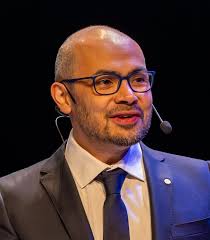
Demis Hassabis
CEO & Founder, DeepMind

The Future of AI: With Sir Demis Hassabis & Dame Wendy Hall

🎥 Jun 01, 2026 📺 Worshipful Company of Information Technologists ⏱ 81m 👁 9962 views
We are delighted to invite you to this year’s WCIT Annual Lecture, a highlight of our calendar and a unique opportunity to hear from two of the world’s most influential voices in Artificial Intelligence. We are honoured to welcome Sir Demis Hassabis FRS, Co-Founder & CEO, Google DeepMind, and Nobel Laureate and Dame Wendy Hall FRS (the UK’s leading independent expert in this area, and Regius Professor of Computer Science, University of Southampton), for a Dialogue on the Future of AI, moderated by our Master, Gus Machado. The discussion will explore topics including: Their personal journey...
Watch on YouTube

About Demis Hassabis

Demis Hassabis, CEO of Google DeepMind, has said he believes artificial general intelligence (AGI) could arrive around 2030, describing the current period as being in the "foothills of the singularity." He has stated that the technology will be transformative for economies and the human condition. Hassabis has also discussed the potential for AI to help cure all diseases within the next decade, citing progress at Isomorphic Labs, where he said test compounds are in pre-clinical stages. He has described the next 10 to 20 years as a potential "new golden age of scientific discovery." Hassabis has addressed concerns about AI talent retention at Google, stating that DeepMind has "by far the biggest and broadest research bench of any of the labs out there" and that the company wins its "fair share of the top talent." He has also spoken about the risks of AI, including misuse by bad actors and the technical challenges of ensuring autonomous systems remain aligned with human intent. Hassabis has advocated for international standards and cooperation on AI safety. He has also commented on the future of the web, suggesting it will change significantly with the rise of an "agent-first" model.

Source: AI-verified profile updated from Demis Hassabis's recent appearances. Browse all interviews →

Transcript (110 segments)
H
Host0:05
Good evening everyone and welcome to this WCIT the worship company of information technology lecture in memory of pastmaster Barney Gibbons. Um firstly a couple of thanks. Thank you to HSBC Innovation Bank for being such great supporters of this lecture. And this year we have two extraordinary figures who have helped shape the digital age liverman and liver dewendy hall our new members. You are both very welcome.
D
Demis Hassabis0:50
Great to be here. Thank you.
H
Host0:53
So, I was thinking about how I start this and every video of both Demis and Wendy have their whole CD read out and I asked Mr. Gemini what's the best definition for Dennis. So, Dennis, if anything's a miss here, then I would um
D
Demis Hassabis1:17
Okay. I'm not to blame.
H
Host1:21
So, Sir Dennis Hasselus, co-founder and CEO of Google Deep Mine and in my opinion one of the world's leading research labs. I'm particularly excited as well that it's in this country and your mission is to advance AI and to apply it to major scientific and social challenges. And he built a video game called theme park which combined AI with economics and you sold 15 million copies. And that's before you even went to school after your university which I'm not going to regail because it's a very long list of things you did. You built Alph Go and defeated the world champion Go player and alpha fold which revolutionized protein structure prediction. You are multi-domain. You combine being a computer scientist, a neuroscientist, an entrepreneur, a former video game designer, and you bring insights in multiple fields in AI research and we are very pleased to have you here, Sadis. Thank you. D Wendy Hall, one of Britain's most distinguished computer scientists, a global pioneer in web science, cross-disciplinary study on how web shapes society and vice versa. Regious professor of computer science at the University of Southampton and one of the first researchers to undertake major work in multimedia hyperdia systems. A founding leader of the web science trust along with sir Tim Bernersley who's actually an honorary member here
D
Demis Hassabis3:09
I know
W
Wendy Hall3:11
yes we both know well
H
Host3:13
to advance the understanding of the worldwide web and its social impact the first woman to become professor of engineering in Southampton and a former president of the BCS and the ACM which is association of computer machinery you are an internationally respected voice on AI, internet governance and data policy and digital ethics and you are helping shape governments and institution to think about how technology impacts society. Dean Wendy, you are very welcome. Thank you very much. Which leads me to my theme in my year of mastership of the Wville company which is community. And if I say a couple of words on that, I chose the theme because I was trying to understand how AI and technology are going to impact our communities, our people, our industry, which touches the four pillars of this organization, which are charity, industry, education, and fellowship. And so today I'm going to pose my first question on skills and AI literacy to you de Mendy nearly a decade after your 2017 review. What does a serious national AI strategy look like now from schools to university to mid-careers to reskilling our people? And I was just wondering, is the UK still missing or misreading this skills challenge?
W
Wendy Hall4:53
Oh, well, that's three questions in one. I can't believe it's 10 years. Deus was there when we did that. So, I wanted to co-chair it with him, but he was already too busy. Do you remember?
D
Demis Hassabis5:04
Yes, I remember. We tried to input into it.
W
Wendy Hall5:07
You did. You did. Right. But he wouldn't co-chair it. So, but anyway, that's fair enough. He was building deep mind. So he was living it living the dream. So unfortunately my answers aren't very positive. The UK did very well. In fact we were I like to say we were the first to develop a national strategy. In fact Canada did beat us to it but I think ours is better known. And we actually we did the whole percenting report was 2017 and then the national strategy was developed by the what we set up out of that the office for AI and the AI council and the national strategy evolved from that in 21 during the covid years. I remember all the calls and I was AI skills champion for a while that there is no AI skills champion now that the um there's no AI council there is no independent body overseeing what the 400 people in DC do in the AI unit and I think the UK loses a trick in that many many countries and I traveled the world meeting governments around the world picked up on our strategy. Many copied it. You can see elements of it, words of it in other countries strategies, and Singapore, for example, followed our playbook and did it better. So, they're now overtaking us in the league of developing AI for a tiny island. and they back hugely above their weight and they're overtaking us in the league tables of you know it's very clear it's US China and we were then third in the tables of AI strategies and adoption we've slipped and Singapore really have done it incredibly well and others countries are doing it too ours now we do well and we can talk about later the things we are doing well. It will come up later in the discussion. But the skills piece is very very patchy. Unfortunately there were several things came out of the whole percent review. All those recommendations were taken forward MSC's PhDs very little for schools. There's very little guidance for schools on AI. and you know that you see things coming out in a quite a fragmented way. So it does but there is no I don't think there's any oversight of AI skills in this country at the moment. Sorry to say that but it's true.
H
Host7:55
How about you Dennis? What's your view on that?
D
Demis Hassabis7:57
Yeah well I'd probably suggest something much more radical. So I would agree with Wendy. had an interesting head start in 2017 but you know 10 years in AI is like a century in most industries right or maybe two you know maybe a millennia so a lot has changed I think we did a good job I think I remember that actually we sponsored some of these masters did absolutely and I think that helped a lot actually we see today London and the UK is doing really well in things like startups and I think we tried to anchor that at with deep mind and brought a lot of talent into the tree and then now 10 years later that a lot of those people are now spinning out other things and this is great to see. We need to do more of that. I'm sure we'll come to that discussion later, but specifically skilling and schools, I absolutely agree with Wendy. Now, we need to look to the secondary school level, maybe even the primary school level. The horse has bolted in the sense they're all using the LLMs and chat bots in their spare time and for homework and things like that, but it's very unsistatic and it's a bit like I feel like government policies and education systems a bit like, oh, I wish that would go away, but it's not. we're going to have to lean into it and help teachers and schools and parents and students work out how do we get the benefits out of it, not just probably the way that people are using it now and kids using now and I see my kids, you know, will just help them almost cheat on their homework or shortcut things. And we know that that will result in deficit of skills, traditional skills, let alone AI and computer skills later on. But I think we got an opportunity here. Maybe it's time for a new review for you to write, Wendy. This is why I would if I was going to input into this is what I would suggest is we need to invert the classroom in my opinion. So I would lean into a this is what I would do if I was in charge of education. I would say school in school should be about people skills, projects, entrepreneurialism, creativity, judgment, all the things that you might expect the skills to be important in 5 10 years time when AGI's arrived. I know we're going to debate about AGI, but even just extrapolation of today's AI, there'll be things AI can do well and then there'll be things that will need human judgment, taste, all of these things. But these are not taught in schools today. But so I'll come to that. So the school so I think in class it should be about human human contact. How do you organize groups of people into projects like a Montyurus school but plus or maybe you get at like Oxbridge and places like these sort of the top universities these kind of individual supervisions right but you bring that into the classroom out of classroom is where you do the rote learning that would be my opinion aided by personalized AI that basically tailors the rote learning to the speed and the exact personalized to the exact speed of the student and what they need to do. It's crazy that we do a one size fits all in class anyway on rope learning. Doesn't work because you have to cater to the average. What about the kids that are behind or the kids that are ahead? Good luck on both sides. So here with AI, you can actually personalize it so everyone gets exactly the tailored curriculum that they need. And then in school, it's all about projects. I think teachers would love that personally. And then you could have world-class teachers that are like kind of almost like superstars that do the lecturing and they're really good. You know, why do we expect every school teacher, every lecturer to be amazing at lecturing the same course? That's just completely redundant amount of work. When I talk to teacher friends of mine, you know, and they have to come, each of them has to teach GCSE maths and then bring create their own slide decks. Why are we in that world? It should just be one. And then it's not then the remote learning you do at your own speed at home with the help of AI. That's what I would do. But I don't know if the countries somewhere like Singapore will do this in my opinion or UAE.
W
Wendy Hall11:52
Can I riff off of that because I agree with almost everything you've said there? I think the rope learning doesn't have to be done at home and some we have a there's not there's no equality around this. There's a lot of kids can't do this at home, right? And we have to be I definitely agree that we can use AI to stop the one-size-fits-all. One teacher, 30 pupils, they're all different. Teachers can teach much better if the children are receptive to what they're going to say and already done the basic stuff, whether it's home or school or wherever. And I've always been in fact my first I don't know if you have ever told you this my first piece of AI code I wrote in 1984 to build an intelligent tutoring system on a BBC micro in prologue. You'll understand what that means just not even proof of concept just an idea right that I got from my tutor at university. But I've always believed passionately that we can use computing and now AI to develop personalized systems tutoring systems for kids that will help everybody get to the same sort of level but that takes a huge commitment from government to make that happen and I'd love to help do that
H
Host13:11
and then and then taking the step one step forward going to university is it now become come pretty redundant that we have a computer science degree because of course not at all.
D
Demis Hassabis13:23
Of course not. You exactly I mean you you absolutely needed to lean into STEM and computer science because no matter it's just a higher level programming language is the way you can think about what programming is going to become. You know we used to program in machine code then there was C then there's Python and now it's going to be perhaps it's going to be English. But that's fine. Like you're still going to need to know about architecting things and software best software engineering practices. Those people who understand the deep technical, they'll be able to use these tools 10 times more effectively than people that don't have that technical knowledge.
W
Wendy Hall13:56
So absolutely we need people to apply, but we also need AI across the board. So things we're doing at Southampton, I know other universities similar. We've actually developing something called an AI driving license for all students who arrive in the university next. This good plug but others arrive in the university in October will be this will be available to them and staff and think of it like your highway code you know this is for non-science students really to get them up to speed. Some of them will already be doing it of course with their own but to get them up to speed how they can use AI. We have a policy on how to use AI in education. And we have also set ourselves a target that by next academic year, every discipline, every degree in the university, there'll be a module on AI customized to that, whether it's history, psychology, geography, physics, whatever. Customized. That's a huge task, by the way. But that's what we've set ourselves.
D
Demis Hassabis14:54
And presumably, you're going to have to tweak the curriculum as well. I was just going to say you so I think you need to teach STEM and computer science and continue that's very valuable training but the curriculum has to change to you know there might be very different things that one should study
W
Wendy Hall15:09
absolutely well I mean if you talk I don't if you heard Mike Waldridge talk recently about the way it's going to change the computer science AI taught as a part of computer science my I mean we do an AI degree a lot of universities are already we've taught computer science with AI for a long time, but we now have a set. We have computer science and we have AI. And I'm passionate about getting how to getting information about AI to non-science students as well.
D
Demis Hassabis15:39
And particularly the risks and the other social effects of doing this that will also have to be brought into the curriculum presumably.
W
Wendy Hall15:49
Yep.
D
Demis Hassabis15:50
Oh, sorry.
W
Wendy Hall15:53
Yes. I mean, and that's across the board as well. You know, I think that was already that was actually even part of, if I remember correctly, the original your original report of like, you know, ethics being taught and challenges as alongside the technical aspects of computer science. I think all computer scientists need to be trained in that. Um, and by the way, I also believe that the time is now for the humanities like philosophy, economics, like I think we really need, you know, in the world we're about to enter into post AGI and these things that's a new era in my opinion. So I feel like that type of thinking is going to be really needed. I was wondering how long it would take you Dennis has actually mentioned AGI and
H
Host16:35
No, he's gone one further. He's mentioned post AGI and I was just wondering if for the uninitiated audience here and listening. I just wanted to give us a just a feel of what how things will change with AGI and the benefits as you see it and also the time scales. I know you say 2030 and onwards but a little bit of color on that would be very good.
D
Demis Hassabis17:01
Yeah. I mean firstly my definition of AGI is a system that you can test and exhibits all the cognitive capabilities humans have. The reason that's important is the human reference point and the human brain reference point is the human brain is the only existence proof we have we know of perhaps in the universe that exhibits general intelligence. And I believe that brain is a sort of an approximate cheuring machine. Obviously, cheuring, one of my all-time heroes, he showed what cheuring universal machines, you know, can compute anything. So that's computable maybe apart from like quantum systems and other things. It's a bit out of scope for today. But I think that's what an AI system is. And that means it should be able to do the types of creative things and invention things that we know the best scientists were able to do. Today's systems are nowhere near that. They're not consistent enough. they have missing capabilities. They're very impressive in many ways but they also as we've all interacted with them every day these LLMs they're missing some components now that may get solved with scaling but it may also require one or two big breakthroughs still like transformers were or things like reinforcement learning applied to deep learning like we did with Alph Go. So the jury's out on that. I think it's going to be given the amount of resources and brain power going into it around four or five years is my expectation from where we are today. So around 2030 and then when that happens that becomes a new type of tool or system that we've never seen before and we'll need to think about how to use such a transformative piece of technology. and it's going to change everything in my opinion, economies, perhaps even the human condition. But I'm a very of course the positive part of that would be advancing science, curing diseases, advancing medicine. This is why I spent my whole career working on AI and what we call AGI technologies. We help popularize that term. But obviously there are challenges with systems and we already see the beginnings of that with the Gentic systems that become more and more autonomous. How do we make sure they stay on the guardrails that we set and they do the things that we want? Then there's questions of things like you know beyond that of as the machines get more capable consciousness other things which maybe we'll get into but the first step is to get these tools right
W
Wendy Hall19:28
and you have an interesting well I don't agree with Dennis on all this I respect what he does right and if everybody was like Demis we'd be all right but they aren't okay. Yeah, they aren't Dennis. Right. So, there are people that are just in this for the money or the power and we'll release anything and say it does everything without any testing, any evaluation, any safety checks, any guidelines. This is happening in the states at the moment. I loved that. Ironically, love that you did a debate with Dario at Davos. I call it the Demis and Dario at Davos debate. the four Ds and I use this with my students because it was Debis saying the things he's just said here and Dario who was out there to get the money for his company and is now going IPO saying we're going to reach AGI by the end of this year and you were trying to pull him back in that right make some because
D
Demis Hassabis20:28
well actually there was a bit so let me roll back the big thing for me if I don't accept it but if we reach some form of something you accept as AGI by 2030 which I don't personally am not on that side of the fence but if then that gives us four years to sort out global governance of AI because otherwise we've got machines that are cleverer than us in some aspects and the big thing is that if the software we're building starts to decide to do things on its own the sort of I'm sorry Dave I can't do that moment. And this will inevitably happen. and Steven Hawings of 2014 said, 'If we build machines that are clever, I'm not using the word intelligence, by the way, here. I'll come just say one more thing about that.' He said that was the end of the human race. That's one of the last things Stephen Hawking said in a BBC interview. There are threats. We absolutely have to have a global governance in place. the and there this I mean I was on the UN high level advisory board. It won't be not enough people the UN isn't what it used to be and it won't be of the UN but it will it could spin out of the UN. There's the global dialogue starting in July where some governments are going to come together and start really talking about what this means. And just this week Trump went back on his word and said we have got to start what did he say not regulate what's the word he used the companies and the check evaluate the software that's coming out I can't remember the word he used so he because he when he came into power he did a what did the president executive order
H
Host22:23
executive order
D
Demis Hassabis22:24
he overturned Biden's rule and he did an executive order that said no regulation at and he stopped the states regulating. Well, he went back on that this week or his government did and said we because and actually it was because I think the tipping point was the mythos software from anthropic. It's yeah, it's also not just that. There's a lot of people input I'm spending a lot of we're spending a lot of our time inputting into those things behind the scenes. We don't shout about that from the rooftops. Mythos is a has been a very interesting good trigger because it worried the banks and Besson which is always the be you know that's when people take things seriously right to talking to HSBC people here you know when the banks get worried then government wakes up which is you know maybe it's a good thing and that means there's a window of opportunity here I think to do something and I think that's why we saw the executive order eventually get through and but it's it's not enough and and there's more and actually we're in I mean as you know Wendy we're in total agreement I do think there needs to be kind of an international standards you know I'm my view is and maybe where we disagree is timelines on AGI but my point is is that there's a I actually talk about it as if 50% chance of 2030 with some obviously margins of error but the point is it could happen depending on things like recursive self-improvement if that works so there's a lot of things people are working a lot of things that could speed up the timelines right if those things don't work then it may take longer, but that's great. Then we'll just have more time. But my view is we don't have the right institutions fit for purpose to deal with something as consequential as this. All of the unfortunately this is happening at a moment where the geopolitics is as complex as it's been in 30 years. It's more fragmented than ever. The UN is not what it was as Wendy was saying. So you know maybe one could have imagined in fact I did imagine 20 years ago maybe it would be some form of technical subcommittee of the UN or something. that's unthinkable now. And so I feel like there's not a lot of time even 4 years, let's say it's 10 years, you know, that would be better in some ways if Wendy's right if it takes a bit longer because then we have more time to get ready and society to get ready. But look, we got to take it seriously is what I'm explaining to people who care about this that it might be sooner. So that's the point I'm making is the urgency. It's absolutely urgent now, right? We've just seen mythos cyber that's just the beginning. I'm more worried about things like biorisk coming down the line. Obviously, this is something that I work very closely on to try and cure, you know, as many diseases as possible with alpha fold. But those, you know, those kinds of tools can in the wrong hands can also be misused. And so, there are two things I worry about. Misuse of general purpose technologies by rogue actors for harmful ends. That can happen. You know, not what those tools were intended for. That even affects things like open source, which is generally good, but how do you restrict bad use cases of that? That's a big problem we don't know how to solve. And then there's the technical question that Wendy alluded to is the making sure the systems as they get more autonomous, more powerful, more smart, how do we make sure that they stick to the guardrails we set them? And then even if we solve those technical questions, then there's the economics questions. How does all of society broadly benefit? Not just a few, you know, handful of companies, a handful of people. That's not a good end. That's not a good way for society to go. And then beyond that, even if we get that right, there's the philosophical question about meaning and purpose. But so there's a whole stack of issues, each one more complex in my opinion, and we've got to get going yesterday on these things.
W
Wendy Hall26:00
So I've started naming it with others. We're going to create an international AI agency. Let's just call it something. And it could spin out of the work the UN doing. It won't be of the UN. It could be it needs to be independent. We need to get I say we I mean the people that care about this. There's no particular organization or group of people and it's got to involve the tech company's got to involve governments and it's got to involve civil society but it's got to be something that the companies and governments can sign up to. Someone's got to fund it too. So but that's like you know this we cannot just sit back and say someone else is going to do it. We have to. So I'll be in AI in Geneva in July. You going
D
Demis Hassabis26:49
I'm not sure.
W
Wendy Hall26:50
Oh s yeah exactly.
D
Demis Hassabis26:54
There's the first dialogue coming global dialogue about this is happening in Geneva that is being run by the UN but it doesn't mean what comes of it has to be of the UN. I mean that's why by the way the AI summits that was started in the UK with Sunax government and we were highly supportive of that and helping push that that I think those summits have been good they're not enough but at least they're getting the international community together to try and talk about some of these subjects
W
Wendy Hall27:23
nothing came out of India demis
D
Demis Hassabis27:25
sure but but
W
Wendy Hall27:27
250,000 people at a conference
D
Demis Hassabis27:29
when how long have people been trying to do climate change cop meetings for can't we can't the evidence of so this is there has to be a different route like talking shops are not going to be enough so and I just don't think the UN has the power to do anything currently so it's going to be need to be new institutions but you know that's a tricky needle to thread a lot of us are working and I'm working trying to work behind the scenes on this you know I appreciate Wendy's working you know front and center on these things I think both are needed actually behind the scenes advice and maneuvering and then you head on tackling of this.
H
Host28:06
We haven't mentioned China either.
W
Wendy Hall28:08
We will come to China soon. Um, but in terms of the big tech companies actually taking part in this, is is it not like Turkeykey's voting for Christmas though?
D
Demis Hassabis28:18
No, of course not. In fact, they want it actually.
W
Wendy Hall28:21
All that's the thing actually all the all the I mean, I know all the lab leaders they're all characters. Let's put it that way. But there but nobody wants catastrophic things to happen. That's no good for any companies. It's no good for any individuals any reputations so or for business. So it sort of even if some of them are genuinely worried and scientifically worried and they always have been I know their motivations from a long time back. People like Dario we used to chat about these things when we were both posttos others have come lately and maybe they're more interested in power and money but it doesn't matter what you're interested in. You don't want catastrophic things happening and nor does government. even the most capitalist should we say or marketdriven governments don't want that or or authoritarian actually frankly so there is hope here because actually it's in everyone's interest to come to some sort of agreement the problem is the usual tragedy of the commons prisoners dilemma issues which is why we need some kind of governance and government involvement because the companies it's always in someone's interest to make money you know by defecting from some agreed protocol right that's the problem and individually I think all of the good news is I would say all of the researchers and lab leaders and company leaders I talk to in this space do want something to happen and do want some guard rails and some standards. The question is what those are, how that should operate and who should run that. But me and others we're making proposals behind the scenes to some of the main governments.
H
Host29:53
That's great to hear. Thank you. Just moving to See, when you said I know you're going to come Well, I don't know. When you said the big tech companies, you meant the ones on the west coast of America.
D
Demis Hassabis30:03
I did.
H
Host30:04
Yeah. So, don't you care about the big tech companies in China and what they're doing?
D
Demis Hassabis30:08
We do.
W
Wendy Hall30:09
Yes. I mean, this this they I mean, China would love to run whatever agency we might set up. They would do it because their support, you know, they want they are as in as Demis said they are as keen not have a catastrophe in AI as for many different reasons and the same reasons as the West is but actually they would love to run whatever we're going to set up. And the other thing about China, I'm sorry I'm going into it because I don't think you can avoid it, is they largely produce their models. You know, they're producing open code and much more open and there's good and bad about that, but they are much more welcoming of these ideas than say the US government is.
H
Host30:51
Okay. Since we're talking about China, I was just wondering whether a lot of the investment and a lot of the stuff that's happening in AI is in the US and China and are we going to just be as a country are our companies just going to be left behind and be watching and being users of the technology rather than like what you've Dennis is being an inventor of such technologies.
D
Demis Hassabis31:24
Well, we can't be I mean I think it's important that and I've told this to all various European leaders that you can't just be I told this to Macron back in around 2017 and he tried to do something about it. You cannot be world champions at regulation only. That's not a thing. Exactly. Right. So to have a seat I literally told him that and I said you can you know you've got to also be leading in the technology and have lead some leading companies and leading academics so that you can have a seat at the table. So first of all you see what's coming down the line ahead of time and you also have a sort of moral authority to have a seat around the table and be listened to. And there was a time when I was trying to encourage a sort of trilateral thing with Britain, France and Canada because I would say those three countries were kind of the next best at research after the two superpowers US and China. actually as a three if you look at citations papers researchers it's pretty like those three countries together now you could include some other European countries and also there's Singapore and so on but those three could create a kind of moderate bull work between the two superpowers didn't quite happen for politics and other reasons but there's still an opportunity there I think the UK is still uniquely positioned to take advantage of this we've tried to do our bit of obviously we're part of Google but I kept eat headquartered here we bought thousands of top researchers here. You know, they did some great work at DeepMine. Many of them then after five, six, 10 years went and started other things. And once you embed yourself in a location, you stay tend to stay there, right? Family reasons, other things you'd like the city and so on. And I think we're seeing that. And all ecosystems need anchors like that. Silicon Valley was not Silicon Valley until Huelet Packard and Intel, all these kind of companies seeded it, right? And they also came from strong universities nearby. Stanford, Berkeley and so on. And we have that here. The Golden Triangle, you know, Cambridge, Oxford, Hampton, UC, we got so many strong these things take centuries to build up. We have those assets. We have very smart people. We just need to have more ambition and utilize them here and hopefully government encourage that or at least not get in the way of that. And I think we're doing pretty well here, but we could do better. And then the next stage is financing the growth stage of companies which is missing which I think maybe some of the financiers in the room can think how would we do that. I think the stock exchange needs some updating. I don't know why companies don't float on the London stock exchange anymore. They will go to the US. There's obviously some problem there that needs to be addressed and I just think we could take advantage of this moment. We have all the right ingredients. The other big thing is we've got to address energy costs and our energy dependence partly for security reasons. So perhaps there's going to be a confluence of good things here. But we have the most expensive energy in the western world. And the problem with that is that's going to directly translate into intelligence. It's literally watts to dollars to tokens. So you cannot build our industry out. This that's the new industrial base, right? If you believe what's going to happen with AI is data centers, information, it's tokens. how much can you inference per unit cost? And so this is vital now. It's vital for all our industries, but it's going to be vital for the industries of the future. So, and then that will pay itself if we're going to I don't know if we're going to get to climate and environment, but obviously there's a worry about that with the data centers and things like that. But actually I just think that's a bit to me that's a red herring because if we build these technologies right they will be the it will be AI that will help us deliver the technologies of the future that will actually solve climate change. So we're working on fusion, material design, better solar power, you know, all sorts of things. We're going to be advancing this new renaissance here I see coming. We could be at the forefront of that and that will be the thing that will then, you know, completely change the climate equation, not trying to shave off 1% or 2% right now. Can I come into that
W
Wendy Hall35:26
because riffing off of that the you know we'll all I think in the future we will talking to our engineers at Southampton we will all want a data center in our city or our town because they will we'll turn it round we'll flip it so they become the generators of power electricity in the future. Yeah, it's abs it's where it's going to go. The other thing I want to say that we are good at here and something you're going to see quite a bit about over the next few weeks. Firstly, we have thanks to what Richie Sunnak did the best AI security institute in the worlding right
D
Demis Hassabis36:03
they are the best and they are setting the benchmarks for how you evaluate what's coming out of the tech companies.
W
Wendy Hall36:10
I wish they do China as well as America but anyway that's another whole issue. And we are part of the network of those around the world which are now called the network of AI evaluation measurement and science or measurement science. They've changed the name because Trump didn't want them to be called security institutes. And we also have funded a new center for AI measurement at the national physical laboratory. And this is a whole driving the whole science of AI, not AI for science, but the science of AI, which I think is something we're very good in this country at leading on these types of new sciences. I think that's a huge potential for the future. And it's all comes under the umbrella of what is being called AI assurance, which we're also very good at doing this type of stuff in the UK. And you're going to see an announcement in London Tech Week next week from the government about a new or growing that as a career not just for technical people but for people who are going to run the AI assurance industry and we'll be able to lead on that in here in the UK if we keep going and I think this government's got that right.
D
Demis Hassabis37:27
100% agree on that. just again to call the praise out of the AI safety institute as it was called security institute now in the UK is the world leading and we are extremely good at that and I think that's something our academic base can feed into too because you actually want non-company organizations doing that type of work really right and so I think that is leading the way and I think that's one way towards having the technical capability for whatever standards body there is you need the highly technical folks and those could come from these security institutes networks.
H
Host38:02
Super. Thank you. I'm going to just switch to a slightly different topic now. I'm just going to ask Emis, I wanted to ask you, you mentioned about UK and the power of the brain that we have here. We have got a good talent pool. I was very keen to understand a why did you set up Deep Mind in the UK? you still run deep mind in the UK which is phenomenal in London. It's great for us as a company as well. But what I wanted to ask you how do we find new British breakthroughs and create global businesses out of them? Well, look, I started Deep Mine in London for a few reasons. One is that I was born and grew up here and I love the country and love London and I love the where I studied at Cambridge and so on and the things it gave to me and I wanted to give back. Second thing but on the commercial side as a personal reason on the commercial side of things there was a lot of talent in the UK and actually in Europe that was untapped. So the story I used to tell my early investors was imagine you're a physics PhD from Cambridge. Okay, world class, but you don't want to stay in academia in physics. You want and but you want to stay in the UK and you want to do a job that really stretches your mind, right? The only option for you would be to go into finance and hedge funds. Excuse the finance people in the room, but I wanted to give a different option, right? Other than that, like what if you wanted to stay in something scientific or deep tech? So I just felt this is back in 2010. This is like the, you know, the dark ages. Like, no one was doing any AI, deep tech, anything like that in London. And so I had the whole field to myself. So I was hiring these amazing people for like 50k a year. You can't even get an intern for a day for that these days in AI, right? And so that was incredible on a shoestring budget. We raised a couple of million to just try and get going. And I could hire world-class people, not just from the UK, but all around Europe. EPFL, ETH, and the top French schools and there was just nothing that was rivaling that. So that was an amazing to begin with and it lasted for about six, seven years and then big tech sort of realized there was a lot of talent here and they've all set up their satellite offices here which is good for the UK actually because it brings more and more talent and investment here and you see that all around King's Cross. the whole of King's Cross is now this amazing

D
Demis Hassabis40:34
Place because of all the tech investment that's gone in. And then again, you know, those people stay for a few years and then they maybe they go and do startups. So that's the other thing. And then the final thing was I just think our bit of an underdog story is I kind of wanted to prove that it could be done here. And that we were punching under our weight in this area. And I think we proved a point with Deep Mind and hopefully that inspired and I think it has inspired the next generation of founders to start amazing things here in hard technologies, deep tech, whether it's like quantum or fusion or indeed finance and banking. So but I think we could go further. We now need to produce our first trillion dollar company here that remains independent and grows here. That's probably the next challenge for the UK ecosystem. But I believe we'll do that and there are pockets of that like Stockholm with Daniel Ek trying to do this with Spotify, and then he's inspiring a next generation of entrepreneurs there. And you just need a few things to happen and seed and then the ecosystems with the government's help can build on that.
H
Host41:43
Yeah. But the key is the government's help. That's where we don't get it. There are people in this room who are working on that very thing. You know that and it's treasury and you just can't get through the change the way they do things.
D
Demis Hassabis41:59
Yeah.
H
Host41:59
We've got the brains.
D
Demis Hassabis42:02
We've got the universities.
H
Host42:04
Is that okay? We got the universities. We got, as you said, Demis, to repeat that all the talent here. Amazing talent here. Other countries, I mean, if you look at what's happening in America and how this government is stopping funding research in America, it's very scary. It's good opportunity for us though. And of course, you got China. Sorry to keep mentioning China, but you know we have a fantastic opportunity to ride high now but we do need the government to sort out how we get the investment into the companies. We can get the unicorns. It's getting it to the next level.
D
Demis Hassabis42:40
The next level now.
Yeah.
H
Host42:43
And just one more question for you, Demis. I was very keen to understand why did you choose protein folding as the first?
D
Demis Hassabis42:54
Yes. Well, look, I spent my whole life working on AI because I thought it would be the ultimate tool for science. So I've always been interested in the big questions, you know, of the nature of reality. How do things work? And for me, my expression of that was to build the best tool to help scientists. Now, protein folding and protein structure prediction, I came across that as an undergrad in Cambridge. A lot of my biologist friends, one specifically was obsessed with that and would talk about it all the time. So I listened very carefully. I tend to listen very carefully about people who are very passionate about things and I thought it was an amazing first of all an amazing scientific question. It was an amazing puzzle. How does this one-dimensional genetic sequence fold up into this exquisite three-dimensional little nano machines? Amazing. And it was also what I call a root node problem. If you cracked it, it would open up whole new branches of discovery, right? Drug discovery, fundamental biology understanding. And I'm always attracted to these, it was described to me once as Fermat's Last Theorem equivalent for biology. So who can resist that? And people have been trying to solve it for 50 years. And then the other thing was I just even back then, this was in the '90s, we didn't have any of the technology that we have today, but I could feel it was the right sort of problem for AI to perhaps help with. So I just filed it in the back of my mind for nearly 20 years, really 15 years, until the day after we had the AlphaGo match and I came back from South Korea and not only we won the match but AlphaGo had played an original move, move 37. So it made a sort of discovery in the limited domain of a game but still kind of unbelievable that it could do that and that was what I was waiting to see, having a system that could not only perform at that level but do those kind of things. And the day I got back is when we started the AlphaFold project.
H
Host44:52
Fantastic, I hadn't heard that before. Good, that's good.
D
Demis Hassabis44:56
And now we continue with Isomorphic Labs, this new spin out in UK, because I feel there's isomorphism between biology and information sciences. I think biology can be thought of as an information processing system.
W
Wendy Hall45:10
Because I'm an algebraic topologist, right? So my PhD was in all this sort of stuff. I'm fascinated.
D
Demis Hassabis45:15
Yeah, you'll like the name. So that's building on what AlphaFold did, which is protein structure, but that's only one, an important but only one component of the drug discovery process. And that's a field I think that needs to be completely reimagined. And that's what we're trying to do with Isomorphic.
H
Host45:33
Yeah. It'll be interesting to see what happens in the next three to five years in the pharmaceutical industry.
D
Demis Hassabis45:38
Yes. Very interesting times. We'll be watching what you guys do because you're doing something with material sciences as well.
H
Host45:43
Yeah. That's a separate thing. So we're doing that at DeepMind. So we're applying AI at DeepMind to many areas of science but those are earlier stage. They're like pre-AlphaFold stage. But material science, we're helping with fusion containing plasma in fusion reactors, mathematics, weather prediction. We work with the Met Office. We've got the best hurricane prediction algorithms in the world. They're also way faster than the traditional fluid dynamic systems. So that was actually used by the US Met Office for Hurricane Melissa last year to predict which path it would go down. And it ended up veering into Jamaica. And if you can give two, 124 hours more warning, that's huge difference for outcome on the ground.
It's a pity we couldn't predict the RMD strike today.
D
Demis Hassabis46:35
Yes. That's a lot harder.
H
Host46:37
It's a lot harder because it's about people.
D
Demis Hassabis46:38
Humans. Exactly. They're the most complex things to predict.
H
Host46:41
My clerk is giving me really bad looks thinking she wants to start the questions, but she's smiling now. But I just want to touch on something that you said earlier on which is equality and I'm very curious, a very short answer on this please. Are we going to open doors for people regardless of gender, background, privilege, or does technology risk actually taking us down a different path?
W
Wendy Hall47:02
Well, I have to say, I was reluctant to use the word obedience because when I got married, I refused to have the wedding ceremony that had the word obey in it. But I obeyed here. So I've been passionate about the lack of women in computing since the 1980s when I started in computing and the scary thing is it's got worse rather than better and in AI it's far worse. You look at Silicon Valley and the leadership is all one monoculture. I see the younger generation of me and Sue there sitting in the audience. We've been trying to do this for so long coming in and looking at with all new but we can change this. The Amari imidians of this world and we haven't shifted the dial in the last 40 years. And it's so important, it's even more important in AI. My mentor, one of them was Karen Sparck Jones, and she used to put on her T-shirts, 'Computing is too important to be left to men.' This is not to denigrate men. This is to say it's for all of us. We need everybody involved in this industry. We need not just gender diversity, but I now say AI is too important to be left to men. It's actually more important because of all the things that if we're going to get to this holy grail of AGI, then we have to think about what type of society we're building or we want to build. Now I know that someone like Demis understands this, but there's a lot of people out there that don't. They glibly talk about AGI as it's all going to be the same. We just have these very clever machines and we'll carry on life as we are now. It won't be like that. So we have to think through what type of society we're trying to build. There's only so much you can say to people, right? Your jobs are going to go, your kids aren't going to have a career or a job, and anyway this could wipe out the human race. There is the beginning of a resistance movement to AI and I think that's very dangerous. I remember some of you here will remember when people were saying no nuclear bombs in my town and there's all the Greenham Common women fighting the nuclear bombs because people feel powerless.
H
Host50:09
Right, in America they feel totally powerless at the moment. They don't understand how this government got elected. We feel powerless because once you have elected a government then you have no control over what they're going to do.
W
Wendy Hall50:22
So, I love saying this, my PA, her 18-year-old daughter, she's very bright young lady going to Bristol University to study something clever and she told her mom the other week that her class have decided their classroom is AI free. Right? And the students at Southampton, I'm sure in other universities, are saying because we're telling them how to use AI in their studies and they're saying we don't want to do that. If this stuff is all the things the companies are telling us, we don't want anything to do with it. We don't want that. We want people to grasp the great opportunities that AI will afford us. So that's something we've got to tackle and it's not part of the safety. It's part of the tech companies have got to get involved with this and I don't know where governments fit in but we have got to have this discussion and think about what type of society we're trying to build where we've got these very clever potentially intelligent. I use that carefully. I think there's a difference between machine intelligence and human intelligence and we might get AGI but it's not going to be human.
H
Host51:40
Thank you. I've got a question from the floor for you. It's from the policy chairman of the City of London Corporation, my very dear friend Chris Haywood.
C
Chris Haywood51:50
Thank you very much, master. It's a question to you, Demis, if I may. And it's in two parts. The first part is if there is one policy decision that the UK needs to take in the next 12 months to lead not just in building AI but in deploying it responsibly at scale particularly in financial services which is the area I represent. What would it be? And the second part to the question is where do you see the greatest opportunity for collaboration between organizations like DeepMind, other leaders in the ecosystem, and institutions such as the City of London Corporation to help accelerate safe adoption.
D
Demis Hassabis52:31
Right. Okay. So two good questions. I think the first one I would talk about two things actually. One is the energy situation. I think that needs to be addressed anyway for security, but I think it's doubly important given the AI economy coming down the line. We need to be part of that. We need to build data centers. We need to have that first party stuff here on the ground and take advantage of that. The second thing is what we also talked about earlier, sorting out how do we get from unicorns, we do very well getting to unicorns. How do we get to the really big global influential companies? We need some of those here. That's the next challenge and I think government has to be part of that. Stock exchange, the whole ecosystem, your world needs to sort that out to help allow for that to happen. So I think it could happen with the right ecosystem. And then the second thing on the collaboration, I think these kinds of forums are good. This is why I was delighted to participate in this. I think it's great and it's always fun chatting with Wendy too. These kinds of forums where we bring together but maybe not just technologists, we need to, this is the amazing thing about London specifically, we actually have world-class things in many domains. In the US, that's split across different cities. The government's in DC, then you've got New York financing, life sciences is Boston, and then you got Silicon Valley, and entertainment in LA. We have all of that pretty much to a world-class level in one city. And I have always been a huge believer in multi-disciplinary work. I'm even more of a believer in that now and I think AI can enable that because it allows you to get expert quite quickly at some other subject area. And I also think what we need to do to solve, actually I totally agree with Wendy's earlier point about that's what I was meaning about philosophy. It was just a highfalutin way of saying it. We need to work out intentionally what sort of society do we want to have and build in a post-AI AGI world. Forget the term. The term is irrelevant. When we're not disagreeing about the term, forget the timeline. Who cares if it's 5, 10 years, even 15. It's soon. It's in our lifetimes. It's in our kids' lifetimes. It's going to happen. So just deal with that. The horse is not going back into the stable. It's happening. We need to work out what do we want to do about it. The future is not written. It is for us, society, to write that. But only if we approach it without fear. It's a challenging thing. It's scary. There's uncertainty. No one has the answers. None of the big tech people have the answers yet. But it doesn't mean there aren't answers out there. It's for us as society to decide that. And I think that requires all parts of society to be involved. I mean the humanities, the sciences, as well as the tech and industry and government. And I think the UK and London could be a center for that actually. But only if we're successful enough economically and technically to have a seat at the table. That's the prerequisite for then having a voice that others will listen to.
H
Host55:47
Okay. Thank you. The next question, deputy master Gary Moore.
G
Gary Moore56:00
Master, thank you. Interesting you use the words the future has not been written. In Frank Herbert's Dune universe, the prohibition of thinking machines became a foundational background of that civilization. It stemmed from a catastrophic interplanetary war where artificial intelligence and sentient robots enslaved humanity. Nice positive start to the question. So you've touched on this already, but as we move to AGI and thinking about regulation, do you have any reflections in a world where some of this stuff's already open source, how we manage rogue actors not just those who submit to regulation.
D
Demis Hassabis56:49
Well, we have to pass laws that have teeth.
W
Wendy Hall56:55
Well, we've got to actually, take for example deep fakes. We don't have laws to deal with these properly. You know, if someone takes someone else's image and does something awful with it, that should be illegal. And when they get caught, there should be teeth in the sentence. That's simple. There's going to be harder stuff to deal with. I'm going to let you take over.
D
Demis Hassabis57:22
Yeah, sure. So deep fakes is a good example of that and there are technologies like invisible watermarking that we've developed and others that it's going to become an industry standard now that would allow if a government wanted to, and I think this will happen because it seems obvious that should be done, outlawing that but also making sure that any model that generates media has to have watermarking as part of it and also a detection system that government can have access to or journalists or eventually maybe the web should just automatically flag that up. That seems like a no-regrets, no-brainer thing to do. But look, as to Dune, which could happen if things go wrong, I've watched the film, I've read so much sci-fi but I didn't read Dune maybe for this reason because it banned AI. But there were many other great movies. We might not get the chance to recover if AI was built wrong. I don't know how it resolved in the Dune universe, but if things go badly wrong there may not be potential to just walk that back, so we got to get that right first time. What I would say is in science fiction, since we brought it up, there are many great examples of universes where humanity did get this right and we're kind of maximum human flourishing to the stars. I would point to Iain Banks as one of my favorite sci-fi novelists and the Culture series. That depicts a future world maybe a thousand years from now where humanity's spread to the stars and they're also AIs as well but they sort of coexist in this largely peaceful and complementary way. So there are many interesting visions of what that could be. Maybe we need more science fiction authors to produce positive stories about the way it should go because actually a lot of science fiction does affect what scientists then think to do. I think when I speak to a science fiction author I tell them write some hard sci-fi that shows a realistic view of where we could get to or where we should be trying to aim for in the next 50 to 100 years. I think we need a big creative explosion of ideas of what sorts of societies should we build assuming we get some of these things right, the technical aspects correct, and then we might be in a post-scarcity world. But what does that mean? How should economics work in that sort of world if we solve fusion and material science and some root node problems?
W
Wendy Hall1:00:11
I like to talk about teamwork. I like to think about AI becoming part of teams so that we are at the, it all seems to be happening so fast. It's not actually happening. I mean the technology might be moving on. Adoption is not happening anywhere near as fast. And I think it's not that all the jobs are going to disappear. The Elon Musk no one will need to work, rubbish. Jobs are going to change and I think we will get used to AI in the workplace. It will replace some of the grunge work that people have to do. AI will do that and all the better for it. Humans can be more creative. But it will take, when you're diagnosing someone's illness, you still need the human doctors but the AI will come along and say from the data, personalized medicine, and it will be teamwork. And as I said before, we have to recognize that machine intelligence and human intelligence are different and that we should rejoice in that and use it for the betterment of society.
H
Host1:01:32
And I guess in the olden times, in the 60s and 70s, people talked about computers in the same light I guess.
W
Wendy Hall1:01:39
Well, I always use the example my father was an accountant. He finished his work, he ran an accounts department in a company, and they did everything by hand. They had no calculators, no computers. He could divide pounds, shillings, and pence in his head. It was all ledgers. And those jobs have all gone. But we've, you know, there are more jobs now in the finance industry because of the calculators and computers can do so much that human beings can't do. And this is what Demis said earlier. AI will do things we couldn't even dream of doing before. And we need to relish that opportunity. But we've got to alongside it get the safety and the guard rails sorted. And we can't sit back on our heels and assume someone else is going to do it. We've got to do it now.
H
Host1:02:37
So part of our livery company is one of the pillars is charity and we have a question on charity which I think could be quite interesting. It's going to be the chair of the AI panel, Paul Excel. A panel is like a committee which helps members discuss, improve, etc. Paul.
P
Paul Excel1:03:03
Thank you, master. So my question is, across our AI for charities community, we've got over now 90 charities who are doing some absolutely fantastic fundamental work using AI, unleashing real benefits to the communities they serve, but they're generally very concerned and worried. You've got very vulnerable people working in these communities. So given that we have a chance all of us to shape the future that our children and grandchildren live in, where would you say things like from a responsible AI, ethics, trust, empathy, safeguarding, if it's fundamental to prevent harm and deliver positive impact, what one to three responsible actions would you advocate to ask us as homework, everyone in this room, governments, civil society, to ensure that the global solutions both serve the needs of society but also can deliver security, sustained growth, opportunity for all, all the good things, almost like a Gosh, maybe that's too much of a positive vision, but surely it's possible for us to grasp here in London and the UK.
D
Demis Hassabis1:04:20
It's quite a hard question to answer. I'm just going to start off by saying my number one would be diversity. I'm sorry, but when I was asked somewhere what keeps you awake at night, it's not any of the things that Demis has been talking about or I hear, it's the fact that we don't have diversity in this world and I think because of that it'll be harder to build an egalitarian world using AI if you haven't got diversity. And I'm looking at it through a gender lens, but I do mean diversity in its widest sense. I'm getting older. Well, we all are. That stupid tautology. I'm beginning to feel there are things I can't do like I used to be able to do. And we really need to think about how the elderly like me are going to get the benefit of AI and school kids who have no access to technology. There's so many things where we've got to think, we've got to try and create a level playing field for people.
H
Host1:05:32
And that's exactly where my theme of community came out. Exactly what you've just been articulating.
Okay. Well, we only came up with one. What's your top one's question?
D
Demis Hassabis1:05:43
Well, it's a tricky one. I'm thinking mostly about what needs to happen at the global governance scale which obviously will affect everything. But I think the bottom-up grassroots aspect is critical too in the way Wendy said. But we've touched on a lot of themes. Education, making sure people are reskilled. These are all community level things. The curriculum is updated. I've told you what I would do. Maybe you agree with that. Maybe there's some way you can influence that. I'm not going to have time to do that, but someone should be doing that. So depending on the interests of your members, I think helping charities get up to speed on these things and take advantage actually of these tools. It should be great for a lot of things like back office things, stuff that charities have to do and spend money on so that they can spend their money and time on helping the community people themselves. A lot of resources in charities to do with fundraising in the back office, but it'd be better if it was frontline. So I think those things, we need both and hopefully they'll converge. The global governance scale with the frontier labs and the superpowers and then community scale. And again, maybe this is something we can lead the way on here in the UK.
W
Wendy Hall1:07:02
We have a civic project in Southampton where we're making Southampton an AI city of excellence but we're doing it from the grassroots up. So for example in the charity sector we do pop-ups, I do pop-ups, and we take some experts in a sector and we have a pop-up workshop and we invite people from, so we have one for the charity sector and it's a sort of come along, you know, everything you wanted to know about AI but were afraid to ask. And seriously, we encourage people to come who feel very vulnerable or frightened or scared and we talk to them as a community of charity workers about and we get examples of best practice of people who are working in charities and they're using AI to spread the word. We've done that in three sectors now. We're doing more of it. It's about awareness and education.
H
Host1:08:12
Super. I have another question from Liverman Nicholas Bill. Nicholas, this is.
N
Nicholas Bill1:08:21
Thank you very much indeed both of you. We're going to have a situation I think in a few months time where all the western big AI developers are publicly listed companies with the responsibility to their investors and the big global investors are the only players that operate at the scale of trillions comparable to the companies and they clearly have a big common interest in having none of their investments blow up. So I guess my question to both of you perhaps particularly Demis is what can the investors do to help encourage the responsible behavior because they may be able to help the game theoretic issue rather effectively.
D
Demis Hassabis1:09:10
Yeah, I think that's a great point actually. So I think that investors could exercise a lot more influence than they probably do. I think the problem is it's so lucrative to get into those funding rounds that the terms are basically there and it's take it or leave it as I understand it, and you can't really miss out because how many of these rocket ship companies are there? Not that many, maybe just a handful. So that I think skews the balance a bit. Also a lot of them have unusual control structures where they're not beholden to the shareholders even when they float. So maybe, but I mean look, the average investor just to be fair mostly cares about their returns. So I don't know if that we want any even further just purely economic incentive. I think that's already part of the problem. Perhaps there's some way around that and maybe when, what I'm hoping is the market will self-correct a bit in the agentic era because if you imagine that one of the leading frontier model labs wants to provide agents for a financial service company for example, I would imagine the financial service companies will want some guarantees around the guardrails of those agents, what they'll do with their client data. You can't have one of them putting a trade on that loses you a billion dollars the next day because of some misspecified goal function. So what I suspect will happen is maybe some sort of error like that will happen with the companies that are providing things without the right guardrails and then the market will do the correct thing and incentivize responsible behavior especially in the regulated industries which are also somewhat the most valuable. So I think it could be good actually. That's the kind of silver lining with these technologies becoming more commercially viable especially in enterprise which is what we're seeing now for the first time. We saw the consumer part of it but there's also now enterprise and that may actually then line up incentives in a way that's really good for responsible deployment. So that's pretty likely to happen actually and I think investors and also enterprises that are CTOs and CIOs of big banks and other companies should be using your power and your purchasing power to support providers that you believe are acting responsibly. That's what you can do. And I also say that to the average person in the street even as a consumer you could vote with your dollars and vote with your feet and use the market forces for good to put pressure to support companies and labs that are doing things in ways and with leaders that reflect the values you would like to see in the world. And as these systems become more commercial I hope that's what investors and enterprises will do. I think it could be tied too to whatever organization we collectively managed to set up to do governance of AI across the world because you could have charter or treaties or whatever and the investors could say if your company doesn't sign up to this then we're not going to invest in you.
H
Host1:12:42
I'm going to go to one last question and this question is from the cell style oldest analyst in the UK, Liverman Richard Hallway.
R
Richard Hallway1:12:52
Yes indeed. Yesterday I wrote an article celebrating Computer Center entering the Footsie 100, only the second tech company to be there. Indeed, in the list of the top 100 tech companies by market capitalization, the UK only has one and that is ARM and that is actually listed on NASDAQ. Now, if DeepMind had actually gone on for an IPO, I guarantee that you would currently be in the Footsie 100. In fact, you might even be leading it. And indeed, you might have acted as a catalyst to many other UK companies to follow the same route and you would have built the infrastructure and ecosystem around it just as they have in Silicon Valley. And I wonder what your views were about that. I think everybody knows what mine are.
D
Demis Hassabis1:13:45
Yes. Well, the alternate history. Yes, sure. Well, look, I don't know where you were in 2014. I don't know if you would have backed us with several billion dollars back then. Maybe you would have done, but I couldn't find. Back in 2014, which is another world in AI terms, we were still the only people doing it. This is before OpenAI was set up, before we did AlphaGo, we just had the Atari games, and people were like, what is, you're playing Space Invaders, why is that important? But Google understood the importance of that to be clear. Larry Page specifically, I give him a lot of credit on that because he himself always was interested in AI. He saw Google as an AI company. The reason I sold was I knew it would require $7 billion of investment in order to try and become one of those companies. And I was barely able to scrape together $10 million rounds at that point. And the problem was that we had done enough, the Atari thing had alerted enough of the Silicon Valley titans. They were coming after my people. So if I had to find, and we had no business, we didn't even have a product obviously because I was trying to make the core technology. And I was paying myself zero and people were being paid like $100k a year and then they were getting offers of $10 million a year. So I could sort of think, and then if that didn't work they could come back and say here's $50 million a year. So at some point that was going to go wrong. And at the time, this was before SoftBank and some of the big VCs were doing billion dollar rounds. I was slightly unlucky with the timing because if we had held on 2015-16 I could have done a fundraising round like that. Wouldn't have been British investors unfortunately, but I could have gotten it from some of the more out there investors that had the firepower. But that just wasn't available in 2014. But the other reason I don't regret it is I wanted to get back to the research and the science. It's very hard to do two, fundraise for a startup worry about product and then do something like AlphaGo and AlphaFold. I would never, so I don't regret it for a moment because for me it was always about the research and the technology and what it could do rather than the money or the power. I appreciate it would be better for Britain, but maybe for my bank balance, but I wouldn't swap my Nobel for any amount of money you could give me literally any amount. And what I've seen, 3 million researchers around the world have used AlphaFold in their important biomedical research. A leading farmer friend of mine said there won't be a drug invented in the future that hasn't used AlphaFold somewhere in their process. So I'm very proud of that. I think it's something built here in Britain. I think we should be proud of that scientific fact. And look, who knows, maybe I'll complete the job with Isomorphic. That's kind of part of the plan, right? Head fully headquartered here. But we need to fix whatever the problem is with the stock exchange right now. Why are companies not floating on there? I don't know. So we need to fix that. I'll come to you in a few years time and we can talk about it.
H
Host1:16:55
I just I'd like to just say in praise of Demis that I think the UK's done hugely well out of what Demis has done. It's obvious and I don't think we should explore the parallel or the alternate because the UK benefits from what you've done with DeepMind and I go to California, I'm out there next week, I go to Google and we ride high in California because of this man. And you're starting out in Southeast Asia now.
W
Wendy Hall1:17:25
And also, I mean, you got billions of dollars of investment have come into the UK because of this partnership, right? And high power jobs and talent and other things.
H
Host1:17:35
But what's actually emerging is that whilst it feels like all the companies and they're all doing the same sort of technology, they're actually emerging as different types of players.
W
Wendy Hall1:17:46
I've always said this. You know, you see well I don't know what's happening to OpenAI but the Microsoft, we're getting all that through our just using Office, and Anthropic's got its particular specialities, and we're going to see this type. So I don't like to make it, my money has always been on Google with or without Demis because I like their values and they've had the search engine, they've got the data, and I love Gemini actually, it's my favorite. And it's always been where my money is. And I'm not just saying it because I'm sitting next to Demis. But we know it isn't a race that there'll be one winner. There will be many different types of AI companies that emerge. I find that whole thing really exciting what we're going to do with it.
H
Host1:18:39
Well, before I say my thanks, I'd just like to invite Emily Turner, CEO of HSBC Innovation Banking, for a last few words.
E
Emily Turner1:18:50
We've got to thank you for the power banks, have we? Thank you. I'm an academic. I'll always take a freebie.
H
Host1:18:57
Well, if you want more merch, I think we have some in the back. So we can work that out. Please join me in thanking our esteemed panelists today for what was an amazing discussion. So Sir Demis and Wendy, thank you so much. I obviously also want to thank the Worshipful Company of Information Technologists for hosting us today. I'm sure everyone like me felt the great juxtaposition of coming into a beautiful building like this and the history of the organization along with the topic today. For those of you who don't know us just very quickly, HSBC Innovation Banking, we are a UK purpose-built bank to serve the innovation economy. We work with 4,000 innovators, entrepreneurs and investors in this country. And as everyone talked about today, this is an amazing time to work in the innovation economy and importantly in the UK where we have the confluence of talent, of diversity of thinking, of diversity of domains and expertise as Demis mentioned, of ambition. It's an amazing moment. In the first quarter alone, 74% of VC dollars in this country went into AI companies, which is a massive increase on just a few years ago. I know there was the sort of theoretical question on what would have happened if DeepMind had stayed here. I will call out that over 10% of the funding in the first quarter alone came from companies in the UK started by people who left DeepMind. So I think the story of DeepMind and its importance on this economy and the next not just unicorn but decacorn will come here probably will have its fingerprints linked to DeepMind. So just wanted to call that out. Certainly for me but I'm sure for everyone else here it's been amazing to be part of the discussion today, to hear from people who got us to where we are today in this space but importantly are playing such a huge role all three of you and where we go tomorrow. So please join us for drinks. Let's continue the discussion and if you didn't have questions answered hopefully people will be around to continue it then. So thank you all and thank you to our panelists.
So all that remains for me to say, Liverman Sir Demis Hassabis and Liverman Dame Wendy Hall, I hope this is not the last time we see you in our company and our livery, but please feel free to join us at any of our events. You'll be more than welcome. Ladies and gentlemen, can I ask you one more time to give Sir Demis and Dame Wendy a big hand? Always fun.