How do you want together? Kiran and I are very good friends and we've been friends for over three decades. In fact, Vikram was a closer friend of Kiran than she was of me. I knew John before I knew Kiran. So, we were friends with each other's spouses before we became very close friends. Vikram and I used to talk to each other every morning.
There. Did you see that? You were a brew master there. Only woman brew master at that time. I mean, how did that happen?
My dad said, 'Why don't you do brewing?' So, I said, 'Are you nuts? I'm a girl. It's not the right profession for a woman.' And he's the one who said to me, 'Why are you bringing gender into this?' He said, 'Do you know what is brewing? It is microbiology. It is biotechnology. And I know you keep talking about biotechnology.' That's how I went to Australia and I, you know, topped my class in Australia in as a master brewer.
John came to Bangalore as chairman and managing director of Madura Coats. We were both single. John was very unromantic in many ways. John said to me, he said, 'You know, I wonder why we never thought of getting married.' Right, it's settled. I just looked at him and then before I could say anything, he told that waiter, 'We've just decided to get married. Get us your best bottle of champagne.' That's how he proposed.
And you, too, you're you're totally different.
We were introduced at a party and we went around for a year and he proposed at a restaurant his style, you know, with a wonderful glass of wine. That was my first glass of wine and I was wowed, you know.
A lot of businesses keep saying that India's difficult to do business in. Many of them invest abroad rather than in India. How do you look at that space?
I still believe that India is a new land of opportunities. Today, for the first time I'm seeing that the government is very open to ideas that can take things forward.
You, Geetanjali, on the other hand, manage joint ventures at a time when joint ventures really don't survive in India.
It was that the values between both partners were embedded in the culture of the company.
Did they take a woman at the helm of affairs easily?
The Japanese are known to be very male-dominated both in the social sphere and in the business sphere.
But I don't agree with that culture. I don't agree with that. I think it's about who you are.
So many awards, what do they mean to you?
It means a lot to me, especially the national awards because I'm a very proud Indian. To me, building brand India is very important. That's why it frustrates me and annoys me when we start devaluing the India brand.
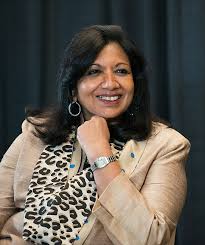
Batein dil se. This is an episode which is probably um a treasure, something that is for the albums and joining me are two beautiful women, Kiran Mazumdar Shaw, Geetanjali Kirloskar, both business women in their own rights, both women who are trailblazers and yet have become such huge friends that business, friendship, life, philosophy all comes together. Thank you so very much for joining me on Batein Dil Se. How's life treating you, Geetu? You are the one um who I see when we met last, you were dealing with tragedy and life after Vikram. Where are you today? And how how do you bond together like this, sitting together? I thought business women didn't even tolerate each other. The boardroom battles came to the drawing room.
To start with your second part of Firstly, thank you, Ravika, for your time and for this dialogue with you, Kiran, and me. We both actually have been greatly looking forward to it. Uh let me start with the second half of your of your question. Uh Kiran and I are very good friends and we've been friends for over three decades. In fact, Vikram was a closer friend of Kiran than she was of me. It was only after Vikram that we bonded with common trauma. And John also was I knew John before I knew Kiran. So, we were friends with each other's spouses before we became very close friends. And it spans three decades. In terms of boardroom battle, we have completely different sectors and businesses. We have different journeys. Kiran is an entrepreneur who has built up a huge biotechnology empire and a brand that is today truly global and international. I have I work with a legacy business in the manufacturing sector, specifically in the automobile manufacturing sector. And mine is more a story of a legacy business that I had to take over and drive a seamless transition across the entire nine or 10 Japanese joint ventures that we have after Vikram's very unexpected, very sudden, and very untimely demise in 2022. So, to that extent, we don't really have a common ground as far as business and boardroom is concerned. I think our relationship starts and ends with sharing common hobbies, sharing moments of friendship where we give each other strength and courage to go ahead. And that's how the friendship has grown. And I must tell you on a lighter note, Kiran and Vikram were so close that that it could have been a little point of envy then because after he passed away a few months later at one or two gatherings, and I even called Kiran and said, 'Kiran, do you know what people ask me? They came to me and said, how are you? 2 minutes later they said, how is Kiran taking it? So, I said, taking what? No, Vikram passed away suddenly. You know, so I So, that's how that's how the relationship is. Yes, Navika, it's 4 years since Vikram suddenly passed away. I think the the trauma and the grief was also about shock because it was very unexpected. Everything was fine and then one morning he was gone. So, I have come a long way in those 4 years. I have to say I've built up strength and resilience. I was just reading the other day and I thought I should talk about it in this chat about this blue You know, I'm exposed to a lot of Japanese ideas, as you know, in the course of my work. So, I was reading about Kintsugi, which is the traditional Japanese art of repairing pottery. So, whenever there is a crack in a beautiful piece of ceramic pottery, they repair it by filling it with gold. So, they don't they don't abandon it. They don't leave it. They They're not ashamed about it. They don't They don't destroy it or they don't you know, sort of leave it out. They actually repair the cracks with gold to enhance its beauty further. And this this gold is really, I think, it is it's powder gold gold, platinum, and silver powder and it's very very beautiful after it's repaired. So, this idea is often used by people in life as a metaphor in life and in leadership where you you don't you are not you don't leave your cracks. You don't let the scars hurt you or harm you. You fill your scars with gold. That way you enhance their beauty and you also enhance their resilience.
And it's such a beautiful thought that you bring out and Kiran is nodding her head. Kiran, you are a Zarina of the biotech field. I mean, Biocon is legendary as as a company. Um How how do women as diverse as you come together? Do do you actually talk like normal people? Because people want to know that these are two powerful women, uh women who have built businesses, run businesses, um you know, legacy business. Yours is an entrepreneurship, um you know, experiment in times when women probably uh were not accepted as entrepreneurs. Where you are today, how do you look back at life?
So, first and foremost, Navecatha, thank you for doing this show and it's means a lot to me because it's with Gitanjali. And you know, Geetu and I have been friends for, like she said, over three decades. And um uh the way I look at it is beneath all this veneer that you're talking about, you know, big business women and you know, travel and all the kind of glitzy life that we lead, we are very ordinary women. We are women who empathize with each other. We have emotions. We connect at that emotional level. And you know, Geetu and I got to really bond because of our personal losses, which happened within a month of each other. Mm. As she very rightly said, Vikram was a very dear friend of mine. In fact, um she is right. Vikram and I used to talk to each other every morning.
Okay. There. Did you see that? But every morning for sure. Are you doing this?
I used to go I used to go on my morning walks and the first thing I would do was call Vikram. And we'd always talk about something or the other. Um never with Geetu. Now I do it with Geetu every morning. But, you know, um I had met Vikram very coincidentally at Dubai Airport. I was on my way to the US, he was on his way back. Who knew that a few a week later he would not be there. And I remember taking a selfie and sending it to Geetu. And that was the day he in fact informed me that Mansi was expecting a second child. And he said, 'Now, don't tell Mansi I told you.' And I said, 'Of course not.' But, he said, 'You know.' And then he was telling me about how he was going to rearrange my wine cellar when he got when I got back. And then suddenly I get this terrible call when I was in New York uh in the midst of my Viatris uh final meeting. And um Geetu gave me this news and that, you know, that suddenly some, you know, he had had this um you know, this cardiac arrest and that he was in hospital and she doesn't know what's going to happen. And um I of course immediately called up my friend Ranjan Pai to know what the status is and I knew it wasn't looking good. So, I had to cancel all my meetings on the spot. I was supposed to go to Boston the next day for an MIT meeting. I just canceled it. I had in fact a meeting even with Vivek Ramaswamy, would you believe it? And I canceled that. And I just rushed back to India. I mean, it was a shock beyond belief for me because I'd just lost John. Although John had not been too well for a year or so. And so, even though I didn't expect him to go to so soon. He I was prepared that he was not going to be there forever. But Vikram, I mean, it was absolutely devastating for me as well. And of course um to lose my mother and then John and then Vikram all within months of each other was something I just could not accept or take because I said, 'What's happening? Why have I lost all my near and dear ones?' And I think at that time I realized what a devastating blow it had taken on Geetu. Because, you know, Vikram was consoling me throughout John's illness. In fact, um both Geetu and Vikram were there by my side throughout the time that John was in hospital. And then to find that Vikram is no more, I think that really got us together. And then I realized that Geetu needed a lot of strength, a lot of, you know, support because I was in some way strong. I was I'd come to terms with the fact that something terrible had happened to me. But I had also come to the terms a year, you know, a few years before it John passed away that John was not going to be the man he I married because he was weak, he was frail, and he was not in good health. And I knew I And my mother had both told me, 'Kiran, you have to make sure that you are strong and that you continue with doing what you're doing.' But when I saw Gee- Geetu, uh I felt that I needed to be by her side. And that's when we bonded. And that's when I realized what she was going through. Um her loss
What How did you see Geetu at that time?
No, I saw Geetu as someone who was in shock, who wasn't in control of herself, who didn't know what was happening to her, who needed someone like me, whom she trusted, because, you know, I was such a close friend of Vikram, that she knew I was a very trusted friend. And so, she relied on me as Vikram's best friend to take her through this terrible time. So, I did help her a lot. I used to call her every Oh, how many times a day? To make sure Yeah, and make to make sure that, you know, she was you know, always going I mean, I was comforting her all the time. And then I called her over. I said, 'Come and spend the weekend with me. You need to be with someone. You need to be with me. And let's just talk about our grief very openly. Let's talk about the good times, the memories, because that's how I'm dealing with John's loss.' And I think slowly we I And then, you know, then I told Geetu. I said, 'Geetu, I have realized that the only way of dealing with grief is to engage yourself with something which is very important. And here, it's your legacy business. For me, it is Biocon. And Biocon has kept me very strong, um, and, you know, has allowed me to deal with my grief, because I'm so busy with addressing so many uh, important issues within Biocon. And you need to do the same for Toyota.'
So, is is work, uh, a great antidote?
It is. The That's the right, uh, word to use for it. Yeah.
I had to, like Kiran rightly said, uh, Navika, it was important for me to transform my grief into resolve. And to have my work as my purpose. And like Kiran rightly said, that my purpose was to carry forward the business, the legacy, the partnerships, the multiple relationships with multiple stakeholders across I had to carry that forward. It wasn't Vikram's journey alone, it was our journey together. Fortunately, in the last 10 years I had started working with him in the family office. I was exposed to our Japanese partners on a business platform, not just a social platform. So, I could step into those shoes. I must say while Mansi and I worked very hard to drive a seamless transition, it was challenging because we were behind Vikram. He was a brilliant person. He was an MIT engineer, very very brilliant, a very loved and trusted over three decades with the Japanese partners and all the stakeholders. And suddenly you're leading from the front. But I think yes, it did help to transform grief into resolve, to find a purpose that of carrying the business forward uh with multiple stakeholders and to grow it, not just carry it forward. Now, after 4 years, we look back and say it wasn't important just to carry it forward, but it was important to build, expand, and grow it into more joint ventures, into more partnerships with the same Japanese partner. And But did they take a woman at the helm of affairs easily? You know, Navika, I've been asked this question and it's extremely interesting and surprising. The Japanese are known to be very male-dominated both in the social sphere and in the business sphere. But I had absolutely no feeling or sense of any bias, even subtle, in that being a woman uh in business with suddenly Japanese. And I was the only woman in almost all our Japanese meetings. Even recently, if I I think if I'm not mistaken, when the Japanese Prime Minister visited Delhi and we had we had lunch meeting and I looked around and I said, 'Here again, I seem to be the only woman.' So, when it comes to the India-Japan platforms, you don't find too many women on either side. So, that was a bit of a challenge, a bit of a self-conscious feeling for me, but I didn't see that bias in them. And I'll tell you why. I think Toyota is not strictly a Japanese company. Now, it's a global It's the world's largest auto company. So, it's more of a multinational than a global company, and I think
But I don't agree with that. I don't agree with that. I think it's about who you are. You know, I think Geetu is sort of not doing justice to herself.
Yeah. Have you noticed that?
Yeah. So, I think she is someone who's very self-assured, someone who speaks with a lot of maturity and wisdom. And I think the Japanese are people who get impressed with people who know what they're talking about, who have a good knowledge of the subject. And Geetu has that. So, I don't think it has got to do with the Japanese being a multinational company, but it's more to do with the fact that Japanese respect any person who is intelligent, forthright, and self-assured. That's what she is.
Yeah, those are values that actually they do recognize in her.
But is it You know, do you both I mean, in your journey journeys, have you felt that boardrooms are a little tilted uh still with a bias against women?
You, of course, are the queen bee now.
No, no, but I've always seen standards. No, no, I've always been the only woman in a room, like Geetu who just mentioned, right from the time I started Biocon. Biocon.
And biotechnology, how many women were there at that time?
And no one. I mean, it I started it, so obviously there was no one. But, even today, I mean, I'm happy that my boards have a lot of women. But, I see that in many, many boards. In fact, I'm very amused that a lot of these business awards that are given, how many women get it? How many women are there? If at all we give awards, it is for the best woman entrepreneur or the best woman business woman. You know, you I In fact, I was the jury of one of the recent awards, and I said to them, 'Listen, my condition is that for every award that we are choosing, I want there to be at least one or two women in the shortlisted candidates.' You know, at least I wanted to make sure that we're not only looking at a bunch of men. And I've seen this throughout my journey. I think things are slowly improving because I'm happy to see that in many startups today you have founders and co-founders and smart young women in these startup companies. But I still believe it's a man's world.
I still believe it's a man's world. I said so recently on a on a fireside chat that unfortunately, the money is still in the hands of men. So, when it's about investing in companies, they invest in men rather than women. So, it's still tough for women. It's still tough for women to break into boardrooms. Um I don't want tokenism because that's not going to help the cause. Uh there are lots of smart women, and I can tell you the women on my board are really strong and very respected. So, I don't think there's a there's a any kind of a debate or a reason to say that there are not enough women who can be on boards. That's absolutely wrong. So, I think we have to do something about it, and all of us who are strong women need to do that.
But tell me something. Uh you both are running enterprises, uh you know, and successful ones. Do you have a light moment, or are you guys always serious? I just want to know.
No. I think it's moments when each other's leg? I do about with our group. Yeah, I think with all her friends. And we're all so part of different groups. So, it's not just Kiran and me. We're individually part of different groups. We're both part of a wonderful group of like-minded industrialists at Bangalore who became very close after COVID and who've been of great strength to both Kiran and me. And when we spend time together, I must admit Navika
So, there there used to be a Bombay club. Now there's a Bangalore club.
No, no, we are part of every club. We are part of many clubs. We have a group in Bombay. We have a group in Bangalore. We even have a group in Delhi.
We have individually together.
Yeah, correct. Absolutely. And these
And we have a lot of fun, by the way. And we have a lot of And we do
Because what are what are your conversations like on that
No, no, let me first tell you what fun we have. We take holidays galore.
Okay, so we take little breaks. Um, you know, I took them to Barcelona once because, you know, I I know Barcelona very well because of John. And we had such a blast, okay? Then we've gone to um Jawai uh
The leopard safari together. We went to Kabini several times.
And we saw the black panther.
And we saw the black panther.
Okay. And who who are all members of these groups that you You you have
What can we do now? We they may not want. In in in the business jargon, they are who's who.
And you pull each other's leg.
Yeah, they they pull I mean, the leg pulling is a lot.
No idea how we pull each other's leg.
Yeah, yeah, a lot. But, you know, I must say, Kiran, we also And that's something I enjoy, honestly. Our evenings together, our holidays, are also characterized by a lot of intellectual conversation. And I think it's that's also fun Because we exchange our experiences and since we're all like-minded industrialists almost from the same scale of business etc. We're able to dialogue and understand and you know, learn a little bit from each other. That helped me a lot. I could discuss some of my work, my challenges in the evening
I thought there was a lot of competition that nobody would give their business secrets away to another. Isn't there Isn't there that kind of competition?
No, if you're a friend and you want advice, I don't think anyone views you as a threat.
Yeah, and I'll tell you the other thing. They're all in very different sectors Navika. That helps. There's biotechnology, ours is automobile manufacturing, somebody's in information technology and services. So it's very different. If perhaps we were on the same platform and if we were competing in the market, yes, a little bit of stress in the relationship would have come in. And I think Kiran will agree with me on this that most of us, at least for me, I don't measure my worth against someone else's journey. It
It's the quality of life that you yourself
I don't think we have our own. We don't. No, because we don't have that attitude.
Yeah, because there's no competition. It's a friendship, right? I mean, all of us are good friends. And it's about empathy. It's about understanding each other. It's about having making time for each other. And it's about really enjoying each other's company. So I don't
Yeah, of course that is part of it.
We accept that somebody else might have done a little better or has a little more experience in a particular area so that the challenges can be shared. So it's it's And I frankly Navika Kiran, while the fun moments are there, but I think what I also really enjoy is the intellectual exchange. I'll be very honest. Because Vikram was brilliant. And living with a brilliant man for 40 years, I sometime I do seek that intellectual conversation, you know, the learning, the ability to share curiosity on different subjects. It's wonderful to sit with Kiran. It's wonderful to sit with that group over a glass of wine. Have We We gossip a lot. I mean, we're women, right? Oh, yeah, yeah, we love gossip.
Women, the men also gossip. The men also gossiping, but when we So, when we
Is your gossip like? About what's happening in the US of A, what's happening in Indian politics?
It's wide ranging. Wide ranging. Yeah, it's about Sabki class.
And it's also sometimes about common, you know, childhood friends that we met, we dialogue, we discuss about it. No, actually we we And there are We enjoy these evenings, like I said Navika, because there's fun. And for me, I think
Yeah, quite frequent. Yeah, but you know, getting everyone's date in a group like this is is harrowing. And sometimes I get very frustrated, because I'll tell you one thing, I think my grief has done is it's tired my nerves out beyond the point. So, it's I just leave it to Kiran. I said if Kiran coordinates, if she organizes, then I'm not in charge.
She's doing the heavy lifting.
She does the heavy lifting and then it and and she has a by her.
May I May I let you in on a secret? May I let you in on a secret? Barcelona and all the other vacations, because you've been organizing, she's been going.
Japan is pending. I just wanted to remind you. Japan is pending and she over a cup of coffee told me that you know, my nerves are frayed.
Because No, no, we all have told her. Yeah, we are absolutely right. We have all told her and threatened her. She has to organize. No, no, everybody I know
Can pull each other's leg. And not now, for the last 4 years. Hold her to it.
Kiran, she kept telling us, 'Oh, for my 60th birthday, I will take you to Japan.'
60th is over. I'm 61 now.
She still has to
I mean, I can still do it, because I'm 61 only in October. But you know, I don't feel like being in charge. So, it's so easy for me. And Kiran is so good at it. She's so good at it. That I the other day she And whenever she slips by mistake, she said the other day, 'You know, for my birthday, let's go here. Let's go to London. We'll stay at home. And we'll have a nice time, you know, we have a lot of common friends. We also have a little work each there, so that can get done.' I immediately jumped at it, and now I'm pursuing it feverishly so that the dialogue doesn't come back to Japan. So, every time we meet, I said, 'You know, Kiran's birthday, we have to travel there.' It's easier, right?
How nice that, you know, birthdays are become these joint uh
So, we even celebrate our anniversaries one day apart. Our wedding anniversary is one day apart, and we were in Barcelona. So, we both celebrated that. We took the rest of the group that came with us, we took them for a lovely dinner, had a great bottle of wine on John and Vikram because they both enjoyed fine things of in life, both. And you know, John, I will give you a memory of his. I first met John when I was in my advertising career, and he was a prospective client, and I was told that we fixed your meeting with the chairman. So, I was all prepared, and I went
Chairman of Madura Coats?
He was chairman of Madura Coats at Bangalore at that point. And it was amazing, you know, I walked into his beautiful, very well-appointed office, colonial furniture, antiques, you know, John loved it all. And he had an amazing collection of art and also antique pieces of furniture. And I was impressed because instead of the usual mug that we got in the best of office, corporate offices, here was a tray with silver service with tea that was, you know, separate milk, separate sugar, John gallantly getting up, pouring, serving it. And then, after the half an hour meeting, he came and left me out to the door. And, you know, he was a He was a thorough gentleman.
So, to that extent, I think, Kiran, both Vikram and John were similar. They liked the fine thing things of life. They enjoyed music, classical music.
So, John came to Bangalore as chairman and managing director of Madura Coats. We were both single. We both used to golf together. We used to I love art just as John loves art. And so we I started introducing him to the art world in Bangalore. Then we you know, he wanted to travel around India a bit. So I went to Rajasthan with him with another friend. And slowly, you know, I mean these two he was a bachelor, I was single. And you know, we used to every time he he knew that Bangalore was a party town. So he would host maybe one or two parties a year. And he would have these large parties, but he didn't know everyone. So he would ask me to co-host it with him saying, you know, let's get the guest list. Please help me invite everyone. Let's tell me how to or you know, organize this dinner. So I think and we used to meet quite often, you know, a small group of us who befriended John.
Oh, in the '90s. He came to he came to Bangalore in 1991. And he left in 1997. So he was here for 6 years. And we got married in 1998.
Okay, so not while he was in Bangalore.
Fact that was the joke because we were such good friends and we used to meet every week for dinner. Either both of us or with friends. And you know, I used to confide in him a lot because I was at that point in time dealing with Unilever as a large conglomerate because they were my partners. And I you know, John being a part of a big international conglomerate would tell me how to deal with in a conglomerate. And I had a lot of little little little issues that I would discuss with him saying, how do you think I should deal with them in this matter, that matter. He knew nothing about Biotec. So Um, and he was very intrigued with what I was doing. He was very curious about what I was doing. We became very good friends. I mean, you can say romantically involved, but not serious, if you know what I mean. And before we knew it, suddenly
Situationship? in today's world.
World, yeah, maybe. What I I mean, we were a number. Let's put it that way. That was that's our times. Yeah, so wherever we went, we were always invited together. So, to that extent.
And but we never thought of even getting married, you know? And one fine morning, I remember John calling me up and said, 'I've got bad news.' I said, 'What?' He said, 'I've just been told that I'm transferred to Amsterdam.' And um, I said, 'Oh my god. And And when are you leaving?' He said, 'In 2 weeks.' I said, 'That soon?' He said, 'Yeah, maybe I'll stretch it to 3 weeks, but no more.' Um, but I wasn't expecting this. So, I said, 'Oh my god.' That's all I said, you know? And then, of course, we had farewell parties for John, and I had a big farewell parties for John. In fact, I had a very funny farewell party for John. It was called Tambrams and Tarts. You know why? Because Madura court so Tambrams, and Tarts because he was going to Amsterdam. So, everyone had to dress up like either a Tart or a Tambram. And it was the funniest party we had, farewell party. Anyway, so John goes to Amsterdam, and suddenly I realized that we are missing each other, and most unlike John. John was very unromantic in many ways because he's he was not the usual romantic guy who would call you every night, or nothing of the sort.
Ah, that's what I thought.
So, um, suddenly I would get a call every day from John. And those were not the times of mobile phones, right? It was a landline call. And I said, 'Hey, this guy cares about me. Why is he calling me every day?' Um and he would tell me and he would just sort of have a casual conversations about, you know, what's happening here, did you play golf, you know, those sort of things. Or what are you doing today or what's what's on for this weekend. And then uh I told John that in January I was going to have a meeting with with the Unilever company, which was fortunately based in the Netherlands. It was based in a place called Naarden, close to Amsterdam. So, John said, 'Hey, why don't you come a few days earlier, spend the weekend with me, and then go and attend your meeting?' So, I said, 'Yeah, that's a good idea.' So, I actually went on a Saturday morning, I landed in Amsterdam. And John had of course I stayed with John in his apartment. Again, as she said, he was so tasteful in everything he did that he had this elegant apartment and beautifully would beautifully done up, great art, everything. And John said, 'Oh, you know, I've I've I've planned have a nap and then I've planned to uh go down the the canals in a in a little boat. And then we'll go and see the Van Gogh Museum because we're both such art aficionados. And then in the evening I booked a very nice restaurant for dinner.' So, I said, 'Great.' So, we did all of that and of course at dinner time John said to me, he said, 'You know, we were talking about all the things in Bangalore.' And he said, 'You know, I wonder why we never thought of getting married.'
Just like that. And I said, 'Yeah, I wonder why.' 'Right, it's settled. We're getting married.'
Typical like John, you know. So, I just looked at him. And then before I could say anything he told that waiter, 'We've just decided to get married. Get us your best bottle of champagne.' That's how he proposed.
So, that was John and and John and I had a wonderful, wonderful time together. You know, we had um a 25-year journey together of wedded bliss, I would say. Because he and I just enjoyed very similar things in life. You know, he was such a man of the world. I mean, he spoke fluent Spanish. He was the most gregarious person. He was, you know, Geetu will tell you that he was the life of a party. He you know, he he would
And very chivalrous. I think we women often remember him taking out his
He always would kiss everyone's hand and all these women used to feel so charmed.
It's nice to have that sometimes.
And he was very he was a thorough gentleman. He loved to doing things very well and I continue with that tradition even today in my home. Because, you know, my home reflects everything of John. And um it was a wonderful time. I mean, we traveled the world together. We did business together. I mean, he was the financial support for me because he was the financial brain and he used to always jokingly say, I'm not joking, sometimes seriously say, um 'At Biocon, we are scientifically aggressive but financially frugal.'
That was his Scottish frugality.
But he would always encourage me to be bold, to be a risk-taker. Yeah, scientifically, if it makes sense, go for it. And I remember even at the end when we were doing the Viatris transaction and he was not in good health. And I asked John, I said, 'What do you think?' 'I think we should go for it.' He said, 'Go for it, but make sure you can afford it.'
Uh, the financial. The buyout, yeah.
And so, you know, he really understood why I was doing it. And he was all for it.
Beautiful. And, Geetu, you're totally different. Uh, you're a romantic.
I'm a romantic, but Vikram was a romantic. We had a purely arranged marriage. I was very young, and we courted for a year. We met at... We were introduced at a party because obviously...
You were a daughter of an IAS.
Yes. So, completely different backgrounds, Navika. I came from a family of...
Yeah, now you know that that's what I really...
It's so beautiful to, uh, sort of see from this side beautiful relationships that, uh, you know, you remember each and every aspect of that, uh, because now the grief... Probably, of course, it can never be completely dealt with, but, uh, you know, you put it in a corner of your heart or your mind, wherever it is. And then, remember the beautiful moments.
Navika, what happens is if you've had a happy moment, if you've had a happy past, I think your past bars your present and your future to a large extent. I think that happens with both of us because we've had very, very happy relationships, very fulfilling marriages, uh, a great partnership. Like Kiran said, John supported her. Here, it was a little role reversal because Vikram was leading, and I was supporting him. But, he always enabled me to think independently. Actually, I was very young when I married. So, he was very progressive. And it helped me to... I am the person I am today, and I'm able to take my life forward because of the progressive nature of the man I lived with, you know. He encouraged me. He enabled me, he wanted me to have my career. Even when we were working together, I had an independent voice. Though I was following him because he was leading, but...
Was an arranged marriage and yet you came from different backgrounds.
Okay, I'll tell you. My grandfather was an Oxford graduate and he was very close to Vikram's grandfather, the late S.L. Kirloskar. Because I think Vikram's grandfather in the business community at that point didn't find many people who were, you know, educated. Vikram's grandfather was from MIT, one of the first Indians to graduate as an engineer. My grandfather had done literature and psychology from Oxford. So, I think they connected at a very intellectual level. They had similar hobbies and interests. They had a similar value system. So, they'd often sit and enjoy a whiskey together and then I remember meeting my grandfather-in-law when I was much younger. And that is where the common thread started. And I think my grandfather approached Vikram's grandfather and said, you know, let the kids meet when Vikram comes back and, you know, we'd be very happy if we could have a relationship through marriage.
And I was, you know, at that point when Vikram came back, I was very young. So, both of us... He was also young. He just graduated a year or two after MIT and we were introduced at a party because neither of us was very keen to meet formally. We were introduced at a party and we went around for a year and Vikram proposed very, very romantic. But those days, you know, it wasn't so much about going outstation and proposing. So, he proposed at a restaurant, his style, you know, with a wonderful glass of wine. I was not into wine. I was too young. I didn't really understand wine. But somehow when he served it and the manner in which he served it, I... That was my first glass of wine. It was a Chablis. I still remember, very crisp, dry Chablis followed by a very good year burgundy and he explained that to me. And I was wowed, you know? It was wonderful. I was feet... I was actually swept off.
We both went back home and he told his parents and his mother called up my mother and said I'm really happy because he was very... he was not comfortable meeting Gitanjali even at the party and my mother said well my daughter was also a little apprehensive because she wants to have a career. You know, we come from a family of professionals, bureaucrats, diplomats, private lawyers. So we believe in education. So she'd like to complete her graduation and I was married into a very progressive family now because I remember.
In fact, I loved acting and when I wanted to act in a film my father said no but immediately after I got married I met Girish Karnad and he said would you like to act? I have a very interesting character role in a film called Cheluvi where I'm introducing Sonali Kulkarni and we're going to shoot in Kerala for 45 days. So will you be able to come out of your family life? And then I spoke to Vikram he said you must do it. So like Kiran says he was very indulgent and pampering but he didn't... it wasn't about crippling me, you know? It was about... and it wasn't about allowing me to be independent because you know, you don't take permission in that sense. It's a relationship of equals but he enabled me and he was very encouraging and I needed that encouragement because if he had not encouraged me I wouldn't have stepped out into it. I really needed him. I needed to lean on him. I needed him to say you must do it. You'll be good at it and I went and did and after I acted naturally it came out in the media.
And Vikram's family, the one thing they were very media shy. They were reticent about being out there in the public domain and being covered. I was newly married. It was a big joint family, however progressive, you still didn't want to see all the, you know, men or women being... it's not about men or women. They weren't very comfortable with media interface on a regular routine basis. So I was very nervous when I went to have dinner with his grandfather because just that morning it had come in all regional Marathi papers and more because Kirloskar's daughter-in-law. And it was wonderful because when I went, my grandfather-in-law had kept the cutting and all the family was sitting and he said, 'Wonderful. You know, you seem to have done very well in movies. Now we need to take your autograph.' He was very happy. And when he said that and when the rest of the family saw, you know, it was those days when the head of the family leads the moment. When they saw that he was encouraging, then they also...
Feeling very... They were enabling.
They were... The only thing he asked me, he said, 'I hope you got paid for it.' You know, because he said when you put in effort, that's what he believed. He said, 'You put in effort, you contribute value, you believe you have contributed value, you must get your remuneration for it.' So, I told him that this is my first film. Next one I'll make sure I'm paid for it. He said, 'Do a proper contract and a proper deal.' And that sealed it. But generally speaking, Kirloskar's were a very progressive family.
I've studied in Maharashtra.
Yes, Maharashtrians are actually very...
Maharashtrians, you know,
Uh, you know, their cultural awareness and cultural pursuits, um, women being treated as equals is an important part of that.
And even if it's a woman running a home, she has a voice. She's not doing it very demurely. Also, I then completed my graduation in commerce, economics and accounting and I did a course in computer data programming at London. And again, very encouraging, very enabling. I wouldn't... You know, Navika, there's no point in my saying that I could have done it anyway because I'm essentially not a very, you know, in that sense, a very bold person. I'm not a rebel. So, I wouldn't have done it if I had not found...
Understand what you're saying.
Just follow the conventions.
Yeah, I did. I did at least. So, I could finish. Yeah, that's it. So, there, you know, you are a trailblazer.
No, I was totally unconventional.
From the beginning. Brewmaster.
You were a brewmaster, the only woman brewmaster at that time. I mean, how did that happen? What was that phase?
So, that was thanks to my father, my late father. He was a brewmaster. He used to be the managing director of United Breweries. And, you know, I finished my bachelor BSC zoology honors. And then, I came to the crossroads saying, 'What next?' And I went to my dad and I said, 'You know, I've got admission in a PhD program in London for genetics, but I'm not so sure I want to do that. I want to actually see if I can do something in applied science and start a career based on science. So, what do you think I should do?' That's how I went to my dad. And my dad said, 'Why don't you do brewing?' So, I said, 'Are you nuts? I'm a girl. I mean, why should... It's not the right profession for a woman.' And he's the one who said to me, 'Why are you bringing gender into this?' He said, 'Do you know what is brewing? Brewing is fermentation science. It is microbiology. It is biotechnology. And I know you keep talking about biotechnology. Brewing is the oldest biotechnology known to man. Why wouldn't you do it?' He's the one that convinced me to go to Australia and pursue brewing. And he somehow gave me that sudden new idea that, 'Yeah, maybe he's right. It's unconventional, but maybe it's a good idea.' That's how I went to Australia and I, you know, topped my class in Australia as a master brewer.
In fact, a lot of my colleagues in Australia said to me, 'Why are you going back to India?' In fact, all of us have been offered jobs by Australian breweries. Why aren't you accepting one of them? I said, 'No, you know, I've thought about it because in Australia, I'll have to start on the lowest rung in a brewery, but if I go back to India, I'll be one of the few. And I'm sure I'll get a pretty good job right almost at the top. So, that was my aspiration and ambition. So, I said, 'No, I'll get a much higher role to play in a brewery than in Australia. So, that's why I want to go back.'
And actually, when I came back to India, my father met me at the airport and said, 'Hey, you know something? There's a job waiting for you.' And I said, 'Wow, what's that?' He said, 'You know, we've just won a contract to commission a new brewery in Calcutta. And I told them that my daughter has to be my assistant, and they agreed.' So, I actually went with my father to Calcutta, and I commissioned a brewery called Jupiter Breweries. It was on Diamond Harbor Road. I still remember. And I worked night and day. You know, I used to go at all odd hours of the day and night to commission that brewery. I did so much. I was in overalls. I would, you know, go with the spanner. I could fix pipes. I could with wrenches and things like that, okay? I did all of that. I even brewed the first beer. And the owners of that brewery were very happy with the beer. I remember it was called the Royal Bengal Lager or something, and they loved it. And then I said to them, 'So, I hope I've got the job.' Because that was my ulterior motive, right? And they kept their heads down, and they said, 'You know, I'm really sorry, but we appointed someone else.' That someone else was a man. And I said, 'Why?' So, I said, 'I've commissioned your brewery. You like the beer.' They said, 'No, no, but this is not a woman's job.' They said, 'You know, much as we admire what you've done and thank you for what you've done.' This is not an environment for a woman. I said, 'Why? I'm quite happy with it. I'm quite okay with it.' My father also tried to appeal on my behalf. But, they had made up their minds. And then, of course, after that, brewery after brewery after brewery said no and they gave me the same reasons. So, that was my introduction.
I'm not going to do this anymore and I'm going to create something.
No, I actually had got a job abroad in Scotland, in fact. Interestingly, full circle. But, I was actually on my way to Scotland to take up a job when I had this accidental encounter with an Irish biotech entrepreneur who had tracked me down. Thankfully, because of my internship that I had done at an Australian brewery and the brewer under whom I had done the internship told the founder of Biocon in Ireland, 'You should go and meet Kiran.' Because he wanted to start a company in India. In India. And that's how he tracked me down and made this proposal. And the first thing was no, not me. I'm not the right partner. I said, 'I have no business background. I have nothing to invest in a business. And I've just been told that this country is not a good country for women. So, not me.' But, then he convinced me and that's how I started Biocon.
Do you think women have come a long way since then?
A very long way. Because when I started Biocon in 1978, women were few and far between. And today, if you look at women and how they've excelled in every field. Did we ever have a women's cricket team? No. Did we have a football team? Did we have women as rocket scientists, as biotechnologists, as AIs, you know, software engineers? No. But if you see the percentage of total employment, it's still abysmal. I would say as a percentage, it is small, but you know, let me say we have come a long way. Yes, we have. Yeah, from zero to some 24% here. But I think what is interesting is that every woman who has excelled in every one of these fields is being called out, right? And they are becoming role models for more women to follow them. So, I feel yes, it's a slow process. It should have been a faster process. But at least we should be thankful for these bold women who have taken those steps to excel in these very unconventional fields.
But, Geetanjali, you have a daughter as well. And how do you see the generation that you came from to her? She's now a young mother, a professional on the boards of companies, married into the Tata family. What is the world view for women that you share with?
You know, Navika, Mansi has been working with our companies with Toyota Kirloskar immediately after her graduation because Vikram wanted her to understand the shop floor culture. And very importantly, the values that drive the partnership and the relationship because that's very, very important in the context of our joint venture businesses. All our businesses are joint ventures. And she did that. But after that, she was also very clear on one thing. She said, 'I want to be a mother first.' So, this is something I did find in her. Maybe it's a characteristic of her generation. I think they like to balance their roles. Work-life... They believe in the work-life balance. They are very immersive mothers. I think she's a much more immersive parent than I was. I always had a career. From advertising it moved to working in the family company with Vikram with the joint venture partners. I independently set up one or two joint ventures. So that helped because later they'd already seen me in the business sphere. But I'm not sure if I could achieve the balance. Because even though it was my older generation, I should have been better at that balance. I found that sometimes I let work take over and I perhaps missed out on parenting moments that should not have been missed out on. I was too career-focused, I feel. But Mansi, even though she's the next generation, she's very, very clear on her work-life balance. She's very clear that alongside her career she will always prioritize and focus on being a very immersive parent and being part of their journey every moment. There are little things that she just wouldn't miss out on. So that's one thing that I've noticed in her as being the next generation.
Second, I think there's greater clarity of thought than I had at her age. They're very, very focused. They know what they want. They know how to get there. Most of them, the ones that I've been engaged with. I mean, I meet a lot of these startup kids in Bangalore. I spent many evenings with them because it's a learning for me. So I meet them, I try and understand what makes them work. After all, we're in the business of manufacturing and marketing cars. It's a consumer product. So it's good to know how the young generation thinks. And I spend time with them and the ones I meet, perhaps I meet the more focused ones, but I find them more focused than the focused kids in my generation. You know, there is a sort of opening of the mind. They're ready to accept new ways of doing business, new ways of living. They look at marital relationships differently. But they're quite committed to parenting. I find a lot of these young girls I meet are pregnant and they're expecting and they're reading up a lot on it. They're very careful about their diet. They've got plans on how they're going to bring up the kids already. And one thing, Navika, we were a lot more lenient with our kids. These children, especially Mansi and a lot of my friends tell me that their daughters and sons are like that. They're quite strict about following a schedule, you know, they must sleep in time. There's literally like sometimes an Excel sheet. Isn't it? No sweet till they're 5 years old, no salt. Kiran knows because Kiran is very close to her grand niece and nephew. And we often exchange... grandma, that's another platform we now connect on. We speak about grandparenting. We are single grandmothers, don't forget. In her case, grand niece, you're in the club. Grand nephew, grand niece and no. So there is that difference. There's greater clarity, there's greater focus, there's a greater need to be a more immersive parent and the work-life balance certainly they are very, very keen to ensure that they have a work-life balance.
Yeah, and you are in the process of grooming your niece to take over, Claire. What do you see in this generation which probably as Geetu says we didn't have in our generation? What is it that you see different? What are the advantages? I mean, of course they have a lot more exposure than we did at our times. Internet has collapsed the world in terms of distance. But other than that?
No, in my niece's case, of course, when I look at her, obviously I see a much more augmented form of me. Because you know, she's so highly qualified. I'm not so highly qualified compared to her. She's even proved herself to be a great entrepreneur. You know, she has a family. I didn't have to deal with a family when I was building Biocon. And, you know, she's like Geetu said, she and her husband both are very good parents.
They're very... both the parents are involved.
And they are very involved in ensuring that they spend a lot of time with the kids. I mean, they love hiking and biking and, you know, in fact, I feel that Claire's husband is a very good father. And because he knows Claire needs a lot of support, he provides that support. But I think Claire is a very smart woman. She's proved herself. And I'm just so happy that I have someone like her to hand over the baton to.
A lot of people, a lot of businesses keep saying that India is difficult to do business in. Many of them invest abroad rather than in India. How do you look at that space?
So, I certainly believe that we need to improve ease of doing business. It is very complicated. The kind of hoops you have to go through to start any business to begin with. The kind of compliances that you have to deal with in any business is onerous. I think some of the rules and regulations of serving on boards or working in companies and leadership teams, I think we have to re-look at some of this. You have to decriminalize a lot of these things. So, I think it is tough to, you know, really serve on a board or work in a company in India or start a company. And I think we cannot delude ourselves into feeling that oh, we've improved a lot over the last 10 years, but I think more can be done. So, that's a fact. It is very tough to run a business in India. But I still believe that India is a new land of opportunities, okay? If you thought US was the land of opportunity, I think India provides that land of opportunities because I am very optimistic that the kind of technological advancements we are making, of course, in digital technology, in AI, in space tech, in robotics, and of course, in biotech. I believe we have a great talent pool. The real challenge we have is to create the enabling ecosystem and the right ecosystem. I still believe that in our field of biotech and life sciences, we haven't created the investment cycle required to attract more venture capital. Because venture capital needs access to capital markets, and we're not providing them that access. Because that exit is required if they are going to seriously invest in startups. So, startups are getting a lot of support from the government and from angel investors, but they get stunted because there's not enough follow-on venture capital. So, I think a lot has to be done. But having said that, I think today for the first time I'm seeing that the government is very open to ideas that can take things forward.
The due importance to innovation.
Yeah. I'm really excited with that. I mean, the government has done its bit. It has walked the talk in terms of the innovation grants, the research incentives, and creating the national, you know, the ANRF. So, all that is very, very positive. And I think when I talk to the policy makers and to the people within the government, ministers, they are very receptive to a lot of the suggestions we make. Some of it has already been implemented, others are in process, but it gives me a lot of hope.
You, Gitanjali, on the other hand, manage joint ventures and you have been managing them beautifully at a time when joint ventures really don't survive in India. How do you do that? What is that extra bit that it takes to make it survive the way the Toyota Kirloskar bonding has gone on?
I will share this response in a slightly lengthier manner. Vikram was credited with bringing Toyota to India as we know. In 1995, our very first joint venture was not for automobiles with the Toyota Group, but it was for textile machinery in 1995, specifically the manufacturing of ring spinning machines and components. Then in 1997 came the car company, Toyota Kirloskar Motor passenger vehicles. After that, another five to six joint ventures with the same group, we grew transmissions and e-drives. Aisin joined the partnership at that point. Then with Denso, air conditioning systems. We even have a joint venture with Toyota Industries for manufacturing engines right here in Bangalore, including hybrid engines. We have another joint venture about eight years back with Toyota Industries for material handling equipment and forklifts. We even have a joint venture with the Toyota Group, with Toyota Tsusho Corporation for insurance brokerage. So the partnership and the joint ventures grew not just in the automobile and auto sector, but they grew even beyond that to other businesses that the Toyota Group had. In fact, we even set up the first India-Japan hospital in Bangalore in collaboration with Toyota Tsusho Corporation and Secom in Japan. And I had invite and that was my project with the Japanese. Both that and the insurance business because by then I joined the family business. I had left my advertising career 10-15 years back, which was just as good. And I remember inviting Kiran to do a walk through. She was the first guest, the chief guest visitor that we invited to the hospital and we wanted to have a critique view because she did come from the domain of biotechnology. So all these joint ventures about seven or eight. Now, not only did the partnership grow and sustain over three decades with Vikram, but after the crisis and after this untimely, unexpected demise and after Mansi and I took over, driving a seamless transition, we have announced more investments in manufacturing, expanding our manufacturing facility and signed up two new joint ventures in the retail space with the same Japanese group.
So how did that happen? Well, how did the joint ventures firstly come about and what makes them sustained? This I will answer in brief. I think when Vikram approached Toyota and when he met Toyota Industries and started with the textile machinery JV, at that point, Navika, Toyota was and still is the world's largest automobile company. Kirloskar Group was India's largest manufacturing company. So there was a huge difference in scale. They were one was huge and one was big in India. They were manufacturing cars, so they were in the consumer business to that extent. Kirloskar's were manufacturing diesel engines, pump pumping sets, gensets with projects all over the world. So we knew how it was to work with international partners and stakeholders and customers beyond your country. I think what the synergy was, one, both were manufacturing groups. Both had a very strong shop floor culture and I think that is key to this partnership. That really was the beginning of the relationship, the reason the two groups came together. Very strong shop floor culture. From there, Vikram further built it up with the Japanese. The Toyota production systems, as we learned, are characterized, they're based on values, based on values of trust and respect. And we are part of a supply chain. So, translating it into simple business practice is very simple. The company trusts and respects the supplier that he will deliver to spec, to the high quality standards, at the price that is committed, within time. The supplier trusts the company that they will accept his product as committed and pay him on time. And there's another very interesting idea of respect when I say on the shop floor culture, which was common between Kirloskar and Toyota. Every worker is authorized to stop work on the production line if he finds a defect, so that the defect doesn't go to the next step. He's empowered. And it is these values that were very, very similar to the shop floor culture and values of Kirloskar. And those were manifested, embodied, and carried forward by Vikram. There are many other values.
And also, traditionally, I think...
Both are legacy brands, also. Legacy brands and not frequent changes. It's like a commitment is a commitment.
Absolutely. There's a traditional...
Yes, that is very important.
Really base a lot on trust. Yeah. So, Mansi told me after Vikram passed away, she said, 'While both of us have worked with them, we've not worked with them without Papa.' So, she said, 'What is very important is for us to continue to invest in building that trust.' And that trust is across, I mean, it's built into the ecosystem and culture of the company. And that is why it was so important for me every time I said that I must carry forward the business on Vikram's values and in his manner because he had managed that trust very well.
You talk about trust and both Biocon and your company Toyota Kirloskar bring that trust, but not many Indian companies in their product are creating that value of trust with the consumer or, you know, for exports to other countries and all. Where do you think we are going wrong in that model?
So, I think I do believe that a large number of Indian companies should be trusted because they are making very good products. But, it depends what you want to amplify as your message to the world. If it's only about expanding your business and becoming bigger and bigger and it's about the market cap of your company and how you're very successful and, you know, I find that a lot of companies get very carried away with building that brand of, um, greatness through wealth creation or personal wealth creation. You know, I have never really believed much in being the richest woman in India or the most powerful woman in India. I mean, it's a nice acknowledgement, but it's not important to me to that extent. You know what I mean? For me, it is about value creation, not even wealth creation. It's about value creation. I've always believed that what Biocon needs to be is a value-led company creating a lot of value for the country and for shareholders. That's the way I portray my business. And if you want to create value, it's about credibility. It's about really building a strong brand of quality and respect and trust. That's what it's about. And that's why whenever anything is made from Biocon, they know it's reliable, it's trustworthy, it's high quality. And that's the way I built the company. Not everybody has built the company that way. They want to take shortcuts. They want to, you know, make sure that they are ahead all the time by hook or by crook. If that's your way of building your company, then you will cut corners. You will compromise. Not all companies do that, but some of them do get into trouble.
And that's how probably we get a bad name because...
We get a bad name because... I've realized one thing. You do things well and you do things in a very compliant way, it's boring. Nobody talks about you. But you make one mistake, everybody will focus on that.
And we've experienced that.
I've experienced that, okay? I lead my life with such high integrity. And I still remember that when I was on the board of Infosys, I had decided that from a good governance point of view, I should not have shares in the company that I serve. I should not buy shares and trade shares on the company's board which I serve. So, I said to my finance manager, I said, 'Oh, who manages my personal money?' I said, 'You know, I have a small shareholding of Infosys. Just make sure you sell it so that I don't have any problem of trading and this and that.' Small amount. So, he said, 'Fine.' And without checking with me, he went and ordered the trader to sell those shares. Now, he should have checked with me about, you know, is this the close period, open period, all that. He didn't check. And he went and sold some, I think it was about 2 lakh worth of shares or something, okay? And immediately I realized what he had done and I reported it to the... first to the board and then to SEBI saying I've done the wrong thing. Because I sold without taking permission. It's not about closed or open. It's about taking permission from the company to sell. I said I didn't follow due process. I violated, I've not been compliant. And whatever you need to do, do it. So, as per the company law, they had to penalize me. I had to pay 1.5 times the amount I traded. So, I had to pay like 3.5 lakhs or whatever. Okay? So, I had to pay that amount as a fine. So, I didn't make any money. In fact, I sold the shares also at a loss. It wasn't like it was sold at a profit. So, everything clearly indicated that it was unintentional. But do you think I got away with it? Kiran Mazumdar. See, even she does these things. Insider trading. She has sold, tried to sell these shares. Oh my god, even if today you do a Google and search for anything that Kiran Mazumdar has done, this thing will pop up. Even though I settled everything, I paid my dues, I didn't have any shares left. But this is what happens, right? When you have an impeccable...
But that comes with being under the...
What it's about. So, your reputation has to be guarded...
That's the wealth you've created.