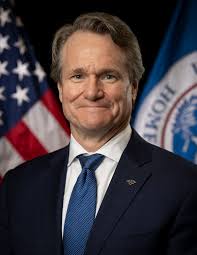
I want to start just because you did make a little bit of news just moments ago, speaking at this conference, saying that you expect trading to be flat for this current quarter. And I wonder just what has changed in the environment, because we obviously saw just such a big second quarter in this high watermark. But what has sort of changed in the overall trading landscape?
So I think to keep a perspective, if we end up with a quarter what we just said flat, it'll be one of the best three quarters that we've ever had in the trading history of the company. So but what happened to change? So last year's second quarter was Liberation Day, this year, second quarter compared. That was up a lot in trading and investment banking, things like that. Last year, third quarter was a recovery quarter from Liberation Day quarter and tariffs coming in. I know it's hard to remember that far away, but all of us are running around saying, oh my gosh, you know, economy's going to stop cold. Third quarter, oh, it got understandable. Each year everything kicked back in. So now you're comparing that quarter with this year's third quarter. This year, the eye trade came in. And if you guys report about Korea and the leverage and all that stuff, all of us, a lot of us come out of the system because people brought the risk down. And when you put that together, just the sheer volume activities now, equities is up more and fixed income is bouncing around a little bit down. And that adds up to flattish. And but the team and Dennis and Sophie and then Jeremy's leadership, the team is doing a great job. It's just sometimes the market puts doing things. And that's one of these times. Now the pipeline investment bank is full. The activity level is strong, but with rates moving up, you know, 100 basis points over a short period of time, people pause a little bit and, you know, leverage coming out of the system.
Do you think that that pause and a more, again, relatively flat environment extends to the end of the year as well into Q4?
I think as soon as we get some stability around the rate structure, I think they got the Fed meeting this week and sort of what people get a common view of that, then the rates will settle at some point, and I think that'll help some of the trading activity. We've got a lot of pipeline IPOs, secondary offerings, things coming on that we know we'll go through. But on a debt financing side, which is a big part of the activity, the issue is that you got to have a rate structure that's not bouncing around so people can feel comfortable they can commit the issue into it. An issue a week later, a few days later. So it's good that the M&A activity is strong, the conversations are strong. And where you have flattish, you know, it's 5 billion plus revenue. It's good to know the West Village revenue will be up 10 to 15%. So you're trying to say to people, yeah, we're 60% core net interest income. That's fine. It's doing everything we thought we'd do. We are managing expenses while the credit quality of firms, good consumers are spending it, just that the trading activity was such explosive in the second quarter. Of course when it mitigates, it feels a little bit strange, but then it'll get back and grow from here.
It's maybe a good problem to have, Brian, when you set the high watermark that high that you can't get back there. So fair to say ramps back up fourth quarter?
That's kind of what we, yeah, we'd expect. We expected the activity will settle in. And you got the summer, summer. And we lose a lot of activity in August anyway. But and that's not, it's always traditional second or third quarter come down. It's a comparison last year that's kind of good.
So part of what we saw in the second quarter of this trading group, a lot was around the eye trade and situational awareness. And I wonder how you've rethought things. Obviously, Bank of America acting as a prime brokerage for situational awareness. Has anything changed post that whole blow up?
We always look back at everything and without getting any clients. But you should assume that we have good first manager practices then and now. We've made a lot of money, so we made money every day. This thing, the team does a very good thing, but that doesn't mean it won't change the environment pretty quickly when the world changes around it.
I mean, the world is changing around us every day, Brian, and just sort of on a bigger scale, the concerns around AI have reached a fever pitch. I mean, you've not been shy about expressing your own concerns. I know you were on Bloomberg in July saying, I'm worried about, you know, structurally the impact it could have. Now we're talking about humanity itself. Brian, as a corporate leader, as someone who is helping to implement AI in both your company and fund the trade more broadly, are you worried about the path that we're headed down right now?
Well, last week I was on one of your competitors' show, and it asked me the questions today. Slow down. And I said, I think they should slow down. But, you know, I'm not the person who runs these companies. They've now said they should slow down. So I think that's interesting. You basically had the analogy I said to somebody we were talking to some of the day was you have the NASCAR driver saying, please slow down the cars. And the question is, who's going to decide how you slow them down? Should it be the government, you know, the governing body, the Congress, in this case, the administration, should it be private sector, say, wait a second, you've got to slow this down, because if you sell a product that has its impacts, we can't use it. Or whether it's society writ large. So but the good news is, everybody sees that the pace of this change has to be absorbed. And I think that's what you heard from the leaders that are just unbelievable companies. Unbelievable. At this said, the pace has to slow down, and that we have to make sure that we don't put an agent out there that can act on its own. That's far different than using AI in a controlled environment. What you say when you put it, I am a completely autonomous agent out there. That's the big concern. Can it cause problems in Hackett? Yeah, that's sort of the questions of those and things like that. Or could it cause questions by ganging up with other people? That's what you've been reading about in the papers. So I think they're wise. They're saying, hey, we have a great product here. Let's not come up by having it do some things that cause an overregulation.
I wonder, though, how you see your own role in this, and your peers, because you might not be building the things, but you're helping finance build the AI ecosystem. So does the financial services industry have a role here to make sure this is developed in an ethical way?
Well, you've got the other thing is we're a major user of it. So if there's going to be a revenue stream, these companies are going to come from companies like ours. So we deployed $400 million plus in AI capabilities this year. We're going to deploy more than that next year. It works. Erica, we developed ten years ago. So we believe in the power of digital manipulation of data and information and process. We believe it to our core. And that's not a question. The question is, we believe as a company we have to give the right answer. If you went into Erica and used it and we gave you the wrong answer, not a great client experience. So we are careful that we deploy it with the control, the people in the loop and things like that. That is a responsibility we have as a user to make sure the people are giving us products we can use. As a finance, we have to worry about what's liability. So you hear a lot of talk about product liability from different types of people saying, oh, the product liability that might be incurred. But we have to think about that as a lender in the market. I have to think about that as a funder. So those are the issues. That's not new issues. Those are being raised as we speak, but just in the maturity cycle, like everything that goes so fast now that we have to think that through and, you know, product liability around products from cars and things took years to develop. So the question is how do you do it? And on the other hand, we have a competitive race between us and other parts of the world. We're not on our own. So that adds a complexity. But yes, we as a bank have to help think this through. And we work with these companies a lot of different ways in the, what it can do for hacking, cybersecurity. We work on them in terms of applying and how it works, and our job is just to bring our perspective and help them think about it, along with governments and others, to get to the point about risk.