Back
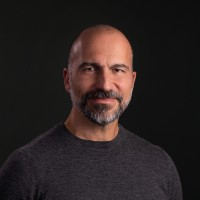
Dara Khosrowshahi
Chief Executive Officer & Director, Uber Technologies Inc

Corner Office Conversation: Dara Khosrowshahi—India To Be Uber’s No. 1 Market

🎥 May 18, 2026 📺 The Economic Times Podcasts ⏱ 26m 👁 61 views
Uber CEO Dara Khosrowshahi says India could become Uber’s largest market globally over the next decade and on whether he is open to a partnership with Travis Kalanick. In this conversation with ET’s editor, ETtech.com (http://ettech.com) , editor-startups, emerging business, new economy Samidha Sharma and Pranav Mukul, he explains Uber’s India strategy across AI, EVs, bike taxis, logistics, and autonomous driving. He discusses the company’s new partnership with the Adani Group, why India’s engineering talent is central to Uber’s AI stack, and how the company sees itself evolving into a broader...
Watch on YouTube

About Dara Khosrowshahi

In July 2026, Khosrowshahi announced Uber's $14.8 billion acquisition of Delivery Hero, describing the deal as "compelling value" that would expand Uber's delivery operations into nearly 50 new markets and bring its total delivery footprint to 99 markets. He stated that the company expects over $1 billion in synergies and that the effective price paid for the assets is eight times EBITDA. Khosrowshahi said that Uber's capital allocation strategy would prioritize organic growth, investment in autonomous technology, and stock buybacks, and that the company would remain "opportunistic" regarding future acquisitions. Khosrowshahi has frequently discussed the future of autonomous transportation, stating that robotaxis are "coming" and that within five to ten years human and robot drivers will share the roads. He described the rise of physical AI, autonomous vehicles, and drones as "another trillion dollar marketplace" that will change how society operates. Khosrowshahi also noted that Uber's AI budget was exhausted within a quarter, forcing the company to meter headcount increases as engineers become more efficient. He emphasized that Uber's priority is organic investment and innovation over buybacks, and that the company aims to drive efficiency to lower prices for riders and increase earnings for drivers.

Source: AI-verified profile updated from Dara Khosrowshahi's recent appearances. Browse all interviews →

Transcript (86 segments)
N
Narrator0:00
In 2025, Uber had its best year ever.
D
Dara Khosrowshahi0:05
I expect every year to be a best year, right? If next year is not our best year, then I fail.
N
Narrator0:11
At the center of that turnaround is Dara Khosrowshahi, the man who took over Uber as its CEO in 2017 amid the chaos that followed the ouster of Travis Kalanick.
D
Dara Khosrowshahi0:21
I'm not looking to establish moats. It means I'm playing defense. I like playing offense. Our largest competitor in the end is a personal car.
N
Narrator0:31
We sat down with him during his 5-day India trip, and the timing couldn't be more telling. On Friday, Uber's closest challenger in India, mobility startup Rapido, announced a 240 million fund raise. India is Uber's third largest market by trip volume. And by Khosrowshahi's own admission, it's toughest.
D
Dara Khosrowshahi0:53
The Indian consumer is super demanding. The one word I would use to describe the Indian market is dynamic. If I look 10 years forward, I think India is going to be our largest market.
N
Narrator1:05
On today's episode, we ask Khosrowshahi about Uber's big India bets.
D
Dara Khosrowshahi1:11
India is the second largest talent base that we have other than the US.
N
Narrator1:17
Its new data center partnership.
D
Dara Khosrowshahi1:19
Building out data centers on a local basis here, I think it's strategic. I think it's strategic to the country.
N
Narrator1:25
A possible return to food delivery.
D
Dara Khosrowshahi1:28
It's something that we're going to revisit.
N
Narrator1:29
And what AI and autonomous vehicles mean for millions of gig workers whose livelihoods depend on the platform.
D
Dara Khosrowshahi1:38
We said autonomous vehicles, for example, has actually introduced new entrants to the transportation space, and human drivers on our platform are earning more.
N
Narrator1:46
And the question that nobody in Silicon Valley can quite stop asking. Is there a partnership coming with the man Khosrowshahi replaced, Travis Kalanick?
D
Dara Khosrowshahi1:59
I will absolutely look to partner with them because there are very few entrepreneurs like Travis.
S
Samidha Sharma2:04
It's Monday, the 18th of May. I'm Samidha Sharma. You're listening to Corner Office Conversation.
Thanks so much, Dara. We're meeting after 2 years. You've had a packed 5-day trip here in India. Tell us how has it been over the past week here?
D
Dara Khosrowshahi2:34
It's been terrific. You know, the one word I would use to describe the Indian market is dynamic. Change is coming fast. There's been a huge amount of growth for us in terms of our business. And I've gone to understand both opportunities and challenges in India generally here, but this remains an incredibly important market for us both in terms of our talent. It's our largest talent base outside of the US. Hence the investment in the technology centers. And it continues to be one of our largest and fastest growing markets as well. So, it's been quite rewarding and I'm going to fly back with my brain buzzing, so to speak, with everything going on here.
S
Samidha Sharma3:15
So, tell us a bit more about, you know, on the policy side. I mean, you obviously met the finance minister. What is it that, you know, you're looking at, you know, in terms of policy changes or your discussions with the policy makers this time around?
D
Dara Khosrowshahi3:32
Well, I think one of the definitional reasons why so many people join Uber, including myself, is the impact that we're having on the greater society. On a global basis, we've got over 10 million earners on our platform. We now have in India over 2 million people earning on the platform. The last time I came here 2 years ago, it was a million, which is a big number, but the expansion here is pretty extraordinary. So, we want to be aligned with policy makers as far as how we grow. You know, the goal of this company isn't just growth and profits, but it's to make sure that our impact on society continues to be constructive and positive. And those are the discussions that we're having with the ministers as far as how we grow.
S
Samidha Sharma4:18
What is it that they have to say to you?
D
Dara Khosrowshahi4:19
Well, part of it is, for example, discussion on social security benefits now and the new policies here, which we're quite supportive of. If you look at historically in many countries, people look at full-time work with benefits and then they say part-time flexible work with no benefits. This solution that we're talking about, which is part-time flexible work with benefits including social security, is quite constructive. So, we were having some dialogue there and how we continue to do so in an environmentally friendly way as well. We very much support the shift towards electrification and EV, but at the same time we are humble and also realize the challenges therein. And that has been certainly a part of the discussions that we're having with ministers, even more so now with the challenges in terms of the cost of fuel now.
S
Samidha Sharma5:09
So, I'm just going to use that as a segue to understand from you, how do you look at, you know, fuel prices sort of going up? I mean, there was some announcement yesterday here as well. How does that impact the business not only in India, but globally? Because that's at the center of what you do.
D
Dara Khosrowshahi5:26
Yes. It's very early here, obviously. Yesterday was I think the first announcement as it relates to fuel price increases. So, it's difficult to predict the impact on our business here. Globally, fuel prices have been a headwind, especially more recently as it relates to our earners and the cost of transportation, but they've been relatively modest. What we are seeing consistently is the demand for transportation of all types, food delivery, grocery, etc. continues at a very robust pace. We announced recently our Q1 earnings, you know, transactions growing over 20%, top line growing well over. So while it's a headwind, it is a relatively modest headwind compared to the increase in demand for all things in the physical world. So the business continues to grow, but it is something that we take into consideration. You know, we think it just underlies this transition to EVs as being healthy for the environment, but also healthy in terms of the diversification of energy sources for India and many other countries in which we operate.
S
Samidha Sharma6:42
Dara, what you said earlier about, you know, you wanting to sort of create more livelihood in India, expanding mobility in a more environment-friendly way. One of the ways we've seen mobility companies do that is bike taxis, you know, two-wheelers and you know, just very recently there's been some sort of threat from the state government over taking criminal action against, you know, bike taxis. What message do you take from that?
D
Dara Khosrowshahi7:07
Well, I think what we want to have is a dialogue with local authorities. There's no question to us that bike taxis are making transportation more affordable for a greater percentage of the population. Bike taxis are often a complement actually to mass transit. About a quarter of our bike taxi trips either start or end with mass transit of one sort or the other. And we're investing now in moving beyond just being a car hail service. Now we have four-wheelers, three-wheelers, bike taxis, and through our partnership with ONDC, are connecting with buses and mass transit as well. So, we think that bike taxis should be a part of this entire transit ecosystem. It's a much more affordable way for earners to come onto the platform and start earning. Some of them then graduate up to four-wheelers, either through a fleet partnerships, etc. So, we're hoping that we can find that win-win solution where the policy makers make sure that they get what they need in terms of following rules and regulations, but also we continue to expand the availability of affordable mobility as well as a way to earn for a greater segment of the population here.
S
Samidha Sharma8:28
Understood. You know, over the last few years, Uber has added a bunch of offerings. Now, of course, at the Go-Get event, you announced Uber being an everything app. In India, I mean, how does that trickle down beyond just mobility, or will you sort of stay razor-sharp focused on mobility in India?
D
Dara Khosrowshahi8:48
The opportunity for mobility in India is enormous. So, we do want to stay focused on the mobility sector. That said, we are exploring other areas, for example, logistics. And in particular, what we're quite interested in is hyperlocal logistics within your city, and empowering especially small businesses to be able to deliver on-demand transportation, just like what you see in quick commerce and or the large companies like a Flip or Amazon. We want to empower the local businesses to also offer on-demand very quick delivery as well of their goods, because we think that a commerce ecosystem that includes large companies, there's nothing wrong with that, but also small businesses is a healthy ecosystem and we are very early in our investments in commerce, but we think it's a very interesting area for us to explore.
S
Samidha Sharma9:49
I just wanted to double click on that data we spoke last time around as well. Uber Eats for you in the US is as much as 50% of your revenue now. Uber Eats is huge and I remember asking you last time as well, is food something that you will look to do again in India considering, you know, you want to be in the delivery ecosystem and food and grocery has become a large part. Whether you look at Amazon, Flipkart, I mean Amazon's now doing quick commerce in the US taking a leaf out of what they doing here in India. So, is that something that you will revisit at all?
D
Dara Khosrowshahi10:33
I believe in continually asking myself hard strategic questions. At this point when we look at the ecosystem in India, the mobility ecosystem and the local logistics sector is quite promising. And has enormous potential growth ahead of it. It's something that we're going to revisit. In Europe for example, we have relaunched in food in a number of markets that we pulled out of. And there's so much potential here in India, but at this point I think to the extent we get into food it'll be through partnership, not through ownership.
S
Samidha Sharma11:08
Is there something on the anvil? Can we look forward to some announcement?
D
Dara Khosrowshahi11:12
Stay tuned.
S
Samidha Sharma11:14
You seem to be very focused on partnerships as a company and I just want you to talk a bit more about the Adani partnership on the data center. Is that the stack which will play out in India on the AI space and how do you see it sort of unfolding here?
D
Dara Khosrowshahi11:34
Well, I think that AI generally is going to be empowering a greater and greater percentage of the information economy. Building out data centers on a local basis here, I think it's strategic. I think it's strategic to the country. And India is quite strategic to us on a global basis and I can't think of anyone better to partner with than the Adanis. I have known them for some time now. We have built a lot of trust together and building out a local data center here to power the entire business, but also the AI innovations that are coming up is something that I'm very excited about and I'm thrilled to do it with the Adani Group.
S
Samidha Sharma12:19
And what's the kind of timeline that you've set for putting this together?
D
Dara Khosrowshahi12:23
Well, based on the discussions that we had with them, we all want it to happen tomorrow. We know that may not be possible. So, the timelines aren't clear here, but the intent certainly is.
S
Samidha Sharma12:33
And just talk me through, you know, the two tech centers which also you've announced between Bangalore and Hyderabad. How much of Uber's engineering and product, etc. are already being done out of India and with these two being set up, where will it sort of take it?
D
Dara Khosrowshahi12:53
Well, India is the second largest talent base that we have other than the US. We always believed in the entrepreneurial talent here. And so, our approach here in India was always building engineering teams that are what we call full stack, that are entirely responsible for the products that they're building, so they don't have to check with the US, etc. They can just go. One of the changes that we're seeing here is, you know, frankly early on we were able to attract top engineers. We had a hard time, for example, attracting product managers, first-rate designers. That's all changed. The product innovation that we're seeing here is core to the business. Like, they are building every part of Uber, whether it's the rider app or two-wheelers or merchant tools or actually the AI stack, the core AI stack. And so, the investment in the tech centers are a reflection of that. I wouldn't be surprised if we add, you know, even more tech centers. This is just the beginning here. The technical talent and the entrepreneurship and the hunger that I see here is wonderful and I want more of it.
S
Samidha Sharma14:06
How does that tie up with the fact that your CTO very recently said you had exhausted all your tokens in 4 months of the year?
D
Dara Khosrowshahi14:15
Our engineers are working. They're working hard and they're building AI teams to work for them as well.
S
Samidha Sharma14:21
Where do you get the confidence to hire more engineers and set up, you know, these tech centers when at a time when, you know, almost 60 or 70% of the code is being done by AI?
D
Dara Khosrowshahi14:31
Yeah, so my view is that AI is building engineers with superpowers. And if the next engineer that I hire is one that has superpowers, I want more. The business is growing very quickly. It's growing even more quickly here in India. So, at this point, I see growth ahead of us both in terms of business and talent. Right now, I want to build and I want to build faster.

S
Samidha Sharma14:56
There are just to, you know, add to the earlier question on, I mean, how do you see the whole, you know, AI ecosystem buildout play in India? Do you essentially think that, you know, India will become a more of a backend what it was in the software era as well? You've done these tech centers. You're also very big on data labeling, you know, from India and all of that sort of rolls up into India being that back-end center. Is there more to it that you see?
D
Dara Khosrowshahi15:24
Well, I think that there are all kinds of technologies, both hardware and software, that are needed to power AI. Most people look at us as a transportation company, but one way that I look at Uber is we are a platform for work. And just the first type of work that we empowered had to do with the transportation sector, but now with AI, there's all kinds of other needs in terms of labeling, both for digital tasks, but also physical tasks. And so, why not involve our workforce in India on that? But that said, I think that what we are building and what our talent is building is far more than the back-end. And again, I think India is going to play a huge part in our innovation for the next 10 years.
S
Samidha Sharma16:12
You mentioned India now has 2 million workers, globally they're 10 million plus. What does, you know, it mean for the jobs? And also, you know, as Uber sort of moves more and more towards autonomous vehicles, how does that impact this worker base? There's a lot of drama around and questions around machines replacing humans, human labor.
D
Dara Khosrowshahi16:37
But if you look historically, we have seen machines augment human labor, which has led to very significant productivity gains. We see autonomous vehicles, for example, where we've introduced them in the US at small scale, admittedly, has actually introduced new entrants to the transportation space, more consumers coming in, and human drivers on our platform are earning more. So, I'm hoping that that pattern continues going forward, but there are these questions that all of us are asking. You know, will it go from augmentation to replacement? We want to be a part of that transition in a responsible way as the game-changing technology plays out.
S
Samidha Sharma17:20
Just want to come back to you know how partnerships have become really key for Uber. If you look at autonomous vehicles, I mean you had a business there which you sold off.
D
Dara Khosrowshahi17:31
ATG, yes.
S
Samidha Sharma17:33
Now you're a marketplace for Waymo and Zoox and others in the US. Is that a regret again Dara or is that something that you would continue to do wherein you will just aggregate these robotaxis?
D
Dara Khosrowshahi17:48
Yeah, we're very much committed to the partnership strategy. And I believe that companies should focus on what they're great at. You know, we are great at aggregating demand and supply on a global scale that no one else has even come close to. And just like I want every qualified safe human driver on our platform, I want every qualified safe robot driver on our platform. We don't think that just as I don't think that the race for the AI foundation models is going to be won by one company.
S
Samidha Sharma18:19
Who are you betting on?
D
Dara Khosrowshahi18:22
Well, I'm betting on the ecosystem. All right? I think OpenAI, Anthropic, Google, and many others are going to build this ecosystem and there won't be any single winner. I think the same is true as it relates to autonomous driving. The Waymos of the world, Zooxes, WeRide, Avride, Pony, Baidu, these are all companies that are racing to the finish line as it relates to autonomous driving and we want all of them on our platform and of course very high utilization of these robot vehicles that are safe but also quite expensive.
S
Samidha Sharma18:58
Correct. Is there any truth to the fact that Uber's working with Travis for some sort of autonomous vehicle venture? There were some reports.
D
Dara Khosrowshahi19:09
We are working with Travis on the restaurant space already. He's our founder. We have an enormous amount of respect for him. And if he looks into other parts of autonomy, I will absolutely look to partner with them because there are very few entrepreneurs like Travis.
S
Samidha Sharma19:27
Do you think a lot of your partnership and the strategy which you've done and now it's going to be almost 10 years since you took over is very different from how a founder would have led it. Do you think in this age of AI this playbook works?
D
Dara Khosrowshahi19:46
I don't have the counterfactual. All I can do is my best here, you know, since I joined the company the business has grown 10 times over.
S
Samidha Sharma19:56
And you've had your best year?
D
Dara Khosrowshahi19:59
Yeah, we've had our best year, but I expect every year to be a best year, right? If next year is not our best year, then I failed. I like winning as a team. When you get to celebrate success with a room full of other partners and friends, it's a heck of a lot more fun than celebrating success alone.
S
Samidha Sharma20:17
Where do you see India's grown in the past 9 years? I know it's your second third largest market.
D
Dara Khosrowshahi20:24
Third largest market in terms of trips, you know, if we have a leaderboard of countries and India keeps climbing the leaderboard and if I look 10 years forward, I think India is going to be our largest market. I'm certain of it. I'd be very disappointed if India doesn't keep climbing the global leaderboard.
S
Samidha Sharma20:44
You spent some time with founders in Bangalore on your trip this time. What are you making of things that are happening?
D
Dara Khosrowshahi20:50
You know, I was super impressed. The Indian consumer is super demanding.
S
Samidha Sharma20:54
You said that.
D
Dara Khosrowshahi20:57
Yeah, I have said that and that remains a fact. So, I see founders who learned to do a lot with a little, but at the same time the scaling of businesses here and the speed of scaling is pretty extraordinary and the kinds of businesses that entrepreneurs are now building, you know, you look at defense tech, you look at robotics, you look at drone technology, the breadth of the Indian ecosystem has really impressed me and I'm certainly going to follow the tech ecosystem here.
S
Samidha Sharma21:34
And you know, last time when we met in 2024, you said that a lot of competition for Uber in India is coming from, you know, young upstarts versus some of your traditional rivals who you said may have been distracted along the way. Where's the next sort of phase of competition for Uber coming in this country?
D
Dara Khosrowshahi21:52
Well, we see plenty of competition. The transportation sector is large and thriving here. We have of course grown here very quickly and we continue to grow. There's competition from other startups, you know, well, there's competition all around, you know, but our largest competitor in the end is a personal car.
S
Samidha Sharma22:14
I think when you met the consumer affairs minister earlier this week, there was also some conversation on EV transition happening. Now, in your view, what sort of restricting India sort of adopting EVs in a massive way and what role can Uber really play?
D
Dara Khosrowshahi22:30
I think EVs need to be more affordable. I think that the residual value of EVs hasn't been established the way that we need it in a healthy market for our drivers and I think there needs to be increased investment in EV infrastructure, especially recharging infrastructure. We're making progress, but frankly not as quickly as I like.
S
Samidha Sharma22:52
What do you think should change there?
D
Dara Khosrowshahi22:55
I think more investment. I think that the EV ecosystem generally, you know, in the US and around the world, the transition to an EV ecosystem has been more challenging than I think many anticipated. But, the benefits are there. We don't think that temporary setbacks should hold companies like ours or governments from leaning in and continuing to invest, and we're determined to invest, and we're looking for partners. I just came from a breakfast meeting both as it relates to the vehicles themselves, financing, charging infrastructure. We're going to keep leaning in.
S
Samidha Sharma23:32
Globally, what percentage of your fleets would be electric?
D
Dara Khosrowshahi23:36
We by far own the largest global fleet. Europe is leading as it relates to the transition, and we have certain cities like London where the majority of new cars coming onto the platform, actually the vast majority, are EVs, and we're probably more than 30% of vehicle kilometers are EV, but we've got a lot of work ahead of us.
S
Samidha Sharma24:01
Understood. Just coming back a bit on AI that I, you know, we saw Zomato founder last month talking about the moat for companies like Zomato and Blinkit being in the physical world, and that was more of an argument against the fact that AI agents will sort of replace platforms. But, what's your kind of take on it? Do you think that if AI agents start booking trips for users, then Uber becomes more of a pipe than a platform, and how do you prevent that?
D
Dara Khosrowshahi24:30
You know, first of all, I'm not looking to establish moats. It means I'm playing defense. I like playing offense. The supply that we're establishing in terms of mobility of all kinds, whether it's two-wheelers, three-wheelers, four-wheelers, as well as connectivity to public infrastructure allows us to be a necessary part for anyone who's building an AI agent. As long as we innovate and build delightful products, then I think we can stay ahead of the game.
S
Samidha Sharma25:04
But wouldn't it be more in OpenAI's interest to say, you know, have that traffic on their own agents rather than Uber doing it so on?
D
Dara Khosrowshahi25:13
I think of course, but I think if we build wonderful experiences with Uber as well on the Uber app, I think we'll be more than fine. There was a time for example where on Google Maps, you could hail a Lyft or an Uber. And but ultimately, people came to Uber because it was just easier. And of course, I'm happy to work with third-party agents as well. Again, I lean into these new technologies and I'm quite confident of our position in a changing world.
S
Samidha Sharma25:44
How's the Dara agent?
D
Dara Khosrowshahi25:48
Oh god, it's embarrassing. I don't know. I prefer the real Dara, but maybe I'm not a neutral party.
S
Samidha Sharma25:57
We should be asking your team which one is better for us.
D
Dara Khosrowshahi26:00
Rob, how's it doing? Has it gone better? Is it behaving?
S
Samidha Sharma26:03
We're training up based on Indian Dara today this week.
D
Dara Khosrowshahi26:08
Yeah, I look forward to that. Thanks so much, Dara, for doing this.
S
Samidha Sharma26:11
It's my pleasure. Thank you.
D
Dara Khosrowshahi26:13
Thanks, Dara.
N
Narrator26:14
That's it for today. You were listening to our latest Corner Office Conversation. This episode was sound designed by Amrit Raji, Rajesh Nayak, and Indranil Bhattacharjee. Produced by Anirban Choudhury and Vinay Joshi. Corner Office Conversation is a show where we talk to the most interesting business and thought leaders from India and the world. Keep listening.