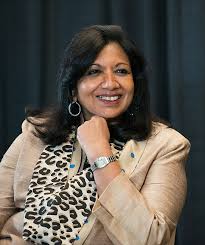
Is there anything that strikes you, Kiran, about how Gen Zs today are in the workforce?
The one good thing about Gen Z is that they are aspirational and they have a lot of energy, but I think they also lack patience. They lack deeper meaning in their life because they are so eager to move ahead. Gen Z don't have that time to reflect. Hustle culture comes because of intense competition, intense aggression, and impatience. There's no patience left in this world anymore. Bangalore is one such brand that has evolved over time. It has many things working for it with a very strong advantage. One is this is a city of first generation entrepreneurs. This is a city of givers because I think the best philanthropists and the most well-known philanthropists come from Bangalore. When you look at entrepreneurs, each entrepreneur has a very different persona. One thing in common is that every entrepreneur has this risk-taking ability. What I like about entrepreneurs is when they build something different. At our board, we do remind ourselves off and on about the purpose that we've built the business for, which is about life-saving medicine for serving patients around the world and about affordable access to these life-saving medicines. I personally believe that AI will actually augment creativity. You've got to be you. Authenticity to me is very important. Don't pretend to be who you're not. And to me, I've always been bold, daring, curious, and experimental.
There are founders who built companies, and then there are pioneers who change what's possible. Kiran Mazumdar-Shaw did just that. Long before biotech became one of India's biggest growth and brand stories, she was betting on science, innovation, and the belief that a global company could be built from India. But this conversation isn't just about Biocon. It's about what decades of building, leading, and reinventing have taught her. About how leadership changes with time. What younger leaders are getting right. Why succession is one of a founder's toughest decisions. And what success really means after you've spent a lifetime chasing it. This is a conversation about ambition, resilience, legacy, and the lessons that only experience can teach. Here's Kiran Mazumdar-Shaw on a special episode of Media Dialogues with Storyboard 18.
I want to just start with your personal interests because I find it very interesting. I also read that you studied singing and you love art and music. Tell me a little bit about how those influences have maybe changed you as a person.
This is something I've imbibed right from the time I was a young girl. I think I owe it to my parents. I owe it to my school and I owe it to the kind of circle of friends that I had during my school and college days. And I think a lot has to do with how you view education. What is education? Is education just about going to school and learning subjects or is it about widening and broadening your horizon? And I think having interests in the cultural arts is very very important. And I think my parents were very keen that we have that kind of worldview of what education is all about. So I'm very grateful to them and my school because school also cultivated that interest in art and culture and theater and music. So I guess I owe it to that educational past and then of course as I kind of grew up I took a deeper interest in many of these areas. My mother often used to take me to musical concerts because she was very fond of classical music. Of course my parents would always take us to museums wherever we traveled and then I had the opportunity of actually spending more time in some of these areas. So as I grew up I decided to learn Indian classical singing, a vocal. So I did that and I got a deeper understanding of Indian classical music as a result of that and I really enjoy not just Indian classical music but I also enjoy Western. My late husband used to enjoy Western classical music and I did enjoy it too but he taught me so much more and now I happen to be a board member of Lincoln Center and I have this great privilege of understanding even more about world music and Western opera and things like that. And then of course it was art. I always was interested in art. My mother sent me to painting classes right from the time I was a young child. And that grew into a very fond interest in art in general. And then I started collecting art and I had the privilege of knowing people like M.F. Husain Saab and of course Yusuf Arakkal was a very good friend of mine and many other local artists like Vasudev Dave then of course Anjolie Ela Menon and Jatin Das and Shakti Bratt and many many people and I've enjoyed spending time with artists and now I've had the pleasure of meeting international artists and as you know I recently commissioned a wonderful sculpture by a world famous sculptor called Jaume Plensa and you have the sculpture which I've commissioned at the Bangalore International Airport and it's a magnificent piece. If you haven't seen it, I really think you should because Plensa is now someone who is sought after in every part of the world and when I asked him to do something in Bangalore he said it will be my privilege because that would be my first work in India.
Wow. You really want to champion brand Bangalore, don't you? How do you think, I'm just putting it out there, cities are brands themselves, there's Bombay, there's Delhi — I still call it Bombay by the way, not Mumbai — but when it comes to Bangalore, what do you think the brand needs right now? It's known as the startup capital of India. It has this place on the world map as well. But what will it really take to make it a global city, a global brand? I mean aside from the infrastructure.
No, I think when you talk about brands, they're about ecosystems. They evolve over time. It doesn't happen overnight and Bangalore is one such brand that has evolved over time. It has many things working for it with a very strong advantage. One is this is a city of first generation entrepreneurs. This is a city of givers because I think the best philanthropists and the most well-known philanthropists come from Bangalore because all of us are first generation entrepreneurs who understand what it means to give back to society, to your city. And I think the other thing is of course we've been blessed with being the science capital of India and because of that we've created this unique ecosystem for innovation, for experimentation, for ideation and that's what has made us the startup capital of the country. And I think technology has led this city in many, many ways. Whether it's digital tech, whether it's biotech, whether it's agritech, you name it. I think Bangalore has really been a great city to support talent, support innovation, and support entrepreneurship. So I think that's what makes this city very special. And more than anything else, it's a very cosmopolitan city. If you look at any other city which is vying to be what Bangalore is today, it doesn't have the liberal cosmopolitan feel that Bangalore has. Whether it's the political ethos, whether it is the civic ethos, whether it is the entrepreneurial ethos, or whether it's purely the working class ethos, I think it's very special because it's about each one trying to make the most out of their lives. And so I enjoy being a part of Bangalore and it's a very free and liberated system which allows you to do a lot more than you can in a very closed environment or a very homogeneous environment which many other cities are. You go to Hyderabad or Chennai, I mean Bombay is another very cosmopolitan city, but if you go to many other cities I think they don't have the kind of cosmopolitan look and feel that we have. Bangalore also prides itself by being the microbrewery capital of the country. In the past we used to be the pub capital of the country. We're also the medical capital of the country in many ways. So I think we really try to build a very diverse ecosystem which is what is very exciting.
But do you see any challenges to that ethos, that fabric that has made Bangalore what it is and that has given India so many founders, business leaders?
I think the main challenge that we have in Bangalore, which I am very vociferous about, is the fact that the city hasn't kept pace with growth. We are 14 million people today and it was a city of less than a million people when I was growing up. So you can see the kind of growth we had to support and with very poor planning I would say. So I think political leadership has to focus on how to look at all the failures in the system and course correct. We haven't built enough infrastructure to cope with the capacity that is being built. We haven't really looked at building rules and regulations that really start with planning a city well. And you can see some of this happening in some of the new localities, but we have to do something to fix the city. We started all the mobility projects too late. The metro should have been completed 10 years ago. At least today we have one of the finest airports in the country. But we should have done a lot of this before and I hope that the government will actually look at this very seriously. I know we're talking about building tunnels and flyovers and what have you, but we don't have the luxury of time. We need to have better mobility and better cleanliness. I think garbage management and solid waste management have been the bane of this city because we just don't have the right governance model. Now we're beginning to try and build all that and I'm just hoping that you will see some change in the next three or four years.
Absolutely. I don't think that's a Bangalore problem alone. I think it's an all India problem. But let me circle back to some of the things that we were talking about earlier and I want to go back to you mentioned your upbringing and what a critical role that plays in shaping us as people. And you talk about your parents a lot. I've read lovely anecdotes in the book as well. Who do you take after? Do you have more of your mother in you, your father in you? Who had more of an influence on your life growing up and the person you eventually became.
So in the early stages of my entrepreneurial journey obviously I was much closer to my father because we shared a common profession which was brewing. It was my late father who really convinced me to pursue brewing and we shared a lot of that interest, which I think made us very close and bonded. But then of course I was disappointed that I got rejected by the brewing industry in India. So then of course I started Biocon. But my father was always deeply interested in how I was building Biocon. And so I was very close to my dad at that time. But then my father passed away in 1993 and that was the time when my mother became a very important factor in my life. And she was an amazing woman. And I only got to respect her and know her when my father passed away because it was then that I realized that this was a woman who was very capable, very accomplished and had this huge potential to do great things. And I must say that she really showed herself to me as this entrepreneur in her later years when she started her own business. And she did that because I had basically counseled her saying that grieving for my father was not going to get her anywhere and she needed to do something more meaningful in her life to keep her going. And then she just took it up and said, 'Yes, I'll do it.' And then she started her own business which started with organic farming. And then she started her own laundry and dry cleaning business which she was very proud of and she made a big success of that. And I'd love to say to many people that she died with her boots on because she worked till the last day. When she fell ill she was working and then of course she had to be hospitalized and she never made it out of hospital. But the fact is that I think I owe my entrepreneurial genes to my mom and I owe my scientific mind to my dad because my father had this curiosity-driven approach to science and that's what he basically inculcated in me and that's what made me focus very strongly on science and I'm very science-led in my way of looking at my business and I guess that part of it comes from my father and the true businessmindedness comes from my mom.
So because you mentioned science, I'll ask you this because that's another thing that strikes me. You have this unshakable faith and trust in technology and science, but at the same time you have that same kind of faith in people. You have taken bets on people that others might have overlooked but you sort of stood by people despite everything. Was that always something that you had, intuition about people, or were they just these calls you took on people while you were building your business and your companies? I'm trying to understand whether you always had it or was that something that you cultivated for yourself in identifying the right people and then making bold bets on those people.
So I've always believed that to be a successful entrepreneur you have to be a people's person. And I think good entrepreneurs are great networkers, are good people persons. And for me it's about getting people to buy into your vision. Entrepreneurs create companies but people build it and you cannot build it alone. So that's something I learned right from the start and I made sure that I got people who believed in what I was doing to join me. So I've always sort of bet on people who share my vision for the future and that's what has actually built Biocon. I've built it with people, I built it with very special people. I built it with extraordinary people who others would have considered ordinary. So I think this is what it's all about and I'm very proud of the people who have joined me in this journey of building Biocon and building a global biopharmaceutical enterprise through this real sense of purpose and conviction. Culture comes from the top.
And I have to ask you this because your April Fool's jokes — how important is fun to you? How important is fun in your leadership style? How important is fun in the way you've built your business, built your company, built your teams? Why is that fun so important?
I think work has to be fun. Work cannot be a drudgery. And any company where you're trying to build an exciting business has to be a very exciting place and creating an exciting place means it has to be a fun place to work in. I don't think people want to come to work feeling, 'Oh no, it's Monday, it's another week.' But I've always wanted it to be a place where people look forward to coming there every day because it's so exciting. And I know I have many stories to tell about many of my colleagues who have lost track of time and they've actually stayed on very late at night not realizing that there's no one there because they just enjoy their work so much. So I think it's very important to make the workplace a fun place. And I think I've also learned a lot from my early days of starting Biocon when I went to Ireland who were my joint venture partners and I got a very different sense of a work culture because Ireland is a fun work culture. People are — there's no status consciousness about hierarchy. It's a very free workplace. People enjoy working and being very free about exchanging ideas. They have dissent, they have arguments, they have discussions but they're all very good friends. And when I came back to India — to the pub later, yes exactly, where the Guinness flows as freely as what your discussions are all about — but when I came back to India I wanted that kind of culture in Biocon because I knew that India was a very different work culture where hierarchy was so important, where you never questioned your superiors, where you never had healthy discussions and dissent. But Biocon was a very different workplace and I think a lot of people who would visit me would be horrified at the kind of animated and strong discussions I would be having with my colleagues who would be not agreeing with me. And I remember one of my visitors saying to me, 'Oh my god, the way you were talking, having this discussion with your colleague, I thought the guy is going to be fired and instead your colleague walked out with a smiling face saying okay we'll continue this conversation later on.' So it was that kind of a culture I created in Biocon and I think it continues even today. I think people are not fearful of making mistakes. People are not scared of speaking up. People are not scared to express their views. That's the culture I've tried to maintain even today. Though like all big organizations, you do have people within the system who might not want that, but I try to make sure that at least those who interact with me and the larger leadership team osmotically has imbibed my sense of culture.
Any one April Fool's Day joke that you're particularly proud of?
I've played a number of pranks. But anyway, I think everyone waits for April 1st to see what I'm going to be up to. And I think that itself is a lot of fun.
Mhm. Absolutely. The buildup to it. Another thing that strikes me about your leadership style and just the way you've approached work and building your brand and business, the curiosity and there's that gumption, right? That despite all the challenges, everything, you have always spoken very freely. And there was this one anecdote, and it's quite a popular anecdote, it's been covered before, but I'll just read it out to you. This was a presentation that you were doing at Unilever and you put this into the slides, I think it was — companies, there are three types of companies: companies which make things happen, companies that watch things happen, and companies that wonder what happened. And this was the passage that follows in the book, which is the reaction: 'We didn't know where to look. There were board members, some senior managers, and the head of Hindustan Lever. Those days we did not have smartphones to fiddle with. We just went red in the face.' Where does that come from is my question. And how do you keep having that gumption and that boldness?
You know, I've always felt that you've got to be honest about certain things and you've got to be very clear about what your message is. To me, the message to Unilever was: guys, this is about innovation. This is about new technology. You've got to be a risk taker. You've got to do things boldly. Don't wait for things to happen. You've got to make things happen. That was my message to them because I knew that Unilever was not used to new technologies. And so I wanted to shake them up and I wanted them to understand what biotech was all about. That it was not about doing things gingerly. It was not about doing things after somebody else had done something and shown you the way. It was about doing things in a first of its kind way, pathmaking. And I think that is what I wanted to convey to the visiting team, which was the Unilever R&D team. And I wanted to tell them, listen, we are here doing breakthrough stuff. Use us, leverage us, and do something exciting. That was my message. So I think the message was very strongly received because people may have been uncomfortable but I think the message was very clearly carried through. And of course my colleagues were very embarrassed because they thought, oh my god, this is the mighty Unilever, we should not be talking to them this way. But then I was pretty irreverential when it came to situations like this and I've always been.
Yeah, yeah. Has that fueled you? Has those moments, those naysayers, those challenges — whether it is a moment like this or I was reading a few other anecdotes about your purse being stolen at the Amsterdam station or for that matter shoving yourself through a window in a train to get to a place. Has all of that in a sense kept fueling your passion, your curiosity, that I want to just go at it, go at everything?
You know, the first thing I want to say is that you've got to be you. Authenticity to me is very important. Don't pretend to be who you're not. And to me I've always been bold, daring, curious, and experimental and I've never had the fear of failure. So whatever I do, I do it with gumption as you said. And I said, you've just got to do things where it counts. And I've always been honest. I've been upfront and I've said it like it is. Now, if you are that way and that's what I am, that's who I am, then I think that's how I will always project myself. I'm not going to be that diplomatic. I'm not going to be that polite. I'm not going to say things which I don't mean. So that's me. But at the same time, I think as I've aged, I've also mellowed. So I don't say a lot of things which I would normally say, but I also don't say things which I don't mean. So that's the way I've tempered myself over time. But I think it's very important for people to be honest because I think when you're trying to build a company, trust is very important and when you're honest people trust you. They may not like what you're saying but they trust you because you're honest.
Do you, in your interactions with younger business leaders, new generation entrepreneurs, do you see a reflection of that kind of, for lack of a better word, gumption? Is there a lack of it in your interactions with whether it is someone like Nikhil Kamath or anybody else that you interact with? What about them strikes you as a strength or what about them is currently a weakness or a challenge?
I think when you look at entrepreneurs, each entrepreneur has a very different persona and one thing in common is that every entrepreneur has this risk-taking ability. And I find that when I started Biocon in 1978 I took a big bet, a big risk, right? Because there was no sector called biotechnology. I was 25 years old. I had very limited resources. So I think I took big bets but I think taking those risks and making those bets is what builds entrepreneurship. Now I think people like Nikhil Kamath have also taken big bets. I mean they've built their company also with a great new idea. What I like about entrepreneurs is when they build
something different where they don't stick to the conventional ideas but they do something very different. And those are the kind of entrepreneurs I truly respect and every one of them is very honest in the way they express themselves. They are very authentic and I think you'll find that as a common trait with all entrepreneurs who have succeeded to build very differentiated businesses because you have to be bold. You have to have courage and you have to be honest with what you're doing and you are bound to have some setbacks and failures because everything's not going to work because it is not a trodden path. You are breaking new ground and everything is not going to work smoothly. So I think all of us who have built these kind of companies know what risks are, know what failures are and know what it means to be chided and criticized because they don't understand what you're doing.
And that criticism is far more public now with social media.
Right. We've seen founders of course going on Twitter, whether it's comments on current happenings or anything else. There's been a huge blowback to some of the things that have been said on Twitter and other platforms. Do you are you on social media as well? Do you think about what you put out there far more? You mentioned that you're far more measured today and far more mellowed. But when you're on social media, for instance, which is now how all of us consume media and interact with each other, are you thinking a lot about what you put out there?
So I am much more measured in what I put out today because in the past I would just react to a comment, but today I realize that these are anonymous comments and it's very easy to make anonymous comments, but I'm not anonymous. I'm a known face, and therefore you have to be a bit measured in how you respond. I think a lot of wise counsel that I've got is don't react to all these people who say crazy things because they are unknown names and unknown faces. Whereas I think you are reacting as a known person, so it's going to be a very different equation. So today when I look at some of the crazy comments I get in response to some of my statements, I tend to ignore them. But if there are important issues where I'm trying to make a point, I do get into a kind of a Twitter dialogue.
Debate dialogue. But does that kind of behavior online bother you? Do you feel
Not anymore? Not anymore. It used to bother me a lot in the past, but I think now that I'm used to social media, I know who I should be bothered by and who I shouldn't be. So, I think as long as it's an unknown commentator or a person, an anonymous remark, I don't care. But if it is from someone I know, then obviously I enter into a discussion.