
enesptjazh-Hanszh-Hantfrdeitkoruarhiidtrnlplvithsvhemsukcselrohudafinobn
Nadella and Huang sold free tokens on a $2,600 laptop while AWS spends $220 billion
Microsoft showed a 284 billion parameter model running on a PC on October 7. A day later AWS chief Matt Garman stood by $220 billion of 2026 capex.
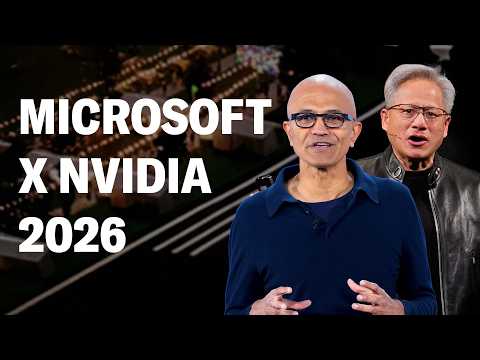
On October 7 Microsoft and Nvidia put a GitHub engineer on stage, had her switch a laptop to airplane mode, and let a coding agent keep working. One of her local sessions had sent 1.66 million tokens to a model on the machine, and she told the room all of it was free. The next day an a16z podcast went up in which AWS chief Matt Garman confirmed $220 billion of capital spending for 2026 and said he could not see it slowing. Both pitches target the same workload. I think only one of them is exposed, and it is not the one spending $220 billion.
What Microsoft showed
The hardware is the Surface Laptop Ultra, built on Nvidia's RTX Spark chip with up to 128GB of unified memory. Gizmodo reported a $2,600 starting price, an October 16 launch and a top configuration at $5,900. Windows chief Pavan Davuluri said Microsoft had compressed a 284 billion parameter DeepSeek model to 1.66 bits per weight so it fits in 60GB of memory and runs on the device. He also said Copilot Plus machines are now more than 40% of business laptops being built and that Windows PCs run over two trillion local inferences a month.
The software matters more than the laptop. GitHub Copilot on Windows will route each task to a cloud model or a local one, starting October 15. In the demo, issue triage ran overnight on the laptop's own model and the harder investigation went to a cloud model. That split is the whole argument. Cheap, repetitive, private work stays on the machine and the difficult work still rents a data center.
Nadella wants you to stop noticing where the model runs
Satya Nadella did not frame this as local against cloud. He compared it to the years when he had a terminal to a VAX and a separate PC at home, before the browser joined them.
There will never be a moment where we will go and look and say, "Oh, this runs locally. This runs in the cloud." You will expect this hybrid intelligence to be everywhere and pervasive.
Satya Nadella, October 7, 2026, source
Microsoft can afford to be relaxed about it because it sells both ends. What it cannot afford is for the agent on your desktop to belong to someone else. That explains the second half of the event, a Windows sandbox for agents that Microsoft calls MXC, with a separate identity for each agent and a meter on its token spend.
And given the fact that essentially coding went there first, where the harness is local, even if you were using a cloud model, we needed to make the desktop the most secure place for agents to execute.
Satya Nadella, October 7, 2026, source
Huang's petaflop needs a footnote
Jensen Huang said the chip took more than 4,000 engineering years and then reached for a comparison.
It has one petaflop. Just to put in perspective, the computer that started the AI revolution called DGX-1 was one petaflop. And it was a quarter of a billion dollars and it weighed 500 pounds and now it's in this, in your laptop.
Jensen Huang, October 7, 2026, source
I would not repeat those numbers. The first DGX-1 launched in 2016 at $129,000 and delivered 170 teraflops at half precision. The transcript has Huang saying a quarter of a billion dollars, which is off by a factor of roughly two thousand, and Gizmodo notes the laptop's petaflop is measured at four-bit precision. The direction is right and the comparison flatters the laptop. What I take from it is simpler. Nvidia now sells the data center rack and the machine that keeps some work out of it.
Garman's answer is that he is sold out
Garman was not asked about the laptop. He was asked about capex, and his answer covers it anyway.
$220 billion for '26, and we don't anticipate slowing down anytime soon because the demand is just massive.
Matt Garman, October 8, 2026, source
That figure matches what Amazon told investors in July, when it lifted guidance from about $200 billion. Data Center Knowledge reported that Andy Jassy put the increase mostly down to memory costs and said Amazon would still be short of capacity through 2026. Garman added detail. AWS has agreed to buy 2 million Nvidia GPUs over the next couple of years, its Trainium chips are sold out until around the end of next year, and it says yes in some form to about 60% of the GPU requests it gets.
He also made the privacy case that Microsoft made for the laptop, from the other side.
We have a guarantee that your data never leaves your VPC. And so if you're running inside of Bedrock, your data doesn't go back to the model provider. They never see your prompts.
Matt Garman, October 8, 2026, source
So the enterprise version of "my tax files never leave my PC" already exists in the cloud. A seller who turns away 40% of requests does not lose sleep over issue triage moving to a laptop.
Amon says the argument is the wrong one
Qualcomm's Cristiano Amon, in a Sources podcast recorded October 6 and published two days later, called the cloud against edge debate futile. His evidence is a customer request.
I have to be careful not to disclose names, but some AI companies right now, some of the companies at the forefront of AI, are telling Qualcomm, 'Qualcomm, by 2028 I need to make sure that I have the ability to run at least a 100 billion parameter model into a phone, and I need to have this thing running kind of all the time.'
Cristiano Amon, October 6, 2026, source
If that is accurate, the labs that rent the most cloud capacity also want a large model in your pocket. Amon's reason is that an agent needs what the phone knows about you.
Your context only exists in the phone, right? Context does not exist in the cloud. It exists in the phone. And the sensor data comes from the phone.
Cristiano Amon, October 6, 2026, source

One of his numbers is thin. Amon said the smartphone market is down 20% this year because memory prices rose five to six times, and he called that a supply problem with pent-up demand behind it. He has made the supply argument since February, when The Register covered his warning that memory makers were favoring AI data centers. The 20% is his figure and I have not seen it from an independent tracker. Note the irony either way. The same memory shortage that added $20 billion to Amazon's capex is what makes a 128GB laptop and a 100 billion parameter phone expensive to build.
Thompson on who keeps the user
If the model can run anywhere, the scarce thing is the agent a person has bothered to set up. Ben Thompson made that case on Sharp Tech in a clip published October 8. He expects agents to beat apps on convenience, and he expects the first one that gets your passwords and logins to stay.
However, once you've done that, whoever gets people to do that, the next agent might be a little bit better, but it's not going to be enough better to trigger that all over again.
Ben Thompson, October 8, 2026, source
Read the Windows event again with that in mind. Microsoft added a one-click setup for third-party agents and a sandbox they all have to run inside. It is making sure that whichever agent wins the user, Windows holds the permissions.
Does a $2,600 laptop take work away from the cloud?
Some, and it is the cheapest work. Triage, file sorting and small code edits were never where AWS made its margin, and Garman cannot fill the orders he has. The companies with something to lose are the ones that bill by the token for easy tasks, because Microsoft just showed developers how to route those tasks to hardware they already own. The first real test is October 15, when the routing ships in GitHub Copilot. If Microsoft later says what share of sessions ran locally, that is the number to watch, more than how many laptops it sells.