
CEOInterviews.AI
Start App
Try: AI strategy tariffs earnings guidance layoffs interest rates growth

Jill Lepore

Professor of American History and Law; Staff Writer, The New Yorker, Harvard University

Search every verified Jill Lepore interview, podcast appearance, and on-the-record quote — each transcript cross-checked by AI and human review to confirm speaker identity. Jill Lepore, the Pulitzer Prize–winning historian and Harvard professor, has been promoting her recent book, The Rise and Fall of the Artificial State, through a series of public conversations and interviews. In these appearances, she has described the book as an examination of the growing reliance on bureaucratic systems, algorithms, and engineered institutions in modern governance, and has argued that some technology leaders view machine-led governance as a utopian ideal. She has also discussed her earlier work, We the People: A History of the U.S. Constitution, which won the 2026 Pulitzer Prize in history, and has spoken about the difficulty of amending the U.S. Constitution, suggesting that its near-unamendability raises questions about its legitimacy. Lepore has also participated in panel discussions and keynote addresses on topics including the role of the press in democracy, the history of constitutional conventions, and the impact of artificial intelligence on higher education and civic life. In these settings, she has expressed concerns about the weakening of American civil society, the concentration of power in private corporations, and the environmental and social consequences of AI development. She has attributed some of these trends to the failure of Congress to regulate technology companies and has encouraged greater civic participation, such as attending local meetings and reviving deliberative traditions.

Recent appearances

  • Jill Lepore on The Force of History | Institute for Advanced Study

    On October 30, 2026, David Nirenberg, Director and Leon Levy Professor at the Institute for Advanced Study, was joined for a Director’s Conversation by Jill Lepore, David Woods Kemper ‘41 Professor of American History at Harvard University, Professor of Law at Harvard Law School, and a staff writer at The New Yorker. Nirenberg opened with a 1932 letter from founding IAS Director Abraham Flexner to Justice Louis Brandeis, which cast the nascent Institute as an experiment in the spirit of Brandeis’s states as “laboratories” of democracy. Drawing on her Pulitzer Prize–winning book “We the People…
    Read the verified transcript → Watch on YouTube ↗

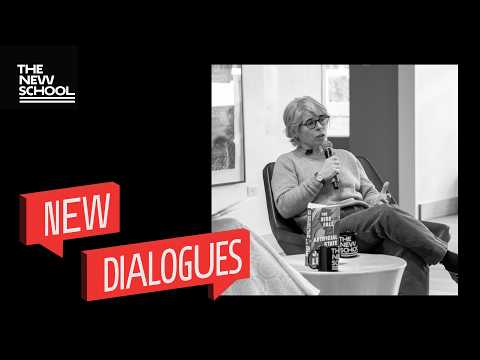
  • Dr. Jill Lepore on “The Rise and Fall of Artificial State” | New Dialogues S2 EP5

    Dr. Jill Lepore, award-winning American historian, New Yorker staff writer, and professor of law and American history at Harvard University, joins Natalia Mehlman Petrzela, co-director of the Center for the American Experience and professor of History, for a conversation on her new book, “The Rise and Fall of the Artificial State.” In the book, Lepore examines how modern states have increasingly relied on bureaucratic systems, algorithms, and engineered institutions to manage society, raising urgent questions about who controls these artificial intelligence structures and what they mean for de…

    Read the verified transcript → Watch on YouTube ↗

  • The Rise & Fall of the Artificial State | Jill Lepore in conversation with César Rodríguez-Garavito

    To better orient debates on AI law and policy, the Center for Human Rights & Global Justice at NYU Law launched COMPASS (the Commons on Machines, Policy, Automation & Society). COMPASS is an interdisciplinary program that produces research-grounded analysis and recommendations on a wide array of issues: the legal status of AI; its social and environmental impacts; AI companies’ legal accountability for harms associated with their products; and national and international inequalities in AI development and deployment. On October 23, COMPASS brought together leading scholars and practitioners fr…

    Read the verified transcript → Watch on YouTube ↗

  • Do People Have the Power to Change the Law? Expert Explains

    With Donald Trump and his allies constantly testing the limits of, or outright defying, constitutional rights in the United States, is one of our most important founding documents – the Constitution itself – equipped to protect U.S. democracy? The Constitution is in “fairly good shape,” argues Jill Lepore, Harvard historian and Pulitzer Prize-winning author. The real problem is a disengaged American civil society, and a belief that the country’s political institutions are set in stone. Lepore joins Zeteo’s John Harwood for a live conversation to discuss how Americans can reclaim their power t…

    Read the verified transcript → Watch on YouTube ↗

  • Historian Jill Lepore: Conversations from the Sun Valley Writers' Conference

    Historian and Harvard Professor Jill Lepore talks with Idaho Public Television host Marcia Franklin about her Pulitzer Prize-winning book, "We the People: A History of the U.S. Constitution." The book takes a deep dive into Article 5 of the U.S Constitution, the document's amendment provision, including why it's so rarely used and what effect its disuse has on our democracy. The two also discuss Lepore's latest book, "The Rise and Fall of the Artificial State." The conversation was taped at the 2026 Sun Valley Writers' Conference.

    Read the verified transcript → Watch on YouTube ↗

  • KI: Was bleibt von Demokratie und Freiheit?

    In diesem Video interviewt der mit dem Pulitzer-Preis ausgezeichnete Journalist Chris Hedges die Historikerin Jill Lepore zu ihrem Buch „Die Regierung der Maschinen: Aufstieg und Fall des Künstlichen Staates“ und zu der Frage, wie künstliche Intelligenz unsere politischen und gesellschaftlichen Strukturen verändern könnte. Gemeinsam blicken sie auf die historischen Wurzeln der Technokratie, die wachsende Macht des Silicon Valley und die zunehmende Verlagerung menschlicher Entscheidungen auf Maschinen. Dabei geht es um weit mehr als nur die technischen Möglichkeiten von KI: Welche Rolle bleibt…

    Read the verified transcript → Watch on YouTube ↗

  • Jill Lepore | The Artificial State

    Pulitzer-Prize winning historian Jill Lepore discusses her new book The Rise and Fall of the Artificial State, in conversation with Professor Sanjay Ruparelia, in the Appel Salon on October 1, 2026

    Read the verified transcript → Watch on YouTube ↗

  • After Words: Jill Lepore on "The Rise and Fall of the Artificial State"

    Harvard historian Jill Lepore explores how digital technology is re-shaping society. She was interviewed by WPVI-TV anchor Tamala Edwards at the Free Library of Philadelphia in September. Download the FREE C-SPAN Now App. https://www.c-span.org/c-spanNow/ Discover the C-SPAN Video Library at https://www.c-span.org/quickguide/ Explore C-SPAN's Free Educational Resources at https://www.c-span.org/classroom/ C-SPAN: Created by Cable in 1979. Offered as a public service. Support C-SPAN by Donating Today: https://donorbox.org/support-c-span?u... Subscribe to our YouTube channel:    / cspan…

    Read the verified transcript → Watch on YouTube ↗

  • Jill Lepore on Silicon Valley Priests and Academic Rot

    A Harvard dean recently suggested that "there should be acceptance, even encouragement" of AI writing in the college classroom. That sort of thing creeps Jill Lepore out. We talked to the Pultizer Prize-winning historian about what AI is doing to higher education, what went wrong at Harvard, and why our new tech overlords want dominion not just over our pockets and our politics but also our souls.

    Read the verified transcript → Watch on YouTube ↗

  • The Past, Present, and Future of the Press in America

    Join us in the JFK Jr. Forum for the third installment of our year-long series observing America’s semiquincentennial, Consent of the Governed: America at 250 and Beyond. Moderated by Pulitzer Prize-winning historian and professor Jill Lepore, this panel discussion will focus on the importance of a well-informed citizenry to the health of constitutional democracy. Featuring: David French Opinion Columnist for the New York Times Steve Inskeep NPR, Host, Morning Edition and Up First Jameel Jaffer Executive Director, Knight First Amendment Institute, Columbia University Jill Lepore (Mode…

    Read the verified transcript → Watch on YouTube ↗

  • VthePeople Conference | Keynote Address from Jill Lepore

    Jill Lepore is the David Woods Kemper '41 Professor of American History at Harvard University, Professor of Law at Harvard Law School, and an author with The New Yorker. Her most recent book, We the People: A History of the U.S. Constitution (Liveright, 2025), a New York Times bestseller, takes as its subject the question at the heart of Article V: what it means to live under one of the world's oldest and least-amended constitutions. She also directs Amend, a public archive of proposed amendments to the U.S. Constitution, documenting the thousands of changes Americans have sought and never sec…

    Read the verified transcript → Watch on YouTube ↗

  • The Rise and Fall of the Artificial State (w/ Jill Lepore) | TCHR

    In her new book, “The Rise and Fall of the Artificial State,” Harvard Professor Jill Lepore examines the influences driving the elites’ fantasy of a machine-dominated future and whether the era of liberal democracy is ending. Support my independent journalism at Substack: https://chrishedges.substack.com/ Follow The Chris Hedges Report on social media: https://linktr.ee/chrishedges (0:00) Intro (4:01) Big tech’s vision (6:06) Science fiction influences (11:24) Escaping life (14:54) Dismantling systems of governance (21:06) The fraud of the AI safety movement (22:49) Data centers (28:21…

    Read the verified transcript → Watch on YouTube ↗

Verified interview transcripts

Notable quotes

“So far from being visionary and futuristic and prophetic, they're the most discredited and failed ideas of the 20th century. If you read the technocracy pamphlets of the 1930s, word for word, they are the same schemes proposed by the techno-optimists of Silicon Valley of a certain sort of a kind of Sam Altman, Mark Andreessen. They just really they just recycled ideas. And so far from being visionary and futuristic a”

“I really don't think it is. I think it's a mode of judicial interpretation. It disguises itself as historical interpretation. I would say more importantly, originalism is not original. It is to say it's not original to the founding era. You see plenty of instances like all obviously if I have an old document, you want to know who wrote it, who are they writing it for, what do the words mean, who read it, right? What ”

“I think the rollout of the large language models was a giant mistake. If you think about say the building of the internet first as ARPANET built by the advanced research projects agency of the Department of Defense, it linked national labs and major research universities while they developed various tools and protocols for a communications network that was partly deeply involved in cold war missile defense. It really”

“When I describe the artificial state, I mean something dystopian, but actually for a number of these very powerful men in the tech world, it is a utopia. So this is what they want. So, you know, Sam Altman of OpenAI, you know, started saying some years ago he thinks an AI president would be better than a human president. It'd be so immediately responsive and could, you know, be making policy constantly adjusting itse”

“The Democrats are wrong about all that, right? They were wrong about that in the Obama era, they were wrong about that in the Trump era, they were wrong about that in the Biden era. Um they took for granted that somehow the Democratic Party could just be an assemblage of everyone who wasn't a white man and that that would be and that demography therefore would be on their side in the Du Bois-ian sense. Um and that th”

“I'd really been concerned at witnessing the many ways in which private corporations are subsuming the functions of government and even of the nation-state. I think it was maybe last year, Sam Altman from OpenAI said he thought it would be great if there was an AI president. Like, just, we should just replace the President of the United States with AI because the AI could constantly be monitoring what people want and ”

Other executives at Harvard University

The summary and quote tags on this profile are produced with AI assistance from verified, first-person interview transcripts, then checked by our team to confirm the speaker's identity and the accuracy of every quote. See how we verify →