
enesptjazh-Hanszh-Hantfrdeitkoruarhiidtrnlplvithsvhemsukcselrohudafinobn
The NYSE is building tokenized stock and Coinbase cannot sell its version here
Lynn Martin told Congress the US listed company count has fallen 40 percent. Brian Armstrong's tokenized stock product is barred from the US.
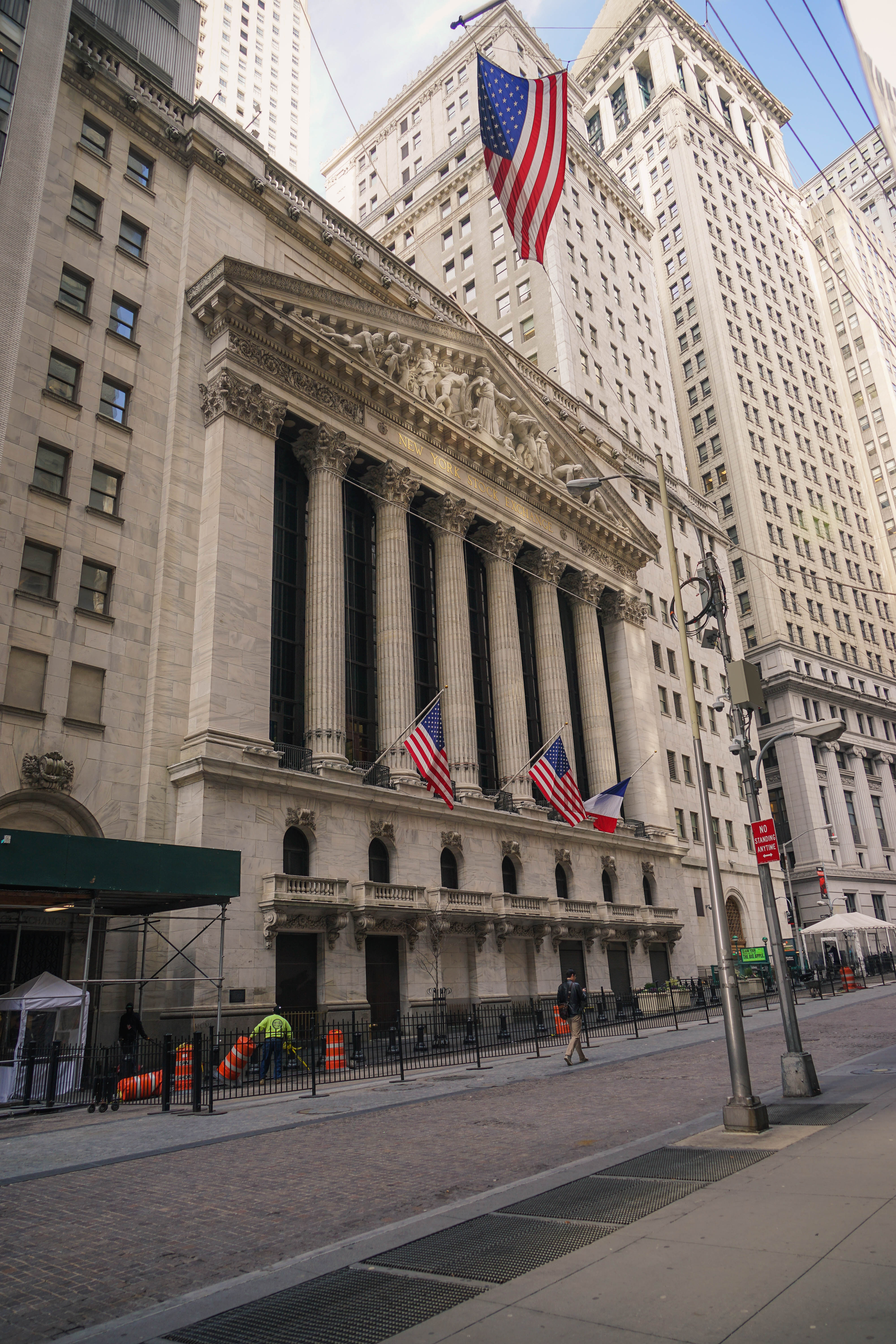
On September 2 the president of the New York Stock Exchange told the House Financial Services Committee that the market she runs has lost roughly 40 percent of its listed companies since the mid-1990s. A clip of that testimony went up on YouTube eight days later, the same day Brian Armstrong explained on a podcast that Coinbase now sells genuinely tokenized shares, held one for one against securities in custody, to everyone on earth except Americans. Put those two facts side by side and the week has a shape. The number of places you can buy something is growing fast. The one place an ordinary retirement account can reach keeps shrinking.
The incumbent is the one asking for a level playing field
Lynn Martin runs NYSE Group. Her opening statement did not read like an exchange defending its moat. It read like someone describing a leak.
"Over the past three decades, the number of US-listed public companies has fallen by roughly 40%. During that time, the best growth years of the most innovative companies were increasingly reserved for wealthy individuals and institutions who were able to invest in private rounds, while teachers, nurses, firefighters, and everyday Americans who were saving for retirement were locked out from that opportunity."
Lynn Martin, September 2, 2026, NYSE written testimony
She paired it with a genuinely good number. Global IPO proceeds in the first half of 2026 came to $178 billion against about $58 billion a year earlier. Both things are true, and one strong half does not replace three thousand missing listings.
Then she told the committee the NYSE is building a tokenized trading and settlement platform, designed so the token and the ordinary share are one security in two forms rather than two products. And she asked Congress for something specific: "consistent treatment regardless of incumbency status or primary regulator. Similar products cannot be treated differently under the guise of innovation." That is the New York Stock Exchange asking not to be undercut. Twenty years of market structure fights had the incumbent on the other side of that sentence.
Coinbase shipped the product first and cannot sell it here
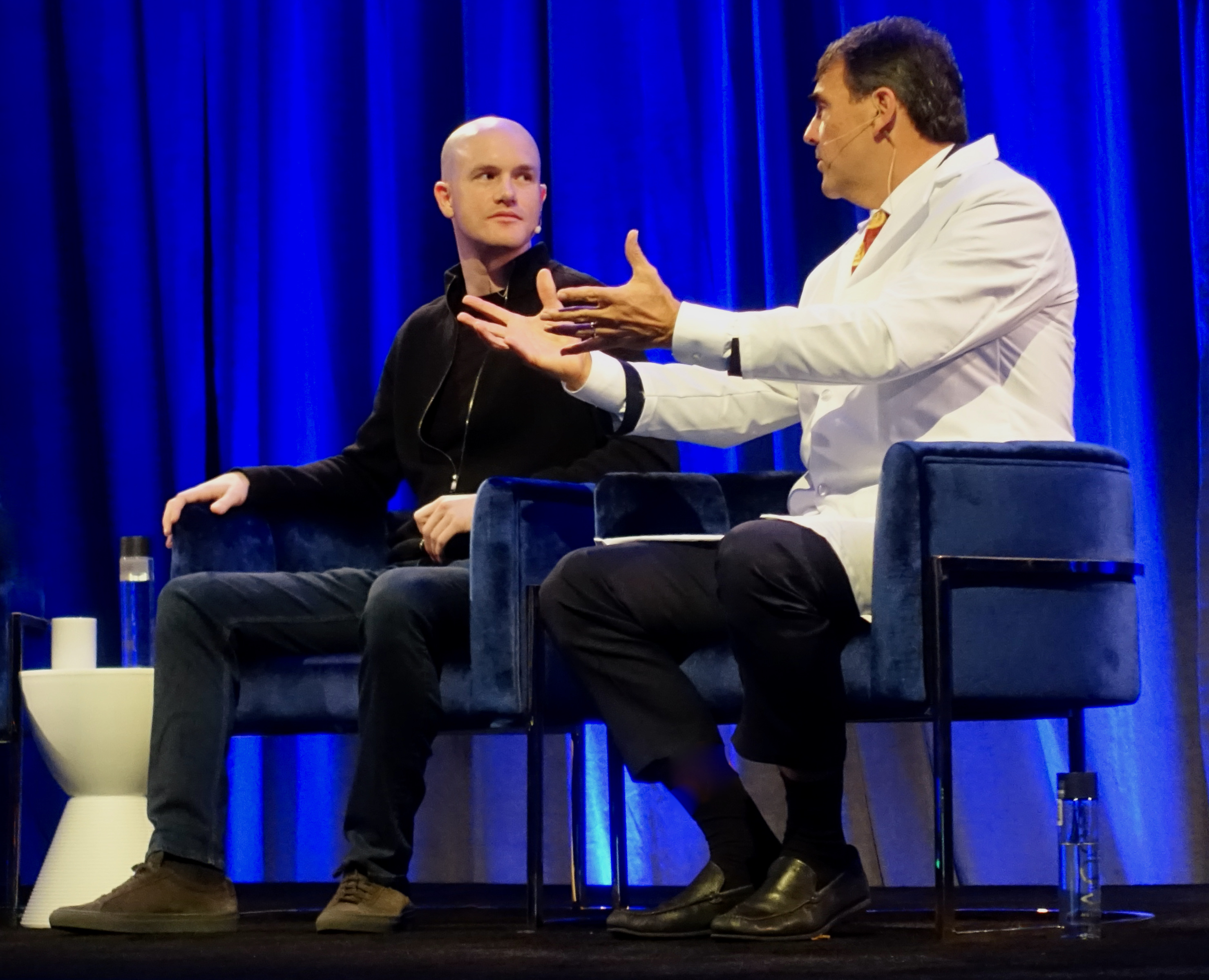
Armstrong, on No Priors on September 10, described a business that has quietly stopped being a bitcoin business.
"We actually shared in our recent earnings deck, which are those are the only numbers I'm probably allowed to talk about, but actually 88% of our revenue is from non-Bitcoin trading at this point."
Brian Armstrong, September 10, 2026, source
Stocks, perps, prediction markets and stablecoin payments in one book is what he calls the everything exchange. Prediction markets alone hit a $100 million revenue run rate within months of launch. The tokenized stock piece is the one that bears on Martin's problem, and Armstrong is blunt that Americans are the ones shut out of it. It is live outside the US only, aimed at the roughly four billion people worldwide with no brokerage account at all.
Everything he wants in the US runs through a Senate floor on Tuesday. Majority Leader John Thune has set a cloture vote on the Digital Asset Market Clarity Act for September 15. Armstrong told CNBC the same day that he has a free roll on it.
"Frankly, if it doesn't pass, it's also going to be a good outcome because the SEC and the CFTC have said that they're ready to publish rulemaking, and we're going to get regulatory clarity one way or another on the 15th or the day or two after."
Brian Armstrong, September 10, 2026, CNBC International
I do not buy the symmetry. Agency rulemaking is reversible by the next agency; a statute is not, which is why the fight is over the statute. Grayscale, in the same coverage, puts the odds of the bill becoming law this year as low, and a failed cloture vote likely pushes it into 2027. Armstrong needs 60 votes and Republicans hold 53 seats. "Everyone I've spoken with in the Senate" is not a whip count. He was similarly unbothered elsewhere on CNBC, restating a $400,000 bitcoin target for 2030 with the chart on screen showing it below the 80,000 handle and calling the bottom in on the current cycle.
DraftKings wants a referee more than it wants a win
The day after the NFL opener, Jason Robins said the fastest-growing part of DraftKings is not the sportsbook.
"I think the biggest growth is going to come from the prediction space. This is the first NFL season that for the whole season we've had our offering available on a broader basis."
Jason Robins, September 10, 2026, source
Same position as Armstrong: product shipped, and the question of which regulator owns it still open. The Third Circuit held in April that federal commodities law preempts New Jersey's gambling statutes, the Ninth Circuit went the other way in August, and on September 2 New Jersey asked the Supreme Court to settle it. Robins will not file an amicus brief on either side. Asked what outcome he wants, he refused to name one.
"I think the most important thing is that there's clarity. It would be nice to just get a clear answer and understand what the rules of the road are. And we're happy to operate under whatever that clear answer might be."
Jason Robins, September 10, 2026, source
Three executives, three products, one word. Clarity is what you ask for when you have already built the thing and the only remaining risk is legal.
The largest raise in history never went near an exchange
Martin's 40 percent has a face. Sarah Friar, OpenAI's CFO, was asked on Consello's podcast about the size of her last round and corrected the host upward: $122 billion. No prospectus, no ticker, no teacher's 401(k). She also gave the most revealing number of the week on how hot the buildout has run.
"The compute I bought a year ago, I could sell in the market today for 3 to 5x. So if nothing else, a great investment. Now, the bad news is that we're still short compute, so I should have bought more of it."
Sarah Friar, September 10, 2026, source
She calls it building the railroads, true capex, shovels in the ground. Fine. The railroads were also sold to American retail investors as listed equity. This buildout is being financed privately and sold to the public later, if at all.
Lasry is selling the 20 percent the leagues just unlocked
The private side is not passive about access either. Marc Lasry, who owned the Milwaukee Bucks and now runs a sports fund at Avenue Capital, explained on a Rockefeller Capital podcast posted September 10 how the door opened. The NBA changed its rules to let a fund hold up to 20 percent of a team and invest across six of them, and baseball, hockey and finally the NFL followed. Major league returns have averaged about 12 percent a year, he said. He was sharper on the standard objection.
"There's massive liquidity. There's a fiction that there's no liquidity; that's absolutely false. Anybody who owns a piece of a team, call me, I'm happy to buy it."
Marc Lasry, published September 10, 2026, source
Note what that means. The liquidity exists because Lasry and a handful of funds are the bid. That is a dealer market, not an exchange, and the difference is the whole subject here.
Gundlach thinks the thing everyone is tokenizing is the expensive part
On September 8, two days before any of the above went up, Jeffrey Gundlach ran his quarterly DoubleLine webcast and spent it arguing that US large-cap equity is the worst-priced asset on the board. Shiller CAPE at 42. Technology at 38 percent of the S&P 500, a higher single-sector weight than 1999.
"So there are about as many bargains in the S&P 500 cap-weighted index as there are in a hotel minibar. This is an extremely concentrated market, which means an extremely dangerous market. So I'm not going to recommend any capitalization-weighted equities."
Jeffrey Gundlach, September 8, 2026, source
The detail underneath deserves more attention than the CAPE chart. Investment-grade spreads on AI issuers have gone from about 50 basis points to 125 while the rest of investment grade has not moved. In high yield the AI cohort widened from roughly 180 to 325 while everything else sits near the year's tights. Credit is already pricing AI separately from the market it dominates. Equity is not.
So what actually gets decided next week?
Two things, on consecutive days, and neither one is the tokenization question. Tuesday is the cloture vote on the Clarity Act, which decides whether Americans get statutory market structure or another round of agency rulemaking. Wednesday is the Fed, where Kevin Warsh has said there is still work to do on inflation and futures put a quarter-point hike near a coin flip. Gundlach reads it at 60 percent and is fading it, mostly on instinct: "There's something about Kevin Warsh that I don't quite fully trust, and I'm leaning against the 60%, although I'm not highly convicted on this."
What does not get decided is the question Martin raised. Nobody is voting on why 7,000 listed companies became roughly 4,000, and tokenizing the survivors does not add one. Coinbase, the NYSE, DraftKings and Avenue Capital are all building better ways to trade a set of assets that keeps getting narrower at the top and more private underneath. Better plumbing is not the same as letting more people own things, and this week's speakers were far more precise about the first than the second.